

Mastering French: Why Immersive Language Courses in France Offer Unmatched ROI
Imagine sitting in a stuffy classroom back home, flipping through textbooks while French words slip away like sand. Now picture yourself strolling through Paris streets, chatting with a baker about fresh croissants, or asking directions in a lively market. That’s the shift immersion brings. French language courses in France turn passive study into an active adventure. You gain speed in speaking and a deep feel for the culture. With French skills in high demand for jobs in Europe and beyond, this path opens doors you didn’t know existed.
Table of contents
- Mastering French: Why Immersive Language Courses in France Offer Unmatched ROI
- Unlocking Rapid Fluency Through Total Immersion
- The Cultural Accelerator: Deep Dive into Francophone Life
- Selecting the Optimal Immersive French Program in France
- The Return on Investment: Professional and Personal Gains
- Your Future Starts Now – Committing to Immersion

Unlocking Rapid Fluency Through Total Immersion
Diving into daily life in France pushes your French skills forward fast. Forget the slow drip of online lessons. Here, every moment tests what you know. You build confidence quickly because you have to use the language right away.
Daily Linguistic Necessity: Forcing Active Recall
You order coffee at a café. You buy tickets for the metro. These small tasks make you pull French words from your mind on the spot. No teacher prompts you. No flashcards help. This real need speeds up how fast you remember and use new terms.
In traditional classes, you might practice once a week. But in France, it’s every hour. Studies show this constant practice cuts learning time in half. For example, a student in an immersive program often reaches conversation level in three months, not a year. You feel the progress daily, which keeps you motivated.
Think of it like riding a bike. You wobble at first, but soon it feels natural. That’s how immersion works for your tongue and brain.
The Nuance of Native Speakers: Pronunciation and Intonation Mastery
Native French folks speak with a rhythm you can’t catch from videos. They roll their Rs just so. Their tones rise and fall in ways apps miss. In France, you hear this all day, from shop clerks to friends at a park.
Over time, your ear tunes in. You start to copy the sounds without thinking. Regional differences, like the softer Southern accent versus Paris clip, add flavor. This helps you sound local, not like a textbook robot.
One key win: fixing silent letters or nasal vowels that trip up beginners. Classroom drills help, but real talks seal it. You’ll notice your accent fade after weeks of chats.
Beyond Grammar Rules: Acquiring Intuitive Language Use
At first, you think about verb endings and agreements. “Is this the right tense?” you wonder. But immersion flips that. You start thinking straight in French, skipping the English middleman.
This shift happens through endless small talks. You describe your day or haggle at a flea market. Rules sink in without charts. It’s like learning to swim by jumping in the pool, not reading manuals.
Soon, sentences flow easy. You express feelings or jokes without pause. This intuitive grasp sets immersive learners apart from book-smart ones.
The Cultural Accelerator: Deep Dive into Francophone Life
Language isn’t just words. It’s tied to how people live and think. In France, you soak up that vibe. This deepens your skills and makes them stick.
Understanding Context: Idioms, Slang, and Social Cues
Ever heard “avoir le cafard” for feeling blue? Or “être dans la lune” when you’re daydreaming? These phrases pop up in chats, not textbooks. Without them, you miss the fun and connection.
Slang changes by city. Parisians might say “cool” as “sympa,” while Lyons folks add local twists. Social cues, like a quick cheek kiss hello, show respect. Mess them up, and talks feel flat.
Immersion teaches this through trial and error. You laugh at your mix-ups and learn fast. Here’s a short list of everyday idioms to start with:
- “C’est la goutte d’eau qui fait déborder le vase” – The last straw.
- “Avoir du pain sur la planche” – Have a lot on your plate.
- “Faire la grasse matinée” – Sleep in late.
These bits make you blend in, not stand out.
Integrating Academically and Professionally
Planning college in France? Or a job at a French firm? Immersion preps you for the real deal. French schools expect debate and nuance. Workplaces value direct but polite talk.
You learn to navigate forms or meetings in French. Cultural know-how, like long lunches as team building, smooths your way. Students often join local classes mid-stay, easing the full switch.
For careers, think EU roles or tourism. One survey notes 70% of French bosses prefer hires with on-site experience. Your stories from immersion prove you’re ready.
Leveraging Authentic Local Resources
France brims with free tools to boost your French. Grab a newspaper like Le Monde at a kiosk. Watch films at indie cinemas, subtitles off after a bit.
Local markets buzz with vendor banter. Strike up talks about cheese or veggies. Libraries offer conversation clubs too. These spots beat any app.
Try this routine:
- Read headlines daily for vocab.
- Attend a film fest weekly.
- Chat at markets twice a week.
No other place gives this easy access. You turn downtime into study wins.
Selecting the Optimal Immersive French Program in France
Picking the right setup matters. It fits your pace and budget. Look for spots that match your aims.
Matching Program Intensity to Learning Goals
Intense courses hit 25 hours a week or more. They suit quick progress seekers. Semi-intense ones, around 15 hours, fit if you want balance.
Schools measure by class time plus homework. Intensive builds skills fast but tires you out. Semi gives space for travel.
Ask yourself: Need fluency for a job soon? Go intense. Exploring culture slow? Pick semi. Many programs in Paris or Nice offer both.
Accommodation Choices: Homestays vs. Student Residences
Homestays plunge you in family life. You eat meals in French. Hosts correct your slips gently. This forces talk from dawn to dusk, great for shy speakers.
But it’s less free. You follow house rules. Student residences offer dorm vibes. You meet peers from everywhere, practice in groups.
Pros of homestays:
- Constant immersion.
- Home-cooked food.
- Cultural tips from locals.
Residences shine for:
- Flexibility.
- Friendships.
- Study quiet spots.
Choose based on your style. Both boost language gains.
Accreditation and Quality Assurance for Your Investment
Look for FLE label. It means Français Langue Étrangère standards. Schools with it follow set teaching plans and teacher quals.
Certificates from these hold weight for visas or jobs. Check IEF or Alliance Française ties. They ensure top methods.
Quality shows in small classes, under 12 students. This lets teachers focus. Your money buys real results, not fluff.
The Return on Investment: Professional and Personal Gains
France study pays back big. Skills open jobs. You grow inside too.
Enhancing Global Career Prospects
French opens doors in diplomacy. Luxury brands like Chanel seek bilingual staff. NGOs in Africa value it too.
A French program on your resume screams commitment. Employers see you handle real challenges. Data from LinkedIn shows French speakers earn 20% more in international roles.
Cities like Lyon host tech hubs needing French. Your immersion edge stands out.
Cognitive Benefits and Personal Transformation
Bilingual brains stay sharp longer. You switch tasks better. Immersion amps this with stress-busting wins.
Navigating France builds grit. You solve problems solo, gain self-trust. Friends from the trip last forever.
It’s more than smarts. You see the world more widely, less scared of new spots.
Actionable Tip: Maximizing Your Study Abroad Timeline
Prep before you go. Learn 500 basic words with apps. Watch French YouTube for sounds.
During stay, set goals. Talk to three new people daily. Track in a journal.
Post-trip, join online groups. Keep the spark alive. This locks in gains long-term.
Your Future Starts Now – Committing to Immersion
Immersion in France rewires how you speak and think. You grab fluency fast, weave in culture, and score big returns. It’s not just classes; it’s life change.
Don’t wait. Research programs in spots like Bordeaux or Toulouse. Pick one that fits. Book your spot today. Your French adventure awaits, ready to transform you.
Remember, never travel without travel insurance! And never overpay for travel insurance!
I use HeyMondo. You get INSTANT quotes. Super cheap, they actually pay out, AND they cover almost everywhere, where most insurance companies don't (even places like Central African Republic etc!). You can sign-up here. PS You even get 5% off if you use MY LINK! You can even sign up if you're already overseas and traveling, pretty cool.
Also, if you want to start a blog...I CAN HELP YOU!
Also, if you want to start a blog, and start to change your life, I'd love to help you! Email me on johnny@onestep4ward.com. In the meantime, check out my super easy blog post on how to start a travel blog in under 30 minutes, here! And if you just want to get cracking, use BlueHost at a discount, through me.
Also, (if you're like me, and awful with tech-stuff) email me and my team can get a blog up and running for you, designed and everything, for $699 - email johnny@onestep4ward.com to get started.
Do you work remotely? Are you a digital nomad/blogger etc? You need to be insured too.
I use SafetyWing for my digital nomad insurance. It covers me while I live overseas. It's just $10 a week, and it's amazing! No upfront fees, you just pay week by week, and you can sign up just for a week if you want, then switch it off and on whenever. You can read my review here, and you can sign-up here!









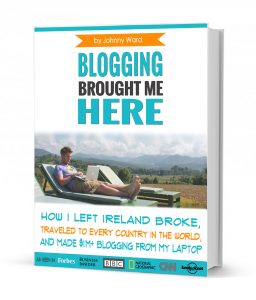 As you know, blogging changed my life. I left Ireland broke, with no plan, with just a one-way ticket to Thailand
and no money. Since then, I started a blog, then a digital media company, I've made
more than $1,500,000 USD, bought 4 properties and visited (almost) every country in the world. And I did it all from my laptop as I
travel the world and live my dream. I talk about how I did it, and how you can do it too, in my COMPLETELY FREE
Ebook, all 20,000
words or so. Just finish the process by putting in your email below and I'll mail it right out to you immediately. No spam ever too, I promise!
As you know, blogging changed my life. I left Ireland broke, with no plan, with just a one-way ticket to Thailand
and no money. Since then, I started a blog, then a digital media company, I've made
more than $1,500,000 USD, bought 4 properties and visited (almost) every country in the world. And I did it all from my laptop as I
travel the world and live my dream. I talk about how I did it, and how you can do it too, in my COMPLETELY FREE
Ebook, all 20,000
words or so. Just finish the process by putting in your email below and I'll mail it right out to you immediately. No spam ever too, I promise!