

Why So Many Online Slots Are Set in Places Travelers Already Recognize
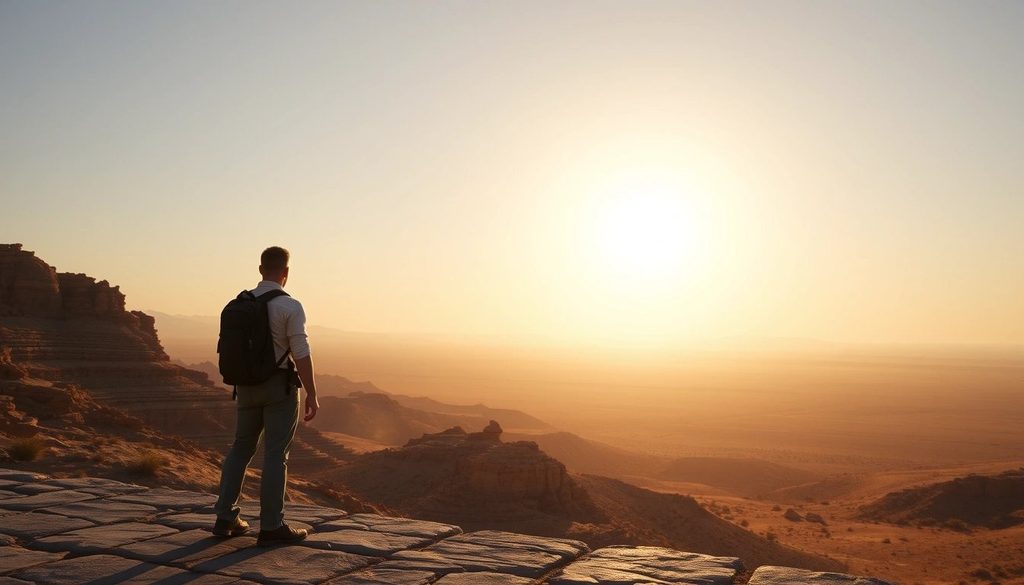
Anyone who has spent a decade chasing stamps in a passport learns to spot the shorthand a place uses to sell itself. A single silhouette does the work of a paragraph. The curve of a pyramid against a flat horizon says Egypt before you read a word. Three worn columns say Greece. A red pagoda roofline says China, and a wrought-iron lattice climbing into a gray Paris sky says France without any caption at all. Travelers collect these visual shortcuts the way other people collect fridge magnets, and once you carry a few hundred of them home, you start noticing them everywhere, including in the corners of the internet that have nothing to do with travel.
GamingToday’s online slots coverage catalogs how relentlessly these destination themes recur across hundreds of titles, and reading through it feels less like scanning a gambling page and more like flipping through a warped travel brochure where every country has been boiled down to its three most photogenic clichés.
One of those corners is the world of themed online slot games. Scroll through any catalog of them and you will feel a strange sense of having been here before. Not to a casino floor, but to actual destinations. There is the Nile. There is the Colosseum. There is a Mayan step pyramid buried in jungle, a Norwegian fjord, an Irish clifftop, a neon strip that could only be one desert city in Nevada. The settings are almost never invented. They lean, over and over, on the exact places a well-traveled reader would recognize on sight, and that is not an accident of taste. It is a design choice with roots in tourism, psychology, and the way human memory files away a skyline.
This piece is not a gambling guide. It is a look at why the same handful of destinations keep showing up on screens all over the world, what that says about how powerfully a famous place lodges itself in the collective imagination, and why the traveler who understands the pull of the familiar is better equipped to resist it and go somewhere stranger instead.
Table of contents
A Planet That Keeps Getting Smaller
The raw scale of modern travel explains why a few destinations became global shorthand in the first place. According to UN Tourism, roughly 1.52 billion international tourist arrivals were recorded in 2025, a gain of about 4.0 percent over the previous year and a full recovery past pre-pandemic levels. That is a staggering amount of collective movement, and it does not spread itself evenly across the map. It clusters, hard, around the same marquee names year after year.
In 2024, France drew about 102.0 million international visitors, more than any other country. Spain followed with roughly 93.7 million, the United States with about 72.3 million, Turkey with 60.5 million, and Italy with 57.7 million. A handful of nations absorb an outsized share of the planet’s wandering, and the landmarks inside them, the Eiffel Tower, the Sagrada Familia, Times Square, the Colosseum, become the most-photographed objects on Earth. When billions of people funnel toward the same few backdrops, those backdrops stop being mere places. They turn into a shared visual language, understood instantly whether you are in Lagos, Lima, or Leeds. A designer looking for an image that reads the same to every audience on the planet has a very short list to choose from, and tourism wrote it for them.
There is a practical trick here too. Use the familiar places as anchors and then push one country over. Everyone photographs the Colosseum, but the ancient sites of Puglia sit nearly empty. Everyone knows Giza, yet Sudan holds more pyramids than Egypt and almost no crowds. If you like watching how travel imagery leaks into unexpected corners of pop culture, GamingToday on Facebook posts the kind of destination-heavy visuals that make the overlap easy to spot, and spotting it trains the eye to see when a place is being sold to you as a symbol rather than a destination. Once you can name the trick, you stop falling for it.
Frequently Asked Questions
Do themed games actually influence where people decide to travel?
Directly, rarely. Indirectly, they add to the constant background hum of familiar imagery that shapes a destination’s reputation over years. A single game will not send anyone to Cairo, but games, films, ads, and social feeds together keep a handful of places top of mind while thousands of equally worthwhile destinations stay invisible. The influence is cumulative and slow, not a single trigger.
Which real-world destinations get reused the most?
The heavily borrowed shortlist tracks closely with the world’s most-visited landmarks: Egypt and its pyramids, Rome, ancient Greece, Paris, Las Vegas, and Mesoamerican sites like the Maya and Aztec temples. These share one trait, near-universal recognition, which is what makes them usable as instant visual shorthand across every language and market.
Are the historical and cultural details in these settings accurate?
Usually not, and accuracy is not the goal. The settings trade in mood and symbol, not fact, so they mix eras, blend unrelated cultures, and exaggerate freely. Treat any such depiction as a compressed cliché rather than a guide. If a place interests you, read a real history or a reputable travel source before forming an impression of it.
Notice which destinations you reach for by reflex, then ask whether the pull comes from real curiosity or from having seen the image a thousand times. Use the famous anchors as starting points, then push one country or region over toward the places no screen has bothered to flatten. That is usually where the crowds thin, the prices drop, and the genuine surprises still live.
Remember, never travel without travel insurance! And never overpay for travel insurance!
I use HeyMondo. You get INSTANT quotes. Super cheap, they actually pay out, AND they cover almost everywhere, where most insurance companies don't (even places like Central African Republic etc!). You can sign-up here. PS You even get 5% off if you use MY LINK! You can even sign up if you're already overseas and traveling, pretty cool.
Also, if you want to start a blog...I CAN HELP YOU!
Also, if you want to start a blog, and start to change your life, I'd love to help you! Email me on johnny@onestep4ward.com. In the meantime, check out my super easy blog post on how to start a travel blog in under 30 minutes, here! And if you just want to get cracking, use BlueHost at a discount, through me.
Also, (if you're like me, and awful with tech-stuff) email me and my team can get a blog up and running for you, designed and everything, for $699 - email johnny@onestep4ward.com to get started.
Do you work remotely? Are you a digital nomad/blogger etc? You need to be insured too.
I use SafetyWing for my digital nomad insurance. It covers me while I live overseas. It's just $10 a week, and it's amazing! No upfront fees, you just pay week by week, and you can sign up just for a week if you want, then switch it off and on whenever. You can read my review here, and you can sign-up here!





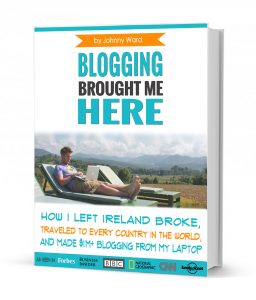 As you know, blogging changed my life. I left Ireland broke, with no plan, with just a one-way ticket to Thailand
and no money. Since then, I started a blog, then a digital media company, I've made
more than $1,500,000 USD, bought 4 properties and visited (almost) every country in the world. And I did it all from my laptop as I
travel the world and live my dream. I talk about how I did it, and how you can do it too, in my COMPLETELY FREE
Ebook, all 20,000
words or so. Just finish the process by putting in your email below and I'll mail it right out to you immediately. No spam ever too, I promise!
As you know, blogging changed my life. I left Ireland broke, with no plan, with just a one-way ticket to Thailand
and no money. Since then, I started a blog, then a digital media company, I've made
more than $1,500,000 USD, bought 4 properties and visited (almost) every country in the world. And I did it all from my laptop as I
travel the world and live my dream. I talk about how I did it, and how you can do it too, in my COMPLETELY FREE
Ebook, all 20,000
words or so. Just finish the process by putting in your email below and I'll mail it right out to you immediately. No spam ever too, I promise!