


The Ultimate Packing List for a Beach Holiday
The difference between a well-packed beach holiday and a poorly packed one shows up on the first morning. The well-packed version involves stepping out with everything needed for a full day, feeling comfortable and put-together, without a single detour to a resort shop to replace something forgotten or replace something that turned out to be inadequate. Getting there requires a list that is genuinely comprehensive rather than aspirationally minimal, and one that accounts for the specific demands of beach travel: sun, salt water, sand and the daily transition between the water and everything else. Swimwear is the foundation of the list, and Bydee bikinis sit at the top of the recommendation for quality and versatility: well-constructed, available in a range of cuts and colours, and made from fabric that holds its shape and colour across a week of daily use. Everything else on this list is built around the same principle: quality and function over quantity.
Table of contents
Swimwear
The swimwear decision is worth more thought than most people give it before a beach holiday. The calculation is simple: you will wear swimwear every day, sometimes multiple times a day, and a poor-quality piece that stretches out, fades or loses its shape by day three is both frustrating and expensive to replace at resort prices.
Two to three pieces is the right number for a week-long trip. One piece should be the strongest performer: your most flattering cut, your best colour, the one you feel most confident in. The second covers the days the first is drying. A third gives flexibility for days where the first has not dried by early morning or where the activity calls for something different, a sportier style for active water sports, a more elegant one-piece for a pool day at a hotel with a dress code.
Rinse each piece in fresh water after every use to remove salt and chlorine, which degrade elastane faster than anything else. Pack each piece flat rather than rolled to prevent the cups or structured elements from losing their shape in transit.
Coverups and Clothing
The coverup is the bridge between the beach and every other context the holiday involves, and its versatility determines how much of the rest of your suitcase you need. A loose linen shirt in white or a warm neutral covers the beach-to-lunch transition without requiring a full outfit change. A lightweight kaftan or a short linen dress serves the same purpose with more coverage. Both pack flat and weigh almost nothing.
Beyond coverups, the clothing required for a beach holiday is genuinely minimal. Two or three casual daytime dresses or a combination of shorts and relaxed tops. One or two elevated pieces for dinners or evenings, a midi dress and one outfit with trousers if the holiday includes anywhere that requires a step above casual. A lightweight cardigan or long-sleeve layer for air-conditioned restaurants and cooler evenings. A denim jacket if the destination has genuinely cool evenings.
The test for each clothing item before it goes in the suitcase is whether it works with at least two other things already packed. A piece that stands alone and does not combine with anything else is a piece that is taking up space without earning it.
Sun Protection
Sun protection is the category where skimping has the most immediate and most lasting consequences. Australian and New Zealand UV levels, and those of most tropical beach destinations, are high enough to cause serious burn in under thirty minutes of unprotected exposure. The three components that together provide adequate protection are sunscreen, a hat and sunglasses.
Sunscreen should be SPF 50+ and should be packed in a quantity sufficient for daily full-body application for the entire trip, reapplied after swimming and every two hours of continuous sun exposure. A 200ml bottle is usually right for a week for one person. Water-resistant formula matters because a sunscreen that washes off in the first swim leaves several hours of sun exposure unprotected. Pack sunscreen in your carry-on rather than checked luggage to avoid the panic of discovering it has been removed or lost with the bag.
A wide-brimmed hat provides sun protection for the face, neck and shoulders that sunscreen alone cannot reliably maintain across a full beach day, particularly in wind or water that removes and reduces the sunscreen layer. A packable straw hat that can be flattened in the suitcase and reshaped when you arrive is both practical and, in most beach destinations, an aesthetic asset.
Sunglasses with genuine UV400 protection are non-negotiable for eye health. The colour of the lens has no relationship to the UV protection it provides; only the UV400 rating on the lens matters. A frame that fits well and that you consistently want to wear is more valuable than one that is technically superior but that you leave at the hotel because it is uncomfortable.
Footwear
Three pairs of shoes is the right number for a beach holiday: a flat sandal for daily wear, a pair of thongs or flip-flops for the beach itself, and one pair with some elevation for evenings and dinners. Four or five pairs of shoes is a common overpacking mistake that adds significant weight for no meaningful additional utility.
The flat sandal should be the most considered purchase on the footwear list because it will be worn the most. A quality leather or quality synthetic strap sandal with a footbed that provides adequate arch support for walking across different surfaces is the piece that determines how much of the holiday your feet feel comfortable rather than strained. Cheap sandals that look similar but lack structural support feel fine for an hour and awful by afternoon.
Pack footwear in the spaces inside your shoes and around the edges of the suitcase rather than stacked in the centre. This distributes the weight and protects shoes from compression during transit.
Beach Bag Essentials
The beach bag itself should be large enough to carry the day’s requirements without requiring a separate bag. A woven straw or canvas tote with a zip closure is the right format: large, tolerates sand and water, and provides security for valuables. Pack the bag the night before to avoid rushed morning packing that leads to forgotten items.
The daily beach bag contents that most people wish they had consistently brought: sunscreen, a water bottle of adequate size (at least one litre per person per half day in heat), a physical book or e-reader in a waterproof case, a small waterproof pouch for phone, cards and cash, a hair tie and sunscreen for the hair if relevant, a lightweight sarong that doubles as a beach mat and a coverup, and a small snack.
The items most commonly forgotten and most commonly purchased at overpriced resort shops: lip balm with SPF, after-sun lotion, a waterproof phone case, and a dry bag for electronics on water-adjacent activities.
Toiletries and Beauty
Beach travel requires some specific additions to a standard toiletry kit and some things that can be left at home. Additions: after-sun lotion or aloe vera gel for sunburn and general skin soothing after daily sun exposure; a good quality hair product for salt-damaged hair, either a leave-in conditioner or a hair oil; and lip balm with SPF, which is the most overlooked sun protection item on most packing lists.
Things that can be left behind or significantly reduced: heavy skincare serums and multiple products that will be sweated off or washed off within an hour of application. A simple routine of gentle cleanser, SPF moisturiser and after-sun in the evening covers the actual skin needs of a beach holiday more effectively than a complicated multi-step routine that requires fifteen minutes and a stable shelf to execute.
The Principle Behind the List
The best-packed beach holiday suitcase is light enough to move easily, contains nothing that is not used, and includes everything that the week actually requires. The process of building that suitcase is essentially a conversation between what you plan to do and what you genuinely need to do it. Swimwear chosen for quality and versatility. Coverups that work for multiple contexts. Sun protection taken seriously. Footwear edited to three pairs. A beach bag packed the night before. Toiletries reduced to what the beach specifically requires. That is the list, and everything on it earns its place every day.
Remember, never travel without travel insurance! And never overpay for travel insurance!
I use HeyMondo. You get INSTANT quotes. Super cheap, they actually pay out, AND they cover almost everywhere, where most insurance companies don't (even places like Central African Republic etc!). You can sign-up here. PS You even get 5% off if you use MY LINK! You can even sign up if you're already overseas and traveling, pretty cool.
Also, if you want to start a blog...I CAN HELP YOU!
Also, if you want to start a blog, and start to change your life, I'd love to help you! Email me on johnny@onestep4ward.com. In the meantime, check out my super easy blog post on how to start a travel blog in under 30 minutes, here! And if you just want to get cracking, use BlueHost at a discount, through me.
Also, (if you're like me, and awful with tech-stuff) email me and my team can get a blog up and running for you, designed and everything, for $699 - email johnny@onestep4ward.com to get started.
Do you work remotely? Are you a digital nomad/blogger etc? You need to be insured too.
I use SafetyWing for my digital nomad insurance. It covers me while I live overseas. It's just $10 a week, and it's amazing! No upfront fees, you just pay week by week, and you can sign up just for a week if you want, then switch it off and on whenever. You can read my review here, and you can sign-up here!







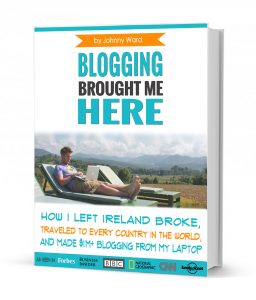 As you know, blogging changed my life. I left Ireland broke, with no plan, with just a one-way ticket to Thailand
and no money. Since then, I started a blog, then a digital media company, I've made
more than $1,500,000 USD, bought 4 properties and visited (almost) every country in the world. And I did it all from my laptop as I
travel the world and live my dream. I talk about how I did it, and how you can do it too, in my COMPLETELY FREE
Ebook, all 20,000
words or so. Just finish the process by putting in your email below and I'll mail it right out to you immediately. No spam ever too, I promise!
As you know, blogging changed my life. I left Ireland broke, with no plan, with just a one-way ticket to Thailand
and no money. Since then, I started a blog, then a digital media company, I've made
more than $1,500,000 USD, bought 4 properties and visited (almost) every country in the world. And I did it all from my laptop as I
travel the world and live my dream. I talk about how I did it, and how you can do it too, in my COMPLETELY FREE
Ebook, all 20,000
words or so. Just finish the process by putting in your email below and I'll mail it right out to you immediately. No spam ever too, I promise!