

Why Morocco Has Become a Top Choice for Affordable Surf Camps
Morocco’s Atlantic coastline has transformed into one of Europe’s most accessible surf destinations over the past decade. For UK students and young travellers seeking an introduction to surfing without premium European price tags, this North African country offers compelling advantages: consistent year-round waves, expert instruction at competitive rates, and cultural immersion in vibrant Moroccan communities.
Table of contents
- Why Morocco Has Become a Top Choice for Affordable Surf Camps
- What Makes Morocco an Ideal Destination for Surf Learners
- The Typical Surf Camp Experience Along the Atlantic Coast
- Beyond the Waves: Adventure Activities in Surf Packages
- Choosing the Right Surf Package for Your Skill Level
- Planning Your Trip: Practical Considerations
What Makes Morocco an Ideal Destination for Surf Learners
The stretch of coastline between Agadir and Essaouira has emerged as a focal point for international surf education. Operations like surf camps Morocco provide structured programmes combining daily lessons with accommodation and meals, creating infrastructure specifically designed for beginners and intermediate surfers.
Morocco’s geographical position delivers remarkably consistent surf conditions. The country’s 3,500 kilometres of Atlantic coastline receives swells from multiple directions throughout the year. Government investments in coastal infrastructure around surf villages like Taghazout Bay have supported the development of this tourism sector.
Several factors distinguish Morocco as a learning environment:
- Wave variety across skill levels – Beach breaks provide gentle foam waves for beginners, whilst point breaks challenge advancing surfers
- Extended surf season – Morocco offers surfable conditions year-round with over 300 days of sunshine
- Value proposition – Week-long packages including instruction, equipment, full board, and accommodation range from £350-450
- Cultural enrichment – The experience extends beyond surfing to include Moroccan hospitality, cuisine, and desert exploration
The Typical Surf Camp Experience Along the Atlantic Coast
Most Moroccan surf camps follow a structured daily rhythm designed to maximise learning whilst building community. Mornings begin with yoga sessions, followed by breakfast featuring traditional Moroccan breads and mint tea. The first surf session runs mid-morning, timed according to tide conditions.
Professional instructors assess each participant’s ability and form small groups accordingly. A typical beginner lesson starts with beach-based instruction covering paddling technique and board positioning. Participants then practice in waist-deep water under close supervision.
Afternoons might include a second surf session focused on free practice, allowing learners to implement morning lessons independently. Evening video analysis sessions have become standard, with instructors reviewing footage to identify improvement areas.
Accommodation and Meals at Moroccan Surf Camps
Established surf camps centre on villa-style properties with shared rooms, private bathrooms, and communal spaces. Rooftop terraces overlooking the ocean serve as gathering spots.
Camps employ local cooks who prepare traditional Moroccan dishes using fresh market ingredients. Expect tagines, couscous variations, grilled fish, and seasonal vegetables. Most packages include three meals daily.
The communal dining setup facilitates friendships amongst international participants. Camps typically host mixed groups of 15-25 guests.
Beyond the Waves: Adventure Activities in Surf Packages
Moroccan surf camps offer integrated adventure programming that leverages the region’s diverse geography. These activities provide variety whilst allowing recovery time from intensive surfing. The development of Morocco’s surf tourism has expanded beyond just wave-riding to encompass the country’s broader cultural and natural attractions.
Popular excursions in standard packages:
- Paradise Valley expeditions – Half-day trips featuring natural pools for swimming and cliff jumping
- Sahara desert experiences – Multi-day packages with camel trekking, Berber camp stays, and sandboarding
- Taghazout village tours – Guided walks including local markets and artisan workshops
- Essaouira day trips – Exploration of this UNESCO-listed coastal town
These activities introduce participants to Morocco’s cultural heritage. Longer packages sometimes incorporate Atlas mountain trekking, including ascents of Mount Toubkal, North Africa’s highest peak.
Choosing the Right Surf Package for Your Skill Level
Surf camps typically structure offerings around skill categories. Complete beginners benefit most from standard programmes emphasising foundational technique development through multiple daily sessions. These packages provide softboards in the 7-9 foot range, offering maximum stability.
Intermediate surfers who can already catch unbroken waves often select camps offering smaller group sizes and access to more challenging breaks. Equipment options expand to include shorter boards for more dynamic surfing.
Key considerations when selecting a programme:
- Instructor credentials and ratios – Seek camps maintaining maximum 6:1 student-to-instructor ratios
- Location proximity to varied breaks – Camps near multiple surf spots can adapt daily to conditions
- Group composition and atmosphere – Some camps skew younger whilst others attract professionals seeking quieter retreats
- Package flexibility – Options for extending stays or modifying activities demonstrate responsive programming
Surf Seasons and Conditions
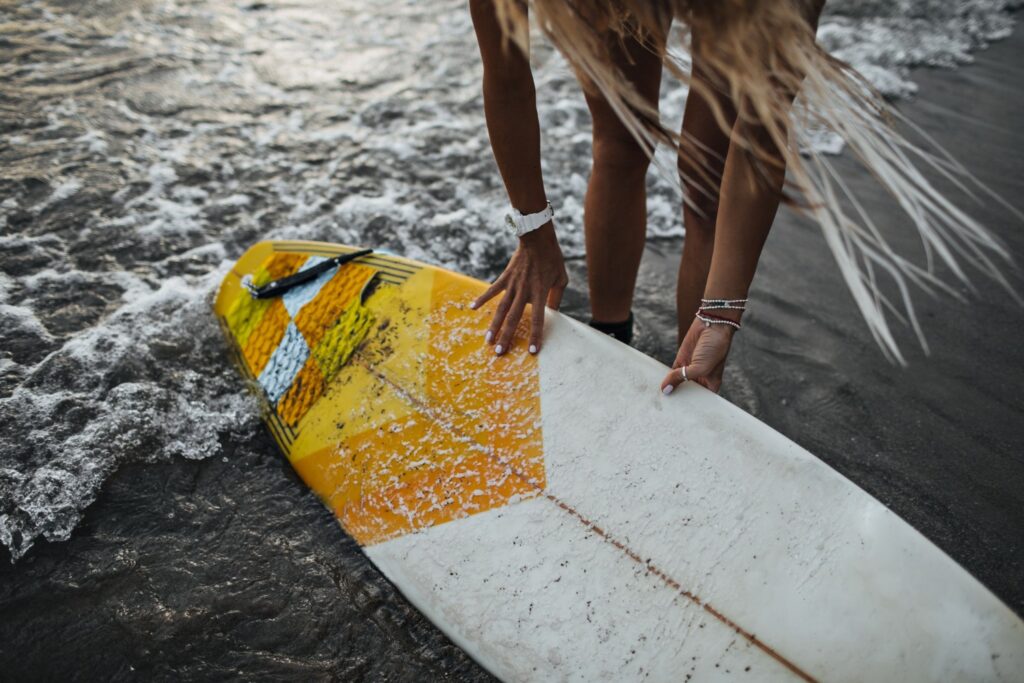
Morocco offers year-round surfing, but conditions vary by season:
May through August represents the optimal window for beginners. Summer months generate smaller swells (1-3 feet). Beach breaks around Tamraght and Taghazout provide gentle waves for first-timers.
September through November delivers moderate conditions for intermediate surfers. Swell sizes increase to 3-6 feet as autumn storms arrive. This transition period offers excellent value as crowds diminish.
December through April brings peak season, with consistent large swells (6-10 feet) attracting experienced surfers. Protected spots remain available, and camps relocate beginners during big swell periods.
Planning tips:
- Summer bookings – Reserve 2-3 months ahead for highest demand periods
- Winter visits – Specify skill level clearly for appropriate group placement
- Shoulder seasons – Often provide best conditions for mixed-ability groups
Planning Your Trip: Practical Considerations
Reaching Morocco’s surf coast from the UK requires minimal logistics. Multiple budget airlines operate direct flights to Agadir-Al Massira Airport, with journey times around 3.5 hours. Flight costs typically range from £80-150 return. Most surf camps include airport transfers.
Beyond the base camp fee, travellers need funds for beverages, optional treatments, and souvenirs. A daily budget of £15-25 covers these comfortably. Morocco’s tourism sector has grown significantly, with visitor numbers exceeding 14 million annually.
Essential packing includes reef-safe sunscreen and rash vests for sun protection. Modest clothing for villages respects local customs. UK citizens can stay up to 90 days without advance visa arrangements. Travel insurance covering water sports is essential.
Key takeaways for first-time visitors:
- Book during shoulder seasons for optimal weather, wave conditions, and value
- Verify package inclusions to avoid unexpected costs
- Join social media groups for your camp to connect with participants
- Allow recovery time as intensive surf instruction proves physically demanding
- Embrace cultural experiences beyond surfing to maximise Morocco
Morocco’s emergence as a premier surf learning destination reflects careful development balancing accessibility with authenticity. For UK students and young professionals seeking affordable surfing introduction within an exotic setting, Atlantic camps offer compelling value.
Remember, never travel without travel insurance! And never overpay for travel insurance!
I use HeyMondo. You get INSTANT quotes. Super cheap, they actually pay out, AND they cover almost everywhere, where most insurance companies don't (even places like Central African Republic etc!). You can sign-up here. PS You even get 5% off if you use MY LINK! You can even sign up if you're already overseas and traveling, pretty cool.
Also, if you want to start a blog...I CAN HELP YOU!
Also, if you want to start a blog, and start to change your life, I'd love to help you! Email me on johnny@onestep4ward.com. In the meantime, check out my super easy blog post on how to start a travel blog in under 30 minutes, here! And if you just want to get cracking, use BlueHost at a discount, through me.
Also, (if you're like me, and awful with tech-stuff) email me and my team can get a blog up and running for you, designed and everything, for $699 - email johnny@onestep4ward.com to get started.
Do you work remotely? Are you a digital nomad/blogger etc? You need to be insured too.
I use SafetyWing for my digital nomad insurance. It covers me while I live overseas. It's just $10 a week, and it's amazing! No upfront fees, you just pay week by week, and you can sign up just for a week if you want, then switch it off and on whenever. You can read my review here, and you can sign-up here!


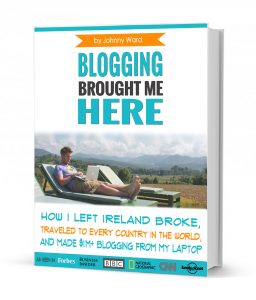 As you know, blogging changed my life. I left Ireland broke, with no plan, with just a one-way ticket to Thailand
and no money. Since then, I started a blog, then a digital media company, I've made
more than $1,500,000 USD, bought 4 properties and visited (almost) every country in the world. And I did it all from my laptop as I
travel the world and live my dream. I talk about how I did it, and how you can do it too, in my COMPLETELY FREE
Ebook, all 20,000
words or so. Just finish the process by putting in your email below and I'll mail it right out to you immediately. No spam ever too, I promise!
As you know, blogging changed my life. I left Ireland broke, with no plan, with just a one-way ticket to Thailand
and no money. Since then, I started a blog, then a digital media company, I've made
more than $1,500,000 USD, bought 4 properties and visited (almost) every country in the world. And I did it all from my laptop as I
travel the world and live my dream. I talk about how I did it, and how you can do it too, in my COMPLETELY FREE
Ebook, all 20,000
words or so. Just finish the process by putting in your email below and I'll mail it right out to you immediately. No spam ever too, I promise!