

The Gesture Gap: 5 Non-Verbal Signals That Mean Drastically Different Things Across Continents
Have you ever travelled to a country and realized that a simple gesture you use daily could confuse or, worse, offense? Human communication is a complex tapestry where less than 10% of information is conveyed through words. The rest lies in tone of voice and, crucially, body language. This gesture gap is a fascinating minefield of cultural misunderstandings.
Table of contents
- The Gesture Gap: 5 Non-Verbal Signals That Mean Drastically Different Things Across Continents
- The Thumbs-Up: From “Great” to “Get Lost”
- The OK Circle: Gold, Zero, or Personal Offence
- Crossed Fingers: From Good Luck to Offensive Gesture
- The Devil Horns: Rock ‘n’ Roll or Sign of Betrayal
- The Hand Call: Come Here or Disrespectful Goodbye
- Navigating the Non-Verbal Labyrinth
What is universally understood as positive or neutral can be a direct insult elsewhere. Understanding these nuances is fundamental for anyone interacting globally, whether in business, travel, or simply consuming content from diverse origins. If you spend hours relaxing by playing games or watching streamers from all over the world, such as those available on digital casino entertainment platforms like https://yep.casino/en-gb, the exposure to different cultures becomes even greater, and the need to recognise these non-verbal signals is surprising. Knowing where a thumbs-up is approving and where it’s offensive is more than a curiosity; it’s an essential social skill.
That is why, as we cross borders—whether geographical or digital—we need to have an updated non-verbal dictionary. Ignoring the cultural meaning of a gesture can turn a friendly interaction into a moment of deep embarrassment. Next, we will delve into five of the most notable examples of how the same hand action can tell completely different stories around the globe.
The Thumbs-Up: From “Great” to “Get Lost”
This is perhaps one of the most globalized gestures, thanks to its popularity in Western media and social networks. In the United States, Canada, and much of Europe, a thumbs-up is an unmistakable sign of approval, that everything is fine, or a hitchhiking request. It’s a positive, safe signal, almost synonymous with “Perfect!”.
However, this familiar attitude must be used with extreme caution in other parts of the world. In Middle Eastern countries (such as Iran and Iraq) and parts of West Africa, the gesture is considered a grave insult, equivalent to raising the middle finger. In some regions of Sardinia and Greece, it also carries very negative connotations. Therefore, when negotiating a price or providing feedback abroad, it is better to resort to a smile or a kind word to express your approval.
The OK Circle: Gold, Zero, or Personal Offence
The gesture where the index finger and thumb form a circle, leaving the other three fingers extended, is the epitome of “all right” or “perfect” in North America and most Western nations. It is simple, quick, and universally taught as a sign of excellent quality.
This gesture, however, has three very distinct and problematic interpretations in other cultures. In France and Belgium, it means “zero” or “worthless,” which can be a disaster if you are complimenting a meal. More seriously, in Brazil, Germany, and some Mediterranean countries, it is a vulgar and obscene insult, often interpreted as a reference to bodily orifices. The lesson here is clear: if you are unsure, keep your hands in your pockets.
Crossed Fingers: From Good Luck to Offensive Gesture
For many English speakers and in Western countries, crossing one’s fingers is a sincere plea for good luck, often accompanied by the phrase “I’ll cross my fingers for you.” It can also be used to void a promise or a lie, as if the gesture provides a kind of magical protection against karma.
However, when travelling through Asia, specifically Vietnam, it is crucial never to cross your fingers when addressing someone. There, this gesture represents the female genitalia and is considered highly offensive and indecent. In other contexts, especially in games, it can be a sign that you are cheating. Therefore, keep your wishes for good luck internal or use words.
The Devil Horns: Rock ‘n’ Roll or Sign of Betrayal
The gesture known as the “devil horns,” popularized by heavy metal legends like Ronnie James Dio, is globally recognized as a sign of rock ‘n’ roll, positive energy, and rebellion. It is the standard greeting at concerts and music festivals worldwide.
However, if used outside of a musical context, especially in Italy, Spain, Portugal, and other Mediterranean nations, the gesture (corna or cornuto) is considered an insult that implies the person is a cuckold (one with horns). It is an attack on one’s personal and marital honor. In Scandinavian countries, it can be interpreted as an invocation of bad luck.
The Hand Call: Come Here or Disrespectful Goodbye
In many Western cultures, the way to call someone to approach is to extend the hand with the palm facing up and wave the fingers. It is a casual and direct invitation to “come here.”
This simple gesture is viewed incredibly negatively in various parts of the world. In East Asia (the Philippines, Japan) and Latin American countries, addressing someone in this manner is considered extremely rude and disrespectful, as it is a gesture historically reserved for calling animals or, in the case of the Philippines, reserved only for calling dogs. Using this gesture for a person can result in glares and even accusations. The safest method is to wave with your palm facing down, moving all your fingers together.
Navigating the Non-Verbal Labyrinth
Mastering a new language is only half the battle of global communication; the other half lies in understanding the nuances of silence and gestures. The five examples above demonstrate that, even with increasing global interconnectedness, the local meaning of non-verbal signals persists and is powerful. Global fun and interaction, whether exploring exciting games or participating in international conversations, only increase when cultural diversity is approached with respect and knowledge.
Remember that the best strategy is always observation and humility. Before using a familiar gesture, watch how locals communicate. If you make a mistake, a smile and a verbal apology overcome almost all non-verbal offences.
Remember, never travel without travel insurance! And never overpay for travel insurance!
I use HeyMondo. You get INSTANT quotes. Super cheap, they actually pay out, AND they cover almost everywhere, where most insurance companies don't (even places like Central African Republic etc!). You can sign-up here. PS You even get 5% off if you use MY LINK! You can even sign up if you're already overseas and traveling, pretty cool.
Also, if you want to start a blog...I CAN HELP YOU!
Also, if you want to start a blog, and start to change your life, I'd love to help you! Email me on johnny@onestep4ward.com. In the meantime, check out my super easy blog post on how to start a travel blog in under 30 minutes, here! And if you just want to get cracking, use BlueHost at a discount, through me.
Also, (if you're like me, and awful with tech-stuff) email me and my team can get a blog up and running for you, designed and everything, for $699 - email johnny@onestep4ward.com to get started.
Do you work remotely? Are you a digital nomad/blogger etc? You need to be insured too.
I use SafetyWing for my digital nomad insurance. It covers me while I live overseas. It's just $10 a week, and it's amazing! No upfront fees, you just pay week by week, and you can sign up just for a week if you want, then switch it off and on whenever. You can read my review here, and you can sign-up here!

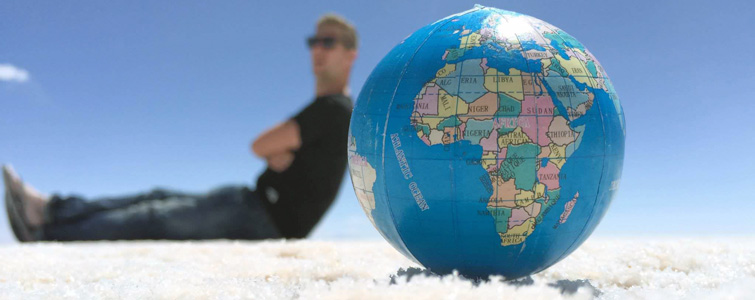




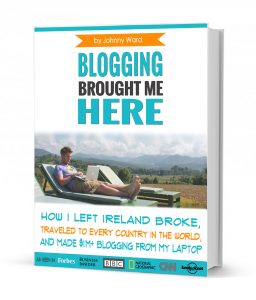 As you know, blogging changed my life. I left Ireland broke, with no plan, with just a one-way ticket to Thailand
and no money. Since then, I started a blog, then a digital media company, I've made
more than $1,500,000 USD, bought 4 properties and visited (almost) every country in the world. And I did it all from my laptop as I
travel the world and live my dream. I talk about how I did it, and how you can do it too, in my COMPLETELY FREE
Ebook, all 20,000
words or so. Just finish the process by putting in your email below and I'll mail it right out to you immediately. No spam ever too, I promise!
As you know, blogging changed my life. I left Ireland broke, with no plan, with just a one-way ticket to Thailand
and no money. Since then, I started a blog, then a digital media company, I've made
more than $1,500,000 USD, bought 4 properties and visited (almost) every country in the world. And I did it all from my laptop as I
travel the world and live my dream. I talk about how I did it, and how you can do it too, in my COMPLETELY FREE
Ebook, all 20,000
words or so. Just finish the process by putting in your email below and I'll mail it right out to you immediately. No spam ever too, I promise!