


Why Travel Changed the Way I Choose Shoes at Home
Before I traveled regularly, I thought I understood what made a good shoe. I chose pairs based on how they looked, how they fit into my wardrobe, and whether they felt comfortable enough for a few hours. If my feet were sore by the end of the day, I accepted it as normal.
Travel challenged that assumption very quickly.
When you travel, especially in walkable cities or destinations built for exploring, shoes stop being a background detail. They become one of the most important decisions you make before leaving the house. Long days, unfamiliar terrain, changing weather, and hours on your feet all reveal whether your footwear is actually working for you.
After a few trips, I realized that the way I chose shoes at home no longer made sense.
Travel Made Me Walk More Than I Ever Did at Home
One of the first things travel taught me was how much walking it involves. Even trips without hiking or outdoor adventures often mean far more steps than a typical day at home.
According to Vogue, travelers regularly log 15,000 to 20,000 steps per day while sightseeing in cities, museums, and cultural districts.
When you move that much, shoes that seem fine for errands or social plans quickly show their limits. Pressure points appear. Cushioning feels insufficient. Support matters in ways it never did during shorter outings.
Those long travel days made me realize that my everyday shoes were not designed for real movement.
Comfort Became the Starting Point
After experiencing the difference between tolerable shoes and genuinely comfortable ones, my priorities shifted.
Comfort stopped being something I hoped for and became something I expected. Shoes that left my feet tired or sore were no longer acceptable, even if they looked great.
This shift is reflected in broader consumer behavior. Research from Simon-Kucher shows that comfort and fit are now the top factors people consider when buying footwear, ranking higher than price or appearance for many shoppers.
Travel helped me understand why. When shoes support you properly, your energy lasts longer and the experience improves.
Versatility Started to Matter More Than Variety
Travel also taught me to value versatility over having many options. On trips, the best shoes were the ones that could handle multiple situations without needing to be swapped out constantly.
A single day might include airports, public transport, walking tours, cafés, and evening strolls. Shoes that worked across all of that became essential.
That logic followed me home. I stopped buying shoes for very specific scenarios and started choosing pairs that could handle walking, standing, and everyday movement without feeling out of place.
An Unexpected Lesson From Skate Shoes
One of the most surprising lessons came from skate-style footwear. I did not expect skate shoes to perform well during long travel days, but experience proved otherwise.
Skate shoes are built to handle impact and repeated movement on hard surfaces. That design translates well to urban environments. After wearing them during full days of exploring, I realized how stable and supportive they felt compared to some lightweight sneakers.
A pair of Globe skate shoes ended up becoming a regular part of my rotation. They handled long walks comfortably and felt grounded underfoot, which made a noticeable difference by the end of the day. That experience changed how I viewed casual footwear entirely.
Fit Became Non-Negotiable
Travel also forced me to get serious about fit. Shoes that were slightly off felt manageable at home but became painful after hours of walking.
I started paying closer attention to how shoes felt after extended wear rather than how they felt in the first five minutes. This meant walking around longer when trying shoes on and being more selective about sizing and shape.
Fit became something I evaluated based on real-world movement, not just standing in front of a mirror.
Durability Started to Influence My Choices
Another shift was how much I began to value durability. Shoes that survived travel tended to last longer overall. They held their structure, maintained comfort, and aged better than pairs designed mainly for appearance.
Instead of replacing shoes frequently, I started buying fewer pairs that could handle daily wear without breaking down quickly.
This approach made my shoe closet smaller but far more functional.
I Use Travel Logic When Shopping at Home Now
Today, choosing shoes feels similar to packing for a trip. I think about how long I will be on my feet, what surfaces I will walk on, and whether the shoes will still feel comfortable hours later.
I ask myself whether I could walk all day in them if I had to. If the answer is no, they usually do not come home with me.
Travel taught me that shoes should support how you actually live, not just how you want to look for a moment.
Final Thoughts
Travel changed the way I choose shoes at home by showing me what matters over time. Comfort, fit, and versatility became more important than novelty or trend.
Shoes that can handle long days away from home tend to be the ones that work best in everyday life too. Whether it is supportive sneakers, durable walking shoes, or skate styles like Globe that hold up under pressure, my choices now reflect what I learned on the road.
Once you experience how the right shoes can support real movement, it becomes hard to accept anything less.
Remember, never travel without travel insurance! And never overpay for travel insurance!
I use HeyMondo. You get INSTANT quotes. Super cheap, they actually pay out, AND they cover almost everywhere, where most insurance companies don't (even places like Central African Republic etc!). You can sign-up here. PS You even get 5% off if you use MY LINK! You can even sign up if you're already overseas and traveling, pretty cool.
Also, if you want to start a blog...I CAN HELP YOU!
Also, if you want to start a blog, and start to change your life, I'd love to help you! Email me on johnny@onestep4ward.com. In the meantime, check out my super easy blog post on how to start a travel blog in under 30 minutes, here! And if you just want to get cracking, use BlueHost at a discount, through me.
Also, (if you're like me, and awful with tech-stuff) email me and my team can get a blog up and running for you, designed and everything, for $699 - email johnny@onestep4ward.com to get started.
Do you work remotely? Are you a digital nomad/blogger etc? You need to be insured too.
I use SafetyWing for my digital nomad insurance. It covers me while I live overseas. It's just $10 a week, and it's amazing! No upfront fees, you just pay week by week, and you can sign up just for a week if you want, then switch it off and on whenever. You can read my review here, and you can sign-up here!






 As you know, blogging changed my life. I left Ireland broke, with no plan, with just a one-way ticket to Thailand
and no money. Since then, I started a blog, then a digital media company, I've made
more than $1,500,000 USD, bought 4 properties and visited (almost) every country in the world. And I did it all from my laptop as I
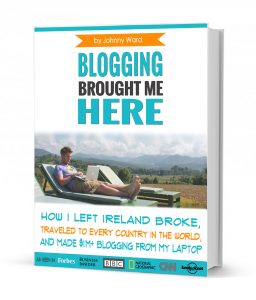
travel the world and live my dream. I talk about how I did it, and how you can do it too, in my COMPLETELY FREE
Ebook, all 20,000
words or so. Just finish the process by putting in your email below and I'll mail it right out to you immediately. No spam ever too, I promise!
As you know, blogging changed my life. I left Ireland broke, with no plan, with just a one-way ticket to Thailand
and no money. Since then, I started a blog, then a digital media company, I've made
more than $1,500,000 USD, bought 4 properties and visited (almost) every country in the world. And I did it all from my laptop as I
travel the world and live my dream. I talk about how I did it, and how you can do it too, in my COMPLETELY FREE
Ebook, all 20,000
words or so. Just finish the process by putting in your email below and I'll mail it right out to you immediately. No spam ever too, I promise!