

A card game can be a useful travelling companion, but the game that works at a hostel table may be awkward in a train seat. Before packing a deck or opening a browser, think about where you will actually play. Spider Solitaire makes that choice unusually clear because its layout is much larger than its rules first suggest.
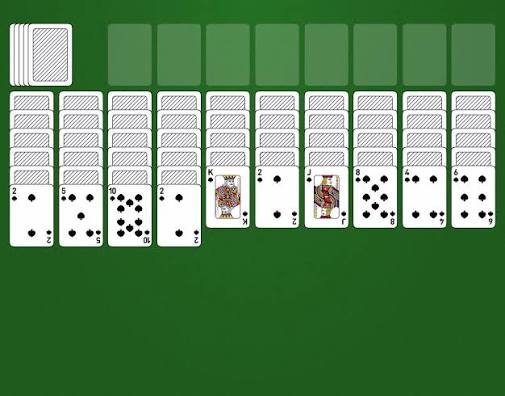
Open the free one suit Spider Solitaire board on PlaySolitaire and look at the ten columns. Those columns are the playing area you would need to reproduce with cards. This version puts every card in the same suit, which also makes it a useful place to learn the layout before deciding whether a physical game belongs in your travel bag.
A small box does not mean a small game
Bicycle’s Spider rules use two standard decks, not one. That means 104 cards before you make room for the stock and completed sequences. The columns also lengthen as cards move between them. A table that fits the first row may become uncomfortable once a game develops.
If you expect to play on a narrow tray, a browser board avoids spreading that layout across the surface. If you have a stable table and enjoy handling cards, two decks can work. Try laying out the game at home before leaving, using the actual cards you intend to pack. Do not discover halfway through a deal that the last column sits beyond the table edge.
Use one suit to learn the job of each area
The browser version separates the working columns, the stock and the spaces for finished runs. Build downward in the columns and complete a sequence from king through ace. The finished sequence leaves the playing area. Looking at where it goes is a more useful first lesson than trying to memorize every possible move.
A physical game made from two ordinary decks contains four suits. It therefore will not behave exactly like the simplified board you opened. Start with the easier version to understand the structure, then check how matching suits affects group movement before transferring the game to real cards. Recognizing that difference prevents a helpful practice session from becoming a misleading set of rules.
Match the game to the connection you have
A physical deck does not depend on mobile data, a charged screen or a website loading successfully. A browser game needs those conditions checked. Open the exact game on the device you plan to use before the journey, rather than assuming that a link saved in a message is the same as a game ready to play.
The linked site documents browser storage for unfinished games. Returning on another device is a different situation, and clearing site data can remove a saved position. If resuming matters to you, check that the position is still present in the same browser before relying on it. Keep access to tickets and travel information available; a card game is optional entertainment, not the reason to spend your last battery charge.
Check the rules before switching versions
Spider implementations do not agree on every detail. MobilityWare’s instructions, for example, describe a restriction on dealing stock cards into empty columns and an optional unrestricted setting. The linked browser board allows a stock deal with an empty column. A move you expect from one edition may therefore produce a different result in another.
That difference matters when your travel game changes between a phone and a physical deck. Choose a rule set and keep it consistent for that deal. If you are playing with cards, decide before starting how stock deals and empty columns work. During a journey, learning one clear version is usually more satisfying than arguing with an unfamiliar rule halfway through the game.
Choose a stopping point that respects the journey
Solitaire is for one player, so it does not require a companion to join in or stay interested. That is useful when people sharing a journey want different things from the same quiet stretch. It does not mean you have to finish a deal before looking up. Put the game aside when an announcement, a connection or the view needs your attention.
The best travel choice depends on the setting. A roomy table can justify two decks. A small seat may suit a readable browser board. An unreliable connection may make physical cards the simpler option. Spider is worth considering when its layout, rules and practical requirements fit the journey you are taking, rather than because it happened to be the first game you remembered.
Remember, never travel without travel insurance! And never overpay for travel insurance!
I use HeyMondo. You get INSTANT quotes. Super cheap, they actually pay out, AND they cover almost everywhere, where most insurance companies don't (even places like Central African Republic etc!). You can sign-up here. PS You even get 5% off if you use MY LINK! You can even sign up if you're already overseas and traveling, pretty cool.
Also, if you want to start a blog...I CAN HELP YOU!
Also, if you want to start a blog, and start to change your life, I'd love to help you! Email me on johnny@onestep4ward.com. In the meantime, check out my super easy blog post on how to start a travel blog in under 30 minutes, here! And if you just want to get cracking, use BlueHost at a discount, through me.
Also, (if you're like me, and awful with tech-stuff) email me and my team can get a blog up and running for you, designed and everything, for $699 - email johnny@onestep4ward.com to get started.
Do you work remotely? Are you a digital nomad/blogger etc? You need to be insured too.
I use SafetyWing for my digital nomad insurance. It covers me while I live overseas. It's just $10 a week, and it's amazing! No upfront fees, you just pay week by week, and you can sign up just for a week if you want, then switch it off and on whenever. You can read my review here, and you can sign-up here!







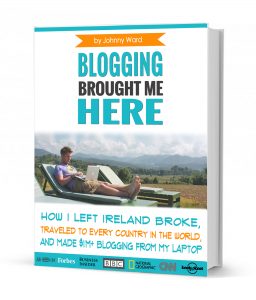 As you know, blogging changed my life. I left Ireland broke, with no plan, with just a one-way ticket to Thailand
and no money. Since then, I started a blog, then a digital media company, I've made
more than $1,500,000 USD, bought 4 properties and visited (almost) every country in the world. And I did it all from my laptop as I
travel the world and live my dream. I talk about how I did it, and how you can do it too, in my COMPLETELY FREE
Ebook, all 20,000
words or so. Just finish the process by putting in your email below and I'll mail it right out to you immediately. No spam ever too, I promise!