

A Practical Guide to Watching Exchange Rates While You Travel
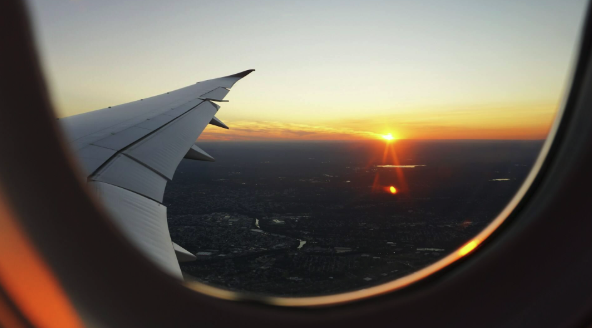
Travellers do not need to look far to convert their local currency into the currency of their destination. Most airports have kiosks that allow them to do this. But the ease of changing currency does not mean the rates will be good. Travellers who want the best value for their money need to understand how exchange rates work, when to convert and where to do it. Getting even one of these wrong can cost hundreds of pounds on a single trip.
Table of contents
What Are Exchange Rates
An exchange rate is the comparative value of one currency measured against a different currency (or basket of currencies). It tells us how much of our own currency we need to give up to receive a certain amount of a foreign currency.
For example, Spain is the most popular holiday destination for UK travellers. If the GBP/EUR exchange rate is 1.17, every £1 exchanged gives you €1.17. So a stronger pound means more euros and a weaker pound means less.
Exchange rates are either freely floating, where they react to forex market supply and demand, or fixed, where they are tied to another currency. The rate on a news website or a financial app is the mid-market rate banks use when transacting with one another. Consumers use a different rate that includes a markup from the service provider.
Travellers typically lose money in three ways including:
- Exchanging at an unfavourable time when the rate is working against them.
- Using a provider whose rate is significantly worse than the mid-market rate.
- Paying hidden fees or percentage charges that are added to the transaction without being clearly shown upfront.
How to Watch Exchange Rates Before and During Your Trip
The best way to avoid exchanging at a bad rate is to track the rate in advance. Free tools like TradingView allow travellers to monitor live currency pairs like GBP/EUR or GBP/USD and see how the rate has moved over the past weeks and months.
You can also set up a simple price alert on the Tradingview app to get a notification when the rate hits a desired level. This is the same approach that forex traders use to profit from currency trading. The aim here is to buy and sell currencies at the right time when it’s favourable. A good strategy should include these steps:
- Monitor rates a few weeks or even months before a trip so there is enough time to scout for a favourable exchange rate.
- Check the historical price of the rate over the past few months to see what a good rate looks like for you.
- Watch the trend to know the possible direction of the rate. For example, if the pound has been strengthening against the euro for several weeks, then it may be worth waiting a few more days before exchanging. However, if it has been weakening, then you may need to exchange sooner to save money.
- Watch the economic calendar for events that can move rates sharply. Central bank interest rate decisions, inflation reports, and elections in either country are common triggers.
- Know the mid-market rate (the rate banks use with each other) so you can spot when a provider adds a heavy markup.
You can exchange a portion of your travel budget at home before departure and top up during the trip if the rate improves. Try as much as possible not to leave it to the last minute because this means accepting whatever rate is available, which is rarely the best one.
How to Get the Best Rate Possible while you travel
Here are strategies travellers can use to minimise losses on exchange rates.
Compare rates across several providers
As said earlier, there are no shortages of exchange providers. This makes it easy to try different ones in search of the best with a low markup. This can include high street banks, online exchanges, travel money cards, and local bureaux.
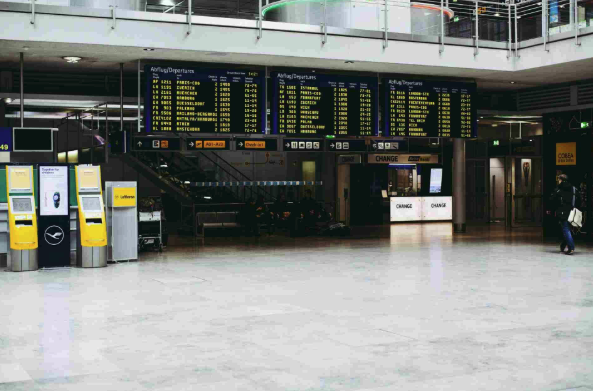
Airport currency kiosks are convenient but exchange rates at airports are almost always worse than what travellers can get elsewhere. The providers know that most people that exchange at the airport have no other option, so they charge wider markups and sometimes add flat fees on top.
Use a Travel Friendly Bank
A better option is to use a bank that offers competitive exchange rates for international spending. In the UK, several high street banks allow customers to order foreign currency in advance at better rates than airport kiosks. Barclays, for example, offers an online trading currency service that delivers euros or dollars to your door or to a local branch, often at rates closer to the mid-market price.
However, this may take a few business days, so it is not a last minute solution.
Choose the Right Credit Card
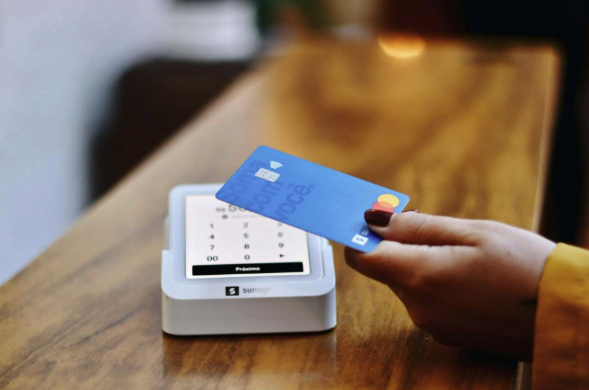
Many UK credit cards charge a foreign transaction fee of up to 3% on every purchase made abroad. On top of that, some card providers add a separate currency conversion fee. These small charges add up over a trip.
The good news is that several UK credit cards have no foreign transaction fees at all. The Barclaycard Rewards Visa, Halifax Clarity Mastercard and Lloyds Ultra Credit Card are all popular choices for travel. They use the Visa or Mastercard wholesale exchange rate, which is very close to the mid-market rate, and do not add a foreign transaction fee on spending.
One important tip is to always pay in the local currency when a card reader gives you the option. If a card machine in Spain offers to charge you in pounds instead of euros, choose euros. The machine’s own conversion rate is almost always worse than what your card provider will give you.
Make the Most of Your Travel Budget
Using these tips ensures travellers get a good exchange rate from a provider that does not add unnecessary fees. A few simple steps before departure can save travellers a significant amount of money and leave more in their budget to enjoy the trip itself.
Remember, never travel without travel insurance! And never overpay for travel insurance!
I use HeyMondo. You get INSTANT quotes. Super cheap, they actually pay out, AND they cover almost everywhere, where most insurance companies don't (even places like Central African Republic etc!). You can sign-up here. PS You even get 5% off if you use MY LINK! You can even sign up if you're already overseas and traveling, pretty cool.
Also, if you want to start a blog...I CAN HELP YOU!
Also, if you want to start a blog, and start to change your life, I'd love to help you! Email me on johnny@onestep4ward.com. In the meantime, check out my super easy blog post on how to start a travel blog in under 30 minutes, here! And if you just want to get cracking, use BlueHost at a discount, through me.
Also, (if you're like me, and awful with tech-stuff) email me and my team can get a blog up and running for you, designed and everything, for $699 - email johnny@onestep4ward.com to get started.
Do you work remotely? Are you a digital nomad/blogger etc? You need to be insured too.
I use SafetyWing for my digital nomad insurance. It covers me while I live overseas. It's just $10 a week, and it's amazing! No upfront fees, you just pay week by week, and you can sign up just for a week if you want, then switch it off and on whenever. You can read my review here, and you can sign-up here!









 As you know, blogging changed my life. I left Ireland broke, with no plan, with just a one-way ticket to Thailand
and no money. Since then, I started a blog, then a digital media company, I've made
more than $1,500,000 USD, bought 4 properties and visited (almost) every country in the world. And I did it all from my laptop as I
travel the world and live my dream. I talk about how I did it, and how you can do it too, in my COMPLETELY FREE
Ebook, all 20,000
words or so. Just finish the process by putting in your email below and I'll mail it right out to you immediately. No spam ever too, I promise!
As you know, blogging changed my life. I left Ireland broke, with no plan, with just a one-way ticket to Thailand
and no money. Since then, I started a blog, then a digital media company, I've made
more than $1,500,000 USD, bought 4 properties and visited (almost) every country in the world. And I did it all from my laptop as I
travel the world and live my dream. I talk about how I did it, and how you can do it too, in my COMPLETELY FREE
Ebook, all 20,000
words or so. Just finish the process by putting in your email below and I'll mail it right out to you immediately. No spam ever too, I promise!