

Alberta Became a Gaming Destination Without Building One
I have lost money in casinos on five continents. Macau baccarat rooms where nobody speaks and the stakes make your eyes water, a smoky poker table in Prague at 4am, the sensory assault of the Vegas Strip, and one very questionable blackjack shoe on a cruise ship somewhere off Mexico. Chasing every country on the map teaches you that gambling towns have a specific energy, and you can usually smell it before you see the neon.
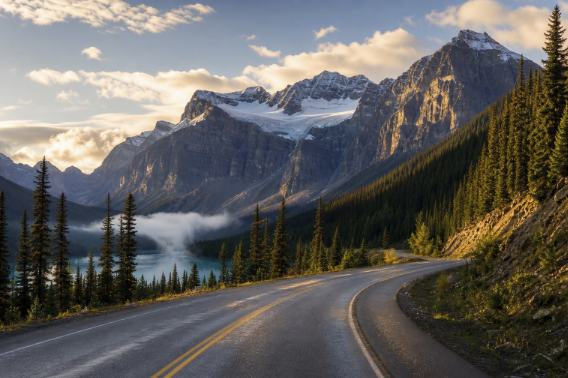
Alberta never had that energy. Calgary and Edmonton have casinos, sure, decent ones, but nobody has ever landed in YYC because of them. People come for the Rockies, the road trips, the rodeo if they time it right. The casinos were something you noticed on the way to something better.
Then 2026 happened, and Alberta quietly became one of the most interesting gambling jurisdictions in North America without pouring a single new foundation. The province opened its online casino market to licensed private operators, the second in Canada to do it after Ontario, and the “casino trip” stopped requiring a trip at all. That inversion fascinates me as someone who has spent twenty years telling people to get on planes.
Table of contents
How Alberta’s online casino boom rewrote the itinerary
Working out the best online casinos Alberta players can legally use became a genuine question this year, because for the first time there is an official answer instead of a shrug and an offshore URL. I only properly got my head around the new system after reading a new Ottawa Citizen guide that breaks down the licensed operators, how the provincial regulator vets them, and what actually changed for players who had been using grey-market sites for years. Worth a read if the details matter to you, and with money involved they should.
The short version is that Alberta copied the homework of the province next door and then localized it. Licensed sites, real oversight, player protections that actually have teeth. What struck me reading about it was how completely it flips the geography of gambling. For a century the entire model was “build a destination and make them come to you”. Nevada was built on that idea. Macau turbocharged it. Alberta just deleted the destination part entirely.
And I will be honest, a piece of me mourns that. I am a travel guy. The point of the casino, for me, was never really the cards.
The land-based circuit still deserves the drive
Here is what surprises people: Alberta already has a proper casino scene, it just never marketed itself like one. River Cree Resort and Casino sits on Enoch Cree Nation land at the edge of Edmonton and runs a genuinely buzzy poker room. Grey Eagle, on Tsuut’ina Nation land beside Calgary, packs its event centre with touring acts most weekends. Then there is a long tail of smaller venues scattered from Lethbridge up to Fort McMurray, the kind of places where the blackjack dealer knows the regulars by name.
None of these are Bellagios and that is exactly their charm. I have written before about the casinos I rated for live entertainment, and the thing that separates a great casino night from a sad one is never the square footage. It is the crowd, the energy, the sense that the room would be fun even if you never placed a bet. Grey Eagle on a concert night clears that bar easily.
My own Alberta casino memory is suitably unglamorous. A Tuesday night at River Cree years ago, passing through Edmonton in January with the temperature at minus thirty and precisely nothing else open. I sat at a five dollar blackjack table between an oil worker on his week off and a grandmother methodically destroying the dealer, and it turned into one of the warmest nights of that whole frozen trip. Nobody was pretending to be in Vegas. That is the Alberta casino experience in one scene, and no app will ever reproduce it.
The First Nations story matters here too. Most of Alberta’s destination casinos operate on First Nations land under agreements that send gaming revenue back into those communities. When the online market opened, one of the sharpest questions asked was what screen-based gambling would mean for those venues, and it is a fair one. A server in a resort casino has a job that a website does not replicate.
So no, the buildings are not obsolete. The honest way to say it is that Alberta now has two casino products. One is a night out. The other is a phone in your pocket, and they are barely the same hobby.
What actually changed in 2026
Canada runs gambling province by province, which is why the rules change every time you cross an invisible line on the prairie. Ontario went first, opening a regulated online market in 2022 and proving that players will abandon offshore sites when a legal alternative exists. Alberta watched for four years, passed its own legislation, and opened its market this year with Alberta Gaming, Liquor and Cannabis holding the reins.
Before that, Albertans gambled online anyway. Everyone knew it. The money went to operators licensed in Malta or Curacao, beyond the reach of any Canadian consumer protection, and if a site decided not to pay out, your options were a strongly worded email and acceptance. Regulation did not create online gambling in Alberta. It just gave the existing behaviour a referee.
For a traveler, the practical difference shows up in odd places. Hotel wifi in Canmore now connects you to the same licensed casino as a condo in downtown Calgary. The activity has detached itself from location entirely, which as a concept still breaks my brain a little. I spent years crossing borders to do things legally that were illegal at home. Alberta made the border irrelevant, at least within its own boundaries.
There is a wider pattern here that anyone who travels a lot will recognize. Currency exchange used to mean a booth at the airport and a bad rate, now it is an app. Booking a room in Ulaanbaatar used to require a fax machine and blind faith, now it takes ninety seconds on a phone. Gambling is simply the latest travel-adjacent activity to lose its geography, and the provinces that accepted this early are the ones writing the rules instead of chasing the players. Alberta read the moment correctly.
The rollout has its critics and they deserve a hearing. First Nations casino operators raised concerns about what an always-open online market means for venues that fund community programs, and public health voices asked whether a casino in every pocket is something a province should be making easier. Both arguments are serious. My take, for what a travel blogger’s take is worth, is that the money was already leaving through offshore sites, so the real choice was between regulated access and pretending. Pretending has a poor record.
Canadians bet far more than they let on
The polite national stereotype hides a serious gambling culture. The University of Alberta has hosted a research chair devoted entirely to gambling policy, national surveys keep finding that a solid majority of Canadian adults place a bet of some kind each year, everything from lottery tickets to slots, and the habit puts Canada firmly among the more enthusiastic betting nations on earth. The appetite predates the online expansion. The behaviour was always there, humming under the surface, long before any province built a legal market for it.
It tracks with what I have seen on the road. Canadians turn up at poker tables in Vegas and Macau in numbers that make no sense for a country of forty million. Every hostel card game from Bangkok to Cusco seems to include one Canadian who takes it slightly too seriously. A country with brutal winters and long distances between towns was always going to be good at indoor games of chance.
Alberta legalizing the online version did not create demand. It acknowledged it, and taxed it, which is the most Canadian resolution imaginable.
I find the cultural fit almost funny. This is a country that queues politely, apologizes when you step on its foot, and then bets the farm on a hockey series without blinking. The gap between the reputation and the behaviour is exactly the kind of thing you only learn by spending real time in a place, which is my standing argument for travel over statistics. Although in this case, pleasingly, the statistics agree.
Still build the trip
Now for the part I actually care about. If Alberta’s new market means you no longer need to travel for the casino, my argument is that you should travel anyway, because Alberta was never really about the casino and the province is carrying some of the best overland travel on the continent.
Start with the obvious. Banff and Lake Louise get the postcards, and they earn them, but the Icefields Parkway between Banff and Jasper is the single best driving day in North America. I have driven it twice and both times pulled over so often the four hour drive took nine. Glaciers hang off the peaks at eye level. Elk wander the shoulder like they own the deed, which frankly they do.
Jasper deserves its own paragraph while we are at it. Everyone stops at Banff because it is closer to Calgary, and Banff is wonderful, but Jasper is what Banff was before the crowds found it. Dark sky preserve, quiet lakes, a town that still feels like a town rather than an outdoor mall. Stay two nights minimum. Canoe on Maligne Lake if the weather cooperates and thank me later.
Head east instead and the province turns alien. Drumheller and the badlands look like Mars with better museums, and the Royal Tyrrell has the best dinosaur collection I have seen anywhere. Canada rewards this kind of zigzag travel generously, and I put together my list of favourite things to do in Canada after realizing most visitors see about five percent of what the country offers. Alberta alone could fill a fortnight without repeating itself once, mountains into prairie into badlands into boreal forest.
Calgary and Edmonton hold the urban end. Calgary during Stampede is chaos of the best kind, ten days where an entire city commits to the bit. Edmonton has the river valley, the festival summers, and yes, River Cree on the edge of town if you want that night out. Fold a casino evening into a Rockies trip and you get the best version of both. The online market cannot give you that, no matter how good the app is.
The math of it has changed though, and I think for the better. Before, the casino was occasionally the excuse for the trip. Now the trip needs no excuse, and the gambling has become fully optional, a thing you can do from the hot tub in Canmore or skip entirely. Travel that sheds its obligations usually improves.
If you want the practical version, here it is. Fly into Calgary, because the flight options are better and the airport is painless. Give the mountains at least five days, more if you can steal them. Point the car at Drumheller for two, loop back through Edmonton if River Cree or a concert at Grey Eagle appeals, and leave one evening completely unplanned, because Alberta has a habit of filling those on its own. A northern lights display over Jasper cost me nothing and outranked every casino floor I have ever walked, and I say that as someone who genuinely enjoys casino floors.
One closing note because it belongs in any honest piece about this. Gambling in Alberta is legal from 18, younger than the 19 most provinces require, and the province runs its GameSense program precisely because easy access and self-control make awkward neighbours. Set a number before you play, online or on the floor at Grey Eagle, and treat the number as law. CAMH offers free support across Canada if the game ever stops being a game. The mountains, for the record, remain free.
Remember, never travel without travel insurance! And never overpay for travel insurance!
I use HeyMondo. You get INSTANT quotes. Super cheap, they actually pay out, AND they cover almost everywhere, where most insurance companies don't (even places like Central African Republic etc!). You can sign-up here. PS You even get 5% off if you use MY LINK! You can even sign up if you're already overseas and traveling, pretty cool.
Also, if you want to start a blog...I CAN HELP YOU!
Also, if you want to start a blog, and start to change your life, I'd love to help you! Email me on johnny@onestep4ward.com. In the meantime, check out my super easy blog post on how to start a travel blog in under 30 minutes, here! And if you just want to get cracking, use BlueHost at a discount, through me.
Also, (if you're like me, and awful with tech-stuff) email me and my team can get a blog up and running for you, designed and everything, for $699 - email johnny@onestep4ward.com to get started.
Do you work remotely? Are you a digital nomad/blogger etc? You need to be insured too.
I use SafetyWing for my digital nomad insurance. It covers me while I live overseas. It's just $10 a week, and it's amazing! No upfront fees, you just pay week by week, and you can sign up just for a week if you want, then switch it off and on whenever. You can read my review here, and you can sign-up here!


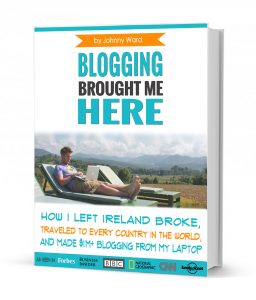 As you know, blogging changed my life. I left Ireland broke, with no plan, with just a one-way ticket to Thailand
and no money. Since then, I started a blog, then a digital media company, I've made
more than $1,500,000 USD, bought 4 properties and visited (almost) every country in the world. And I did it all from my laptop as I
travel the world and live my dream. I talk about how I did it, and how you can do it too, in my COMPLETELY FREE
Ebook, all 20,000
words or so. Just finish the process by putting in your email below and I'll mail it right out to you immediately. No spam ever too, I promise!
As you know, blogging changed my life. I left Ireland broke, with no plan, with just a one-way ticket to Thailand
and no money. Since then, I started a blog, then a digital media company, I've made
more than $1,500,000 USD, bought 4 properties and visited (almost) every country in the world. And I did it all from my laptop as I
travel the world and live my dream. I talk about how I did it, and how you can do it too, in my COMPLETELY FREE
Ebook, all 20,000
words or so. Just finish the process by putting in your email below and I'll mail it right out to you immediately. No spam ever too, I promise!