

Climbing Mount Vinson; Antarctica’s Highest Mountain and my 7th summit
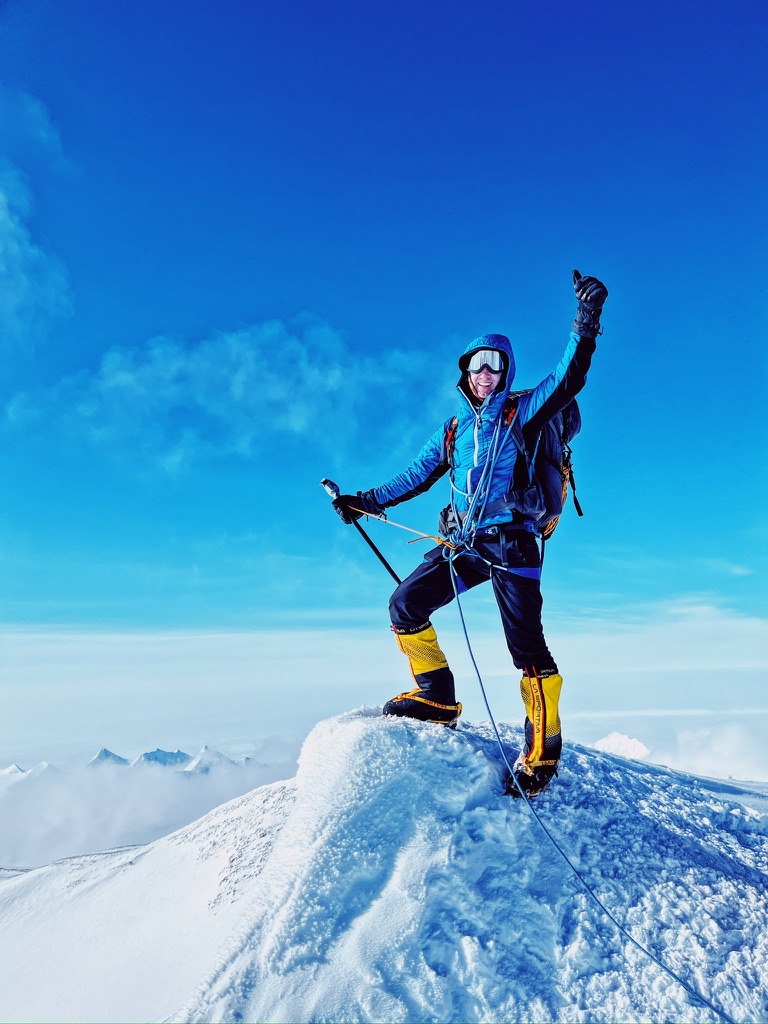
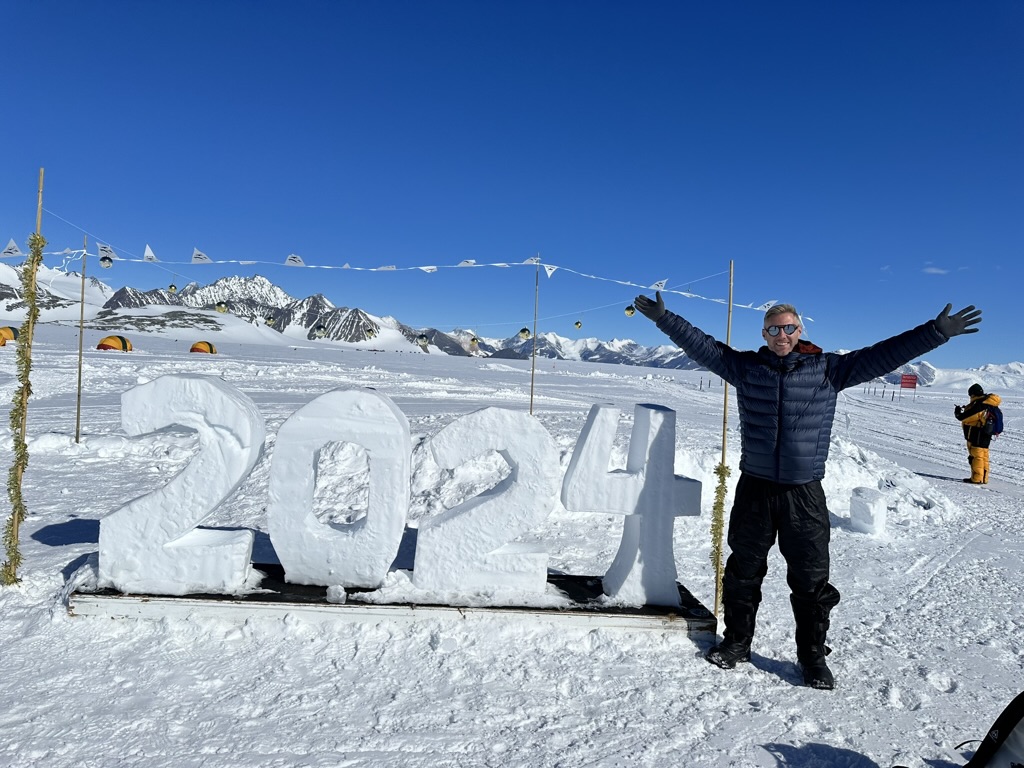
On 7th January 2024, standing on the summit of Mount Vinson in Antarctica, I finally completed the Seven Summits. And became the youngest person ever to visit every country and climb the 7 summits. It was a huge day for me.
At 4,892 metres (just over 16,000 feet), Vinson isn’t the highest or the most technical of the seven, but for me it carried a different kind of weight. It was the last one.
I hadn’t planned it that way. In a perfect world, I would have saved Everest for number seven. Finishing the Seven Summits on the highest mountain on Earth would have been the obvious ending. But these expeditions are brutally expensive, and when you start chasing the Seven Summits, there’s no guarantee you’ll ever be able to afford all seven.
So for me, after climbing five, I had just Everest and Vinson left. I’d managed to save enough money for one of them, but not both. So I had a decision to make.
Everest felt too important to gamble on. If my finances changed, if business went badly, or if life simply got in the way, I didn’t want to look back knowing I’d had the chance to climb the highest mountain in the world and passed it up. So I spent the money I had saved and climbed Everest as summit number six.
That left Vinson.
At that point, all I could do was hope I’d somehow find the money to finish what I’d started. Thankfully, around six months later, a few things went my way in business. I managed to put the money together, booked Antarctica, and suddenly the Seven Summits were back on. And that is how Mount Vinson, one of the most remote (and expensive!) mountains on Earth, became my seventh and final summit of my journey.
Table of contents
How Much Does It Cost to Climb Mount Vinson?
It’s a disgusting number. But I’m always honest about this stuff, so here we go….
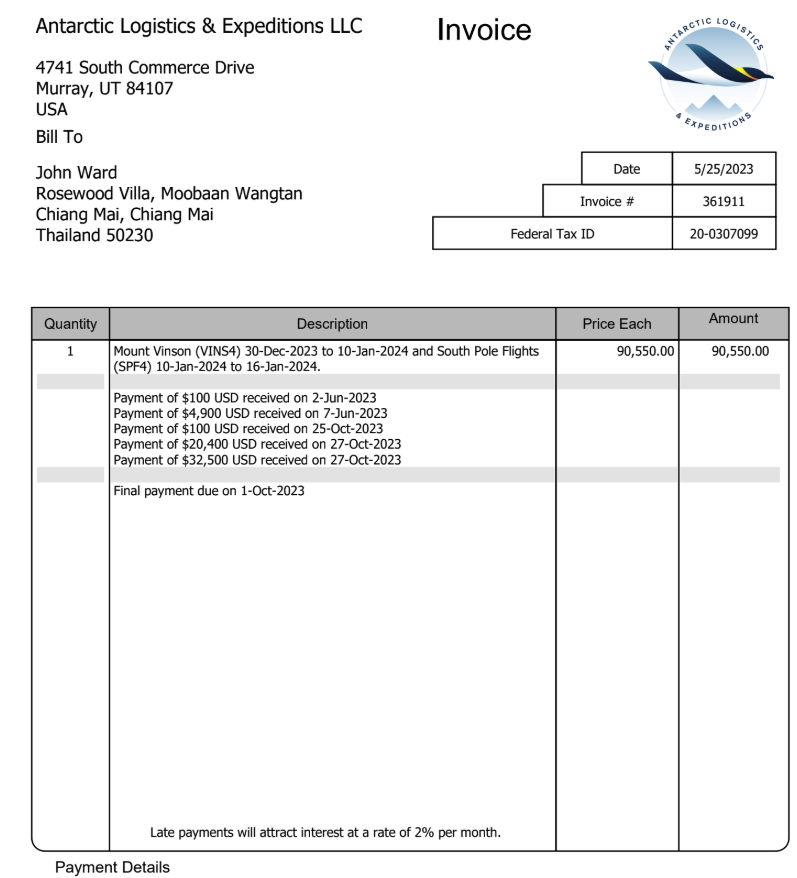
I paid $90k+ for my expedition to Mount Vinson AND the South Pole. When I include extra flights, hotels, gear etc, it’s probably closer to $95k. That’s 2 trips in one, as I was already on the continent – which is the most expensive part. So I ticked 2 boxes and minimised costs to a still disgusting $92k. That being said, to climb Mount Vinson alone is $58k in 2026. And to reach the South Pole is $67k by plane ($93k by ski – my long term place once iI can afford it again, but I can’t yet sadly). So I ‘saved’ $33k by combining them.
MY DISGUSTING INVOICE:
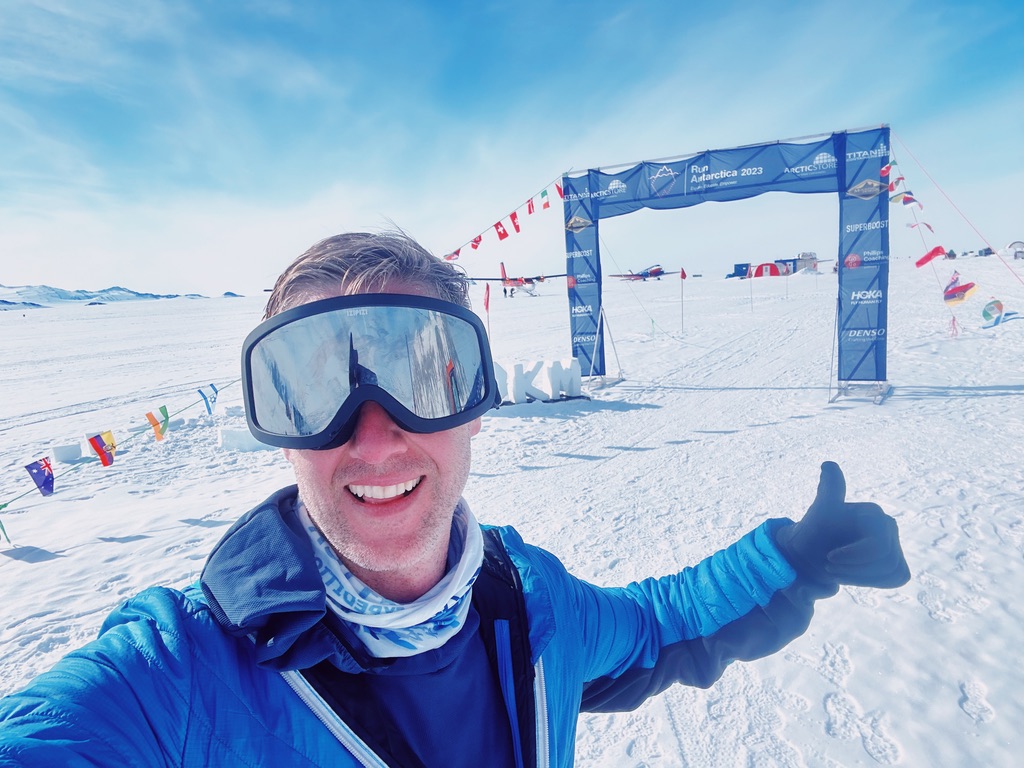
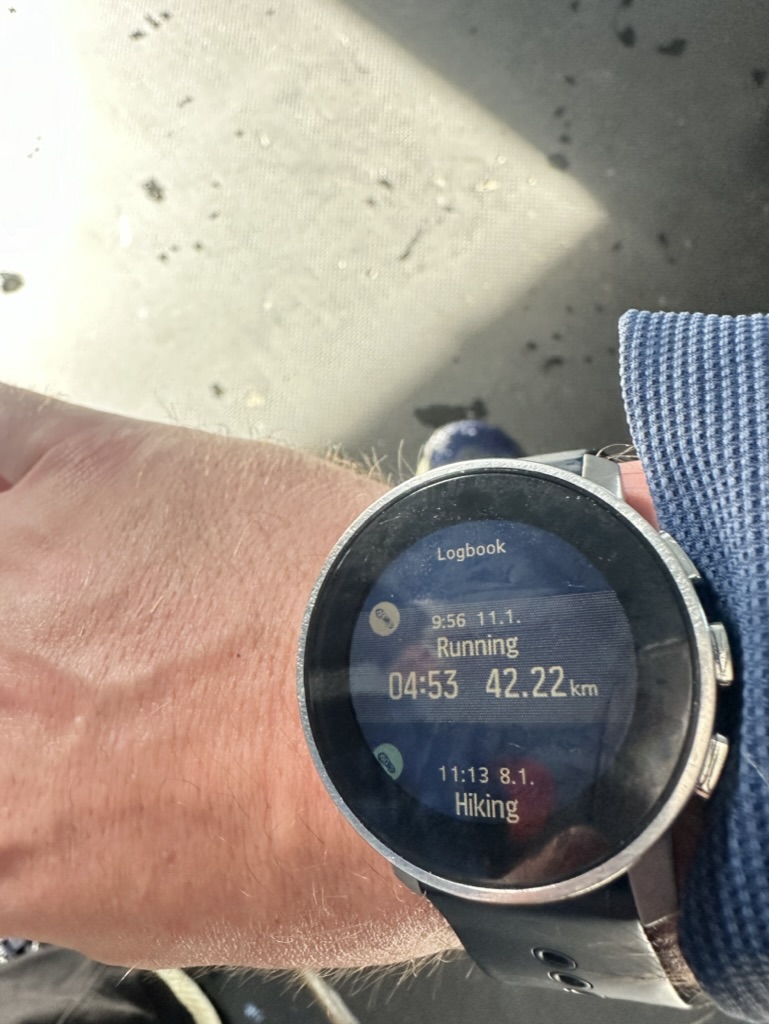
I also took the opportunity to run the Antarctica marathon there ‘for free’, as the route was still up from the company who organises. So after coming down from Mount Vinson, like a weirdo, I went and ran 42km/26miles is -40 on my own. That’s normally $23k, so does that also count as saving another $23k? Probably not, but still
There is no cheaper way, that’s the reality of it. The company, antarctic-logistics.com, have an entire monopoly on the whole thing. So even if you book through a mountaineering company, that company is simply forced to outsource to these guys anyway. So if you’re going, go direct with them and save that margin.
Climbing Mount Vinson; My Experience
Getting to Antarctica (from Thailand!)
I had climbed Everest only six months earlier, so thankfully I was still in pretty good shape. My bigger concern was Christmas. I didn’t want to miss it, so I stayed home in Thailand until December 26th and then began the long journey south.
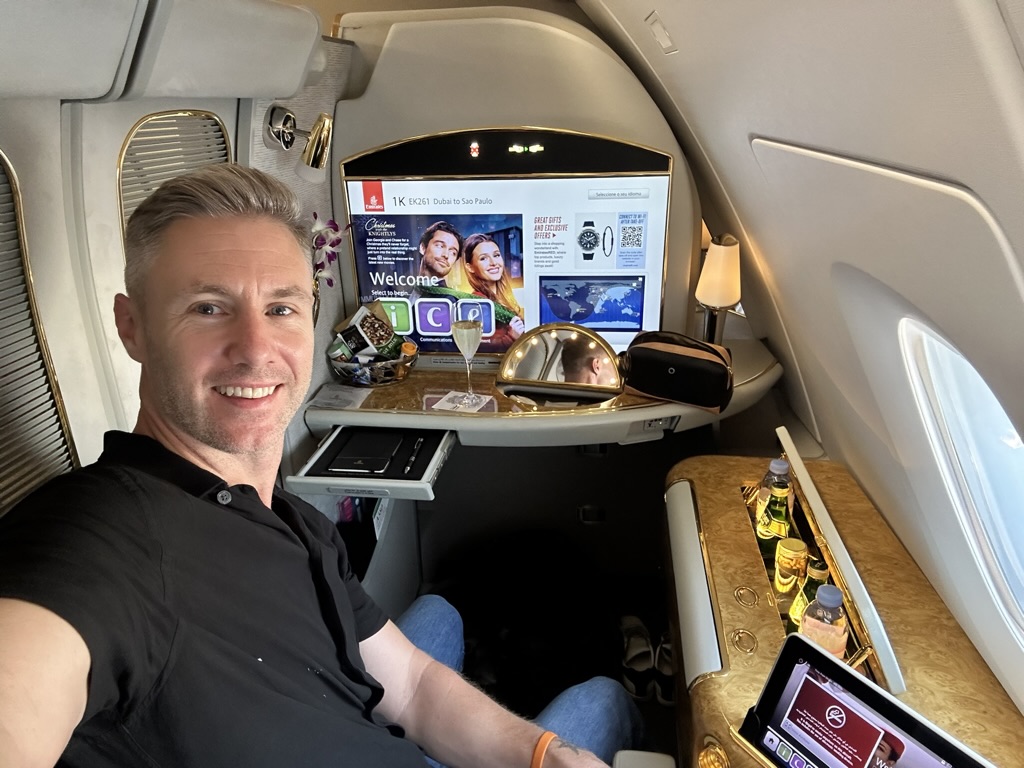
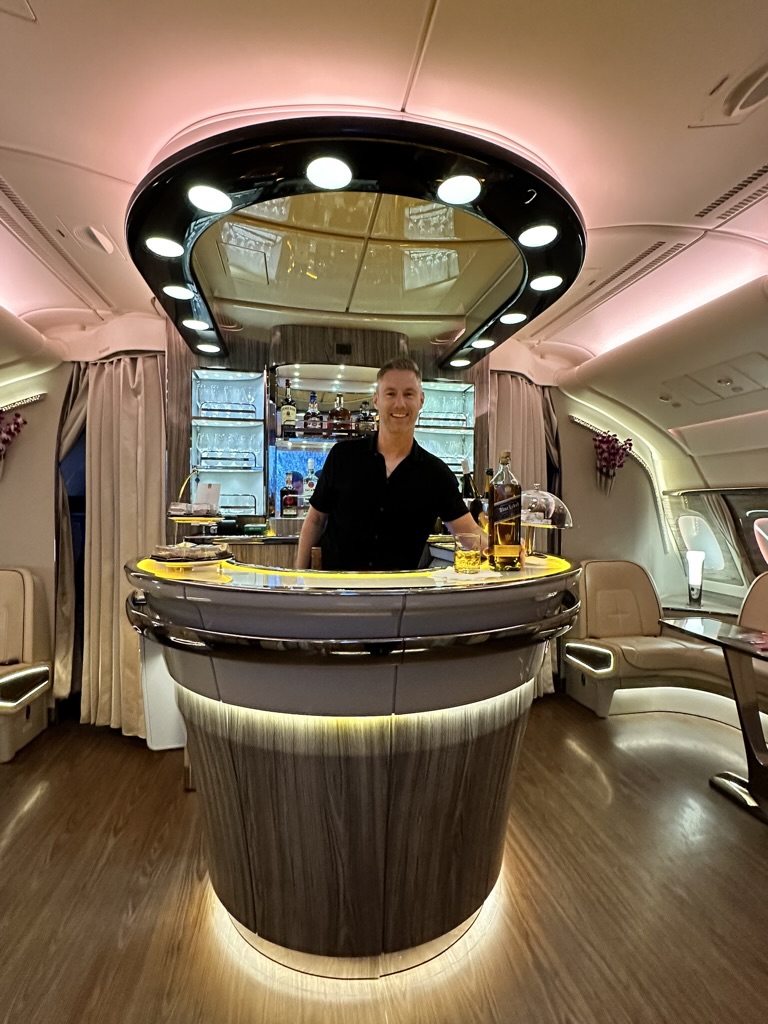
Getting from Bangkok to Antarctica is about as ridiculous as it sounds. I burned pretty much my entire stash of air miles to tick of a bucket list item by flying first class with Emirates from Bangkok to Dubai, then on to São Paulo, before eventually connecting down to Punta Arenas in southern Chile. It took me a couple of days of travelling just to get there, but it was AMAZING. I blogged about that HERE too.
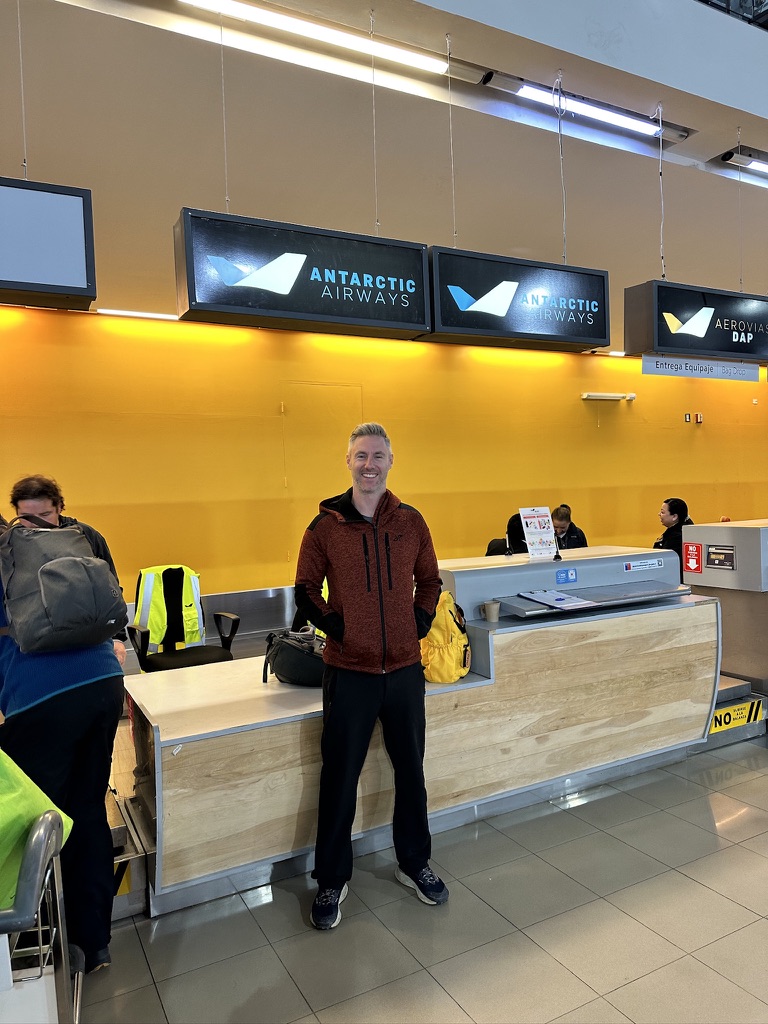
Punta Arenas is where you meet the team from Antarctic Logistics & Expeditions (ALE), the company that handles the flights and logistics into the interior of Antarctica. On December 30th, I finally met the other climbers on my expedition and we had our briefing and began preparing our equipment.
As it turned out, we had a brilliant group. I’m still in contact with a few of them today. I suppose that shouldn’t be too surprising spending this sort of money to travel to one of the most remote places on Earth and climb a mountain tends to attract a pretty cool group and an unusual collection of travellers.
Then, on January 1st 2024, it was time to fly to Antarctica. And this isn’t your normal commercial flight. Or actually, weirdly it kinda was!
ALE operates flights from Punta Arenas directly into the Antarctic interior, landing on a specially maintained blue-ice runway beside Union Glacier. During the season I travelled, the operation used a Boeing 757 operated by Loftleiðir Icelandic, part of Icelandair Group. Somehow, despite where you’re going, the whole process in Punta Arenas feels surprisingly like taking a normal international flight — check-in, boarding passes, cabin crew, the lot. Then you remember that your destination is a runway made of ice in the middle of Antarctica. The flight takes roughly five hours. As we got deeper into Antarctica, the views outside became increasingly surreal: nothing but an enormous white desert stretching towards the horizon. Eventually we descended onto the blue-ice runway at Union Glacier, ALE’s main base deep in the Antarctic interior.
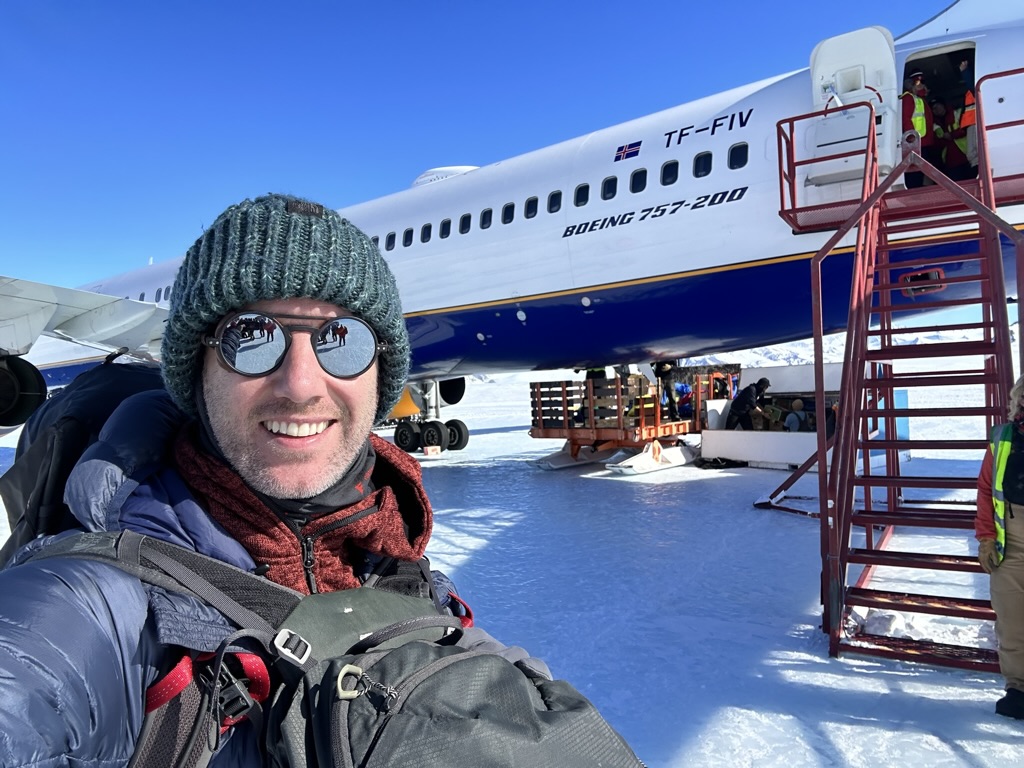
This was completely different from the Antarctica I had experienced before. I’d already visited the continent by expedition cruise, which is how almost everyone reaches Antarctica. Those trips generally visit the Antarctic Peninsul, the long finger of land stretching north towards South America. Union Glacier is another world entirely.
We were now far into the interior of the continent, surrounded by seemingly endless ice and mountains, hundreds of kilometres from the coast. Flying over that vast white wilderness and then landing in the middle of it was one of those rare travel moments when somewhere feels every bit as extraordinary as you had imagined. And we hadn’t even started climbing yet.
Getting to Mount Vinson Base Camp
The original plan was to spend our first night at Union Glacier. It would give us a chance to settle in, get accustomed to the cold and altitude, sort our equipment and generally come down from the adrenaline of having just landed in the middle of Antarctica. But Antarctica doesn’t care much about your itinerary.
Almost as soon as we arrived, we were told that bad weather was on the way. Low cloud and poor visibility were forecast, and if we didn’t fly to Mount Vinson immediately, there was a real possibility we could be stuck at Union Glacier for another three or four days waiting for the next weather window.
That’s one of the realities of climbing in Antarctica. Everything revolves around the weather. Flights into the interior, flights between camps and ultimately your chances of climbing the mountain can all be delayed for days at a time.
And when you’ve spent an obscene amount of money just to be there, sitting around watching your expedition disappear into a weather system is not an appealing prospect. My understanding was that once the expedition was underway and we had made it onto the ice, weather delays were simply part of the risk you accepted. There was no magical refund coming because Antarctica decided not to cooperate.
So when they told us we had a chance to fly straight to Vinson Base Camp, the reaction was basically: fuck it, let’s go.
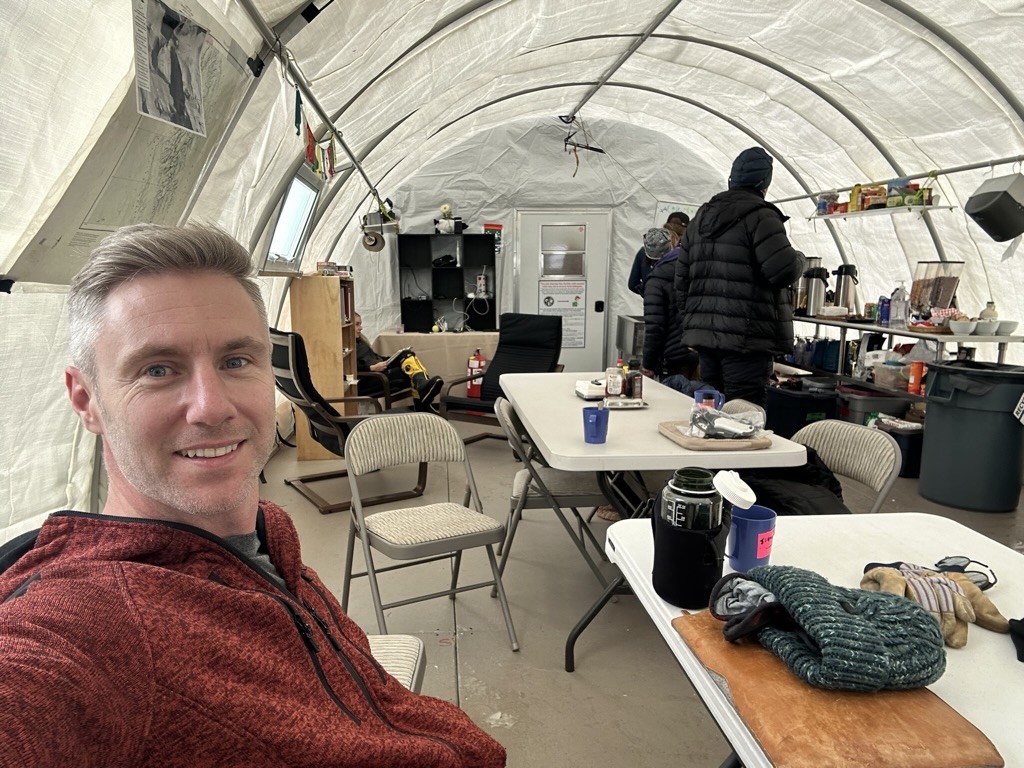
We barely had time to settle into Union Glacier. We registered at camp, reorganised what we needed and almost immediately climbed aboard one of ALE’s small ski-equipped aircraft for the flight deeper into the Ellsworth Mountains. Not long afterwards, we landed at Mount Vinson Base Camp. And suddenly it was real (and FUCKING COLD!)
After years of working my way through the Seven Summits, there I was, standing at the base of number seven, surrounded by glaciers and enormous white mountains in the middle of Antarctica. We arrived at Vinson Base Camp on January 1st, 2024. We spent that night and January 2nd at Base Camp, resting, preparing our equipment and getting ready for what was ahead. Also, at camp I met another irishman, a legend in fact. Rob was camp manager, and Rob is the the 1st irishman to climb K2 and come down alive (sadly he’s the 2nd irishman to climb K2). Hearing his stories was something else.
Normally you do everything a bit slower. So the pace as a bit of a worry. The standard trip would be a night or 2 at Union Glacier, then 2 or 3 nights at Vinson Base Camp, then a slow ride up the mountain with plenty of acclimitisation days, and a stop on the way back down to recover.
But with the crappy weather forecasts, everything was a rush, so we were looking like this:
My Vinson schedule
Jan 1: Land in Antarctica, STRAIGHT transfer by prop plane to Vinson Base Camp. Sleep.
Jan 2: Just 1 day acclimitsation. Sleep at Base Camp.
Jan 3: Base Camp to Low Camp
Jan 4: 1 day acclimitsation
Jan 5: Low camp to High camp
Jan 6: 1 day acclimitsation
Jan 7: SUMMIT, back to High Camp
Jan 8: Back down to Base Camp
Jan 9: Fly back to Union Glacier.
- In a perfect world, we would have more rest, more time at high camps
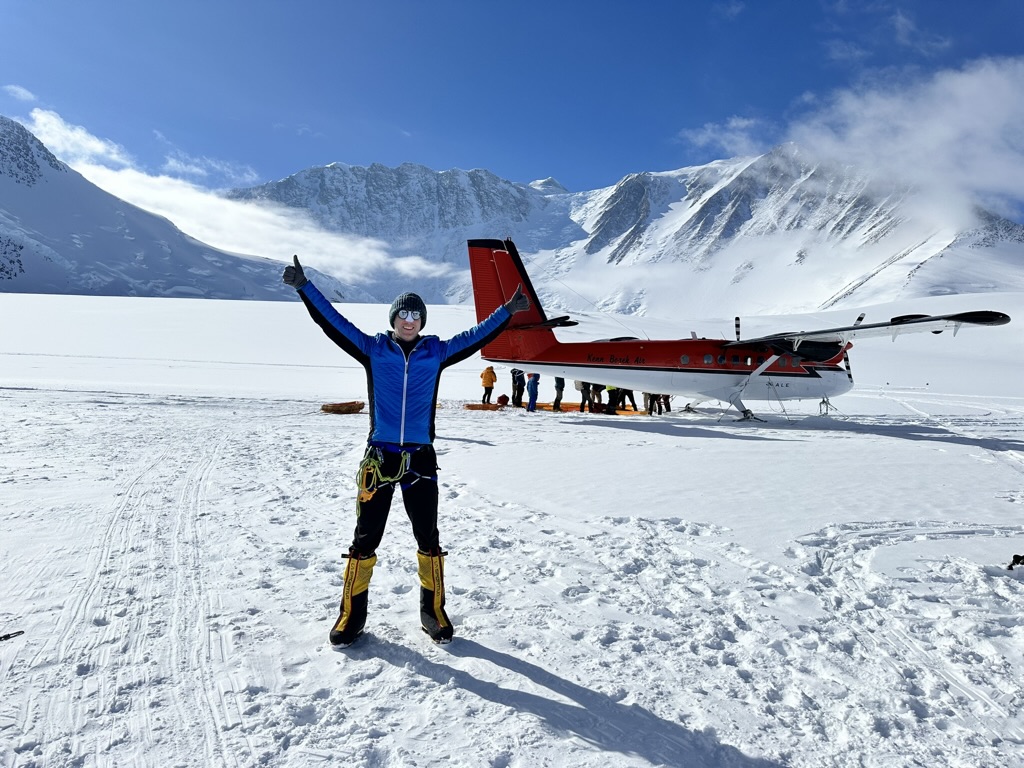
Then, on January 3rd, the actual climb began.
Base Camp to Low Camp
The basic structure of a Mount Vinson expedition is actually pretty simple. You start in Punta Arenas in Chile, fly into Antarctica and, normally, spend a night at Union Glacier. From there you fly to Mount Vinson Base Camp, then climb progressively higher through Low Camp and High Camp before making your summit attempt. After summiting, you reverse the whole process: back down through the camps, eventually returning to Base Camp, flying back to Union Glacier and finally escaping Antarctica altogether.
On paper, the whole expedition takes roughly two weeks. In reality, Antarctica decides the schedule. Bad weather can stop the small aircraft from flying, trap you at one of the camps or delay a summit attempt for days. We set off from Base Camp on January 3rd. The moment you walk out of camp, there is just… nothing. And I really mean nothing.
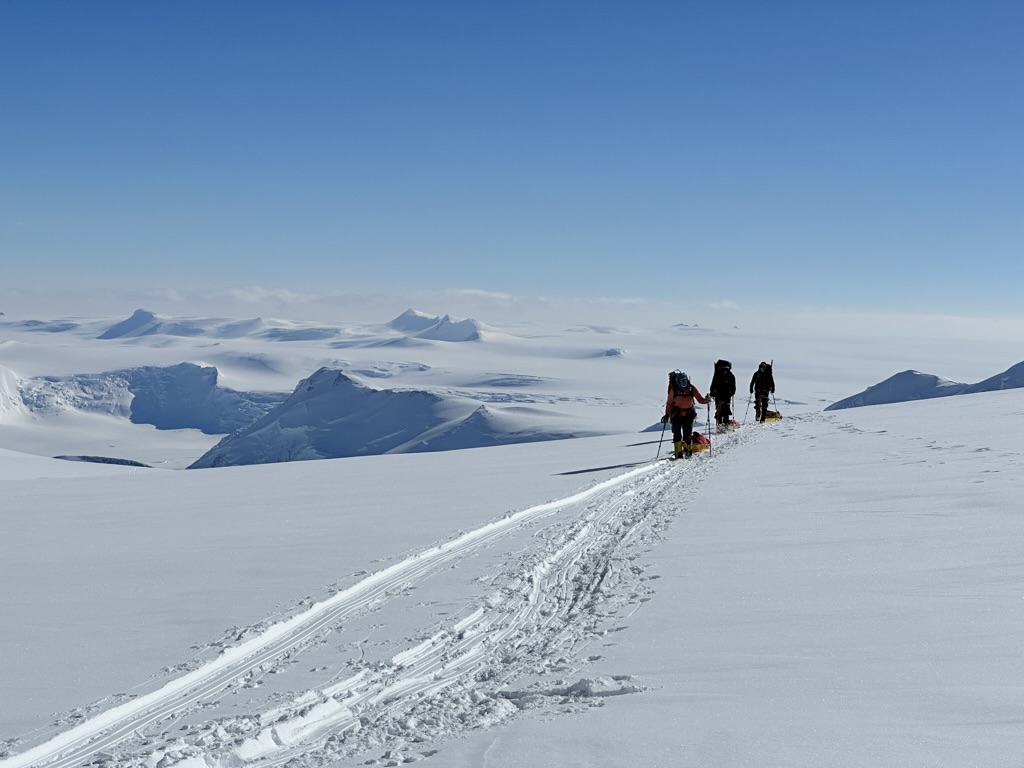
No villages. No roads. No trees. No animals. No buildings. Nothing. Just enormous expanses of untouched white stretching towards distant mountains, with temperatures that can drop towards minus 40°C. It is brutally cold, but absolutely spectacular.
The climbing setup reminded me a little of Denali. Everything you need has to move up the mountain with you, so you carry a big backpack while also dragging a sled attached to your harness. Thankfully, the sleds weren’t remotely as horrific as the ones I had dragged around Alaska on Denali, but you’re still pulling a considerable amount of equipment across a glacier.
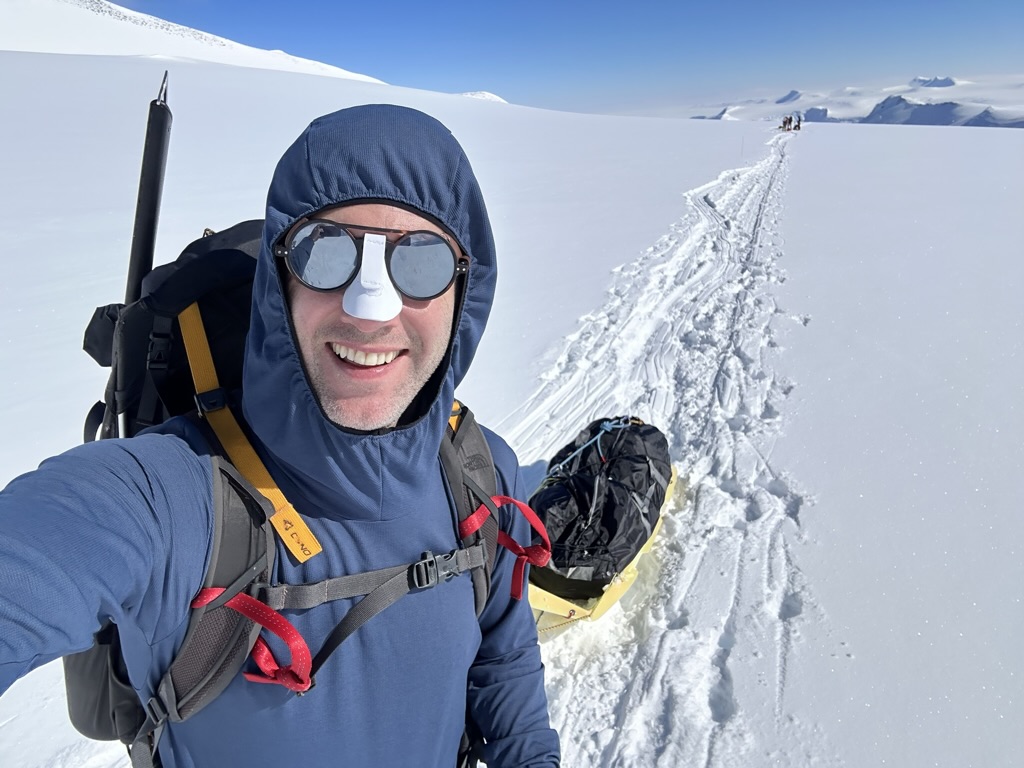
There were six of us climbing, from memory, divided into rope teams. And then we simply started walking into this enormous white wilderness. One of the strangest things about climbing in Antarctica in January is that the sun never sets.
That completely messes with your perception of time. We left Base Camp sometime after lunch, around 2pm, and continued climbing for hours. Eventually we reached Low Camp at around midnight. Except it didn’t feel like midnight.
The sun was still shining. The entire landscape was still lit up. Your watch might be telling you that it’s the middle of the night, but your brain is looking around thinking it could just as easily be the middle of the afternoon.
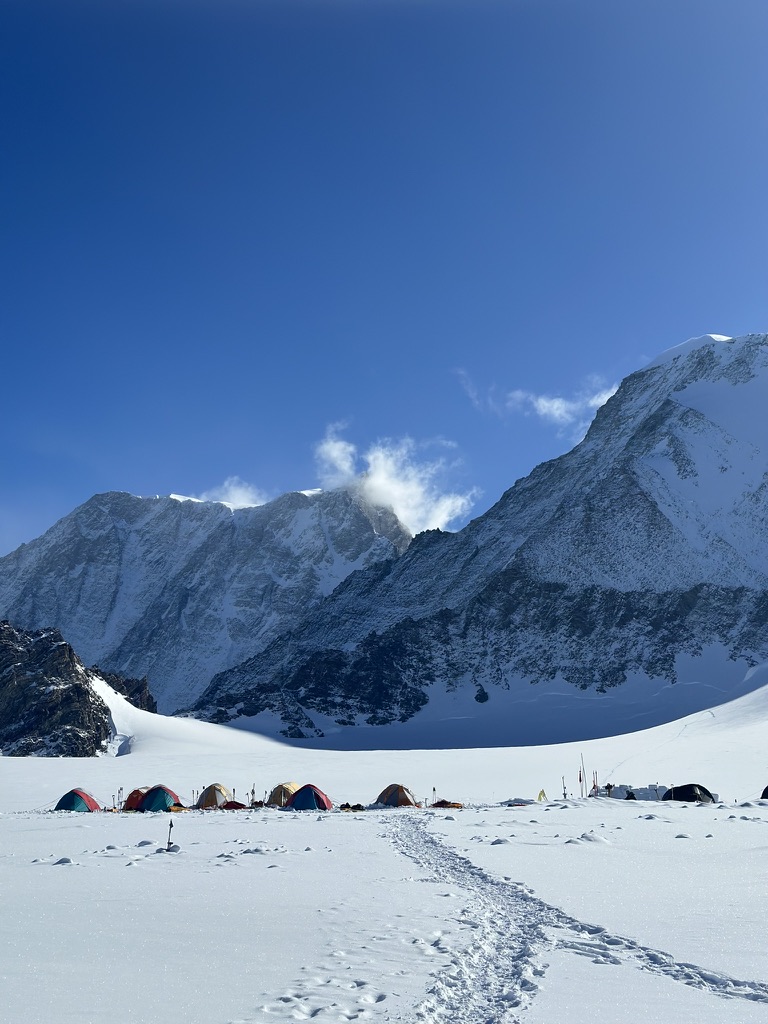
After a long, fairly gruelling first day hauling our equipment up the glacier, we finally set up camp, crawled into our tents and went to sleep. When we woke up the following morning, the weather was looking mixed. And on Vinson, the weather dictates everything.
We had our first night at Low Camp on January 3rd, and it was absolutely freezing, around minus 28°C.
January 4th was basically a rest and acclimatization day. We did a bit of rope training, checked and organised our gear, and otherwise just killed time around camp. The plan was always to spend two nights at Low Camp before making the push higher, giving our bodies a little more time to adjust to the altitude.
So we spent the night of January 4th at Low Camp as well, and then on January 5th it was time to move. We got into our rope teams, packed everything up and started the climb from Low Camp to High Camp. This is where the route suddenly gets a lot steeper, and it turned into a properly challenging day. The climb up to High Camp is one of the toughest sections of the expedition, with a long, steep ascent while carrying all your gear in the cold and at altitude.
Low Camp to High Camp
January 5th. Low Camp to High Camp is a tough day. 1100m altitude climb. It’s steep, exposed, and much of the climbing is done on fixed ropes. Before you even start, you have to pack up your entire camp at Low Camp and load everything onto your back. I was probably carrying somewhere around 25 kilos, and then you’re hauling that weight uphill for hours on steep fixed lines at altitude. Beautoful though.
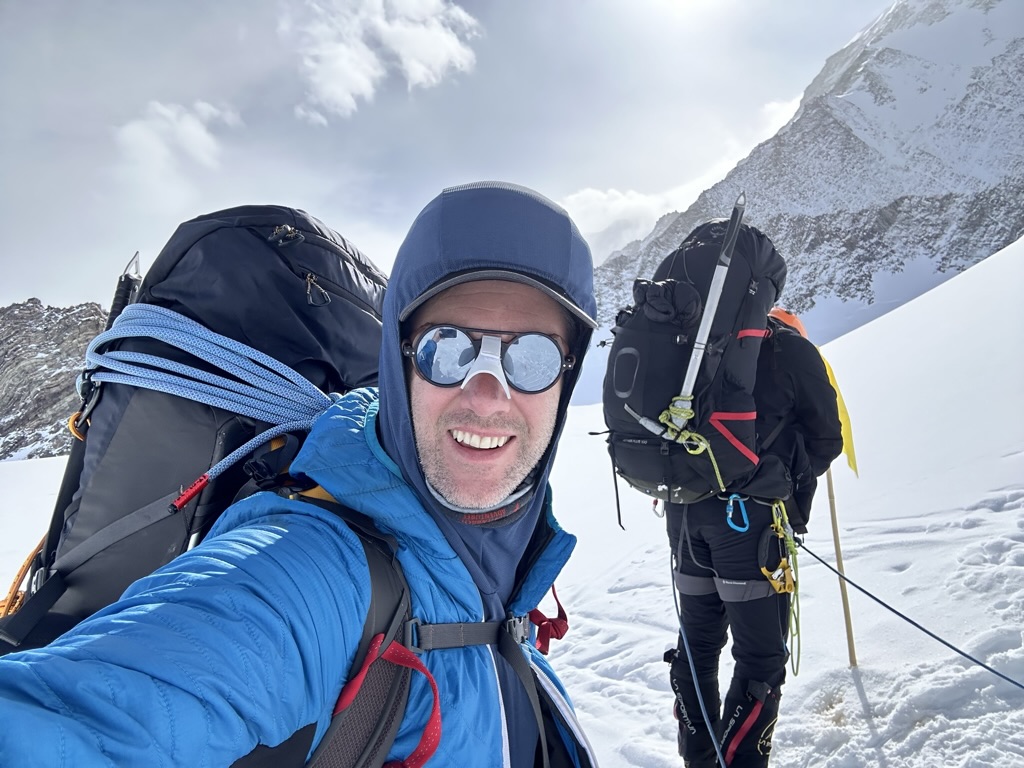
We set off at around 1 p.m. on January 5th. The fixed ropes are probably the hardest part of the day. It’s relentlessly steep, there’s a lot of exposure, and with a heavy pack on your back it becomes a proper grind.
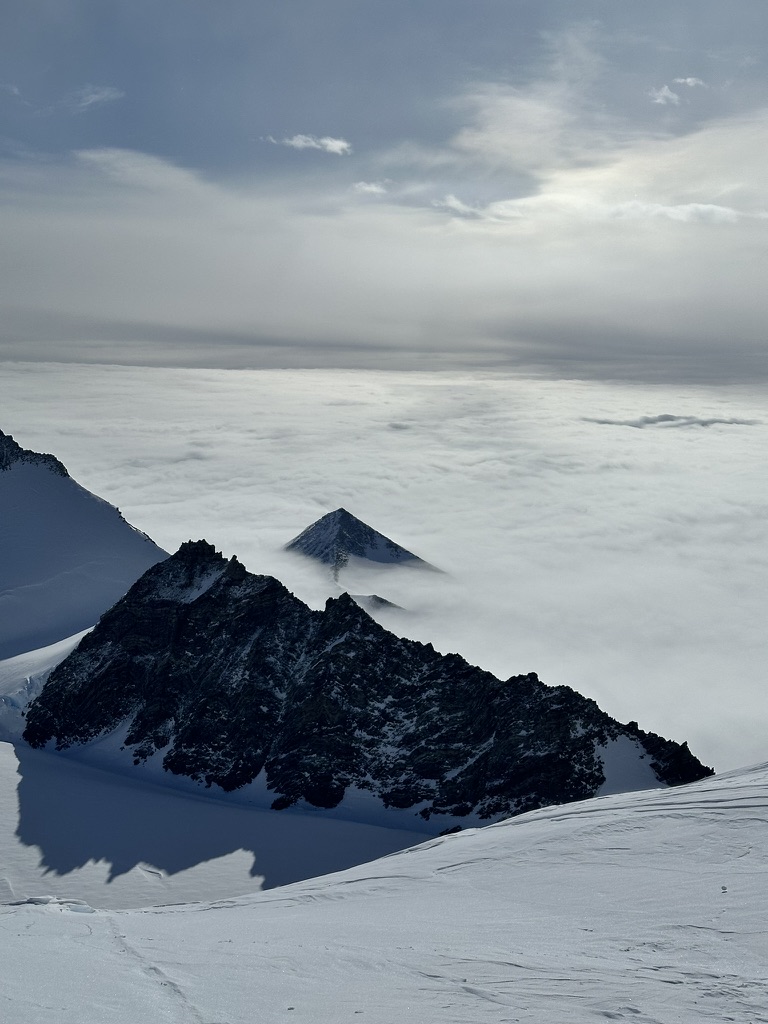
But once you finally reach the top of the fixed lines, you turn around and the view is spectacular. It’s one of those moments you dream about as a kid. You’re getting up towards 4,000 metres, almost above the cloud line, looking back across this enormous Antarctic landscape, and it really hits you where you are. I also got to see the Pyramids that the Aliens built in Antarctica, which was cool:
Also, the problem is that once you’re that high, you’re also very exposed. If the weather turns, things can become serious very quickly. And for us, the weather did start to turn.
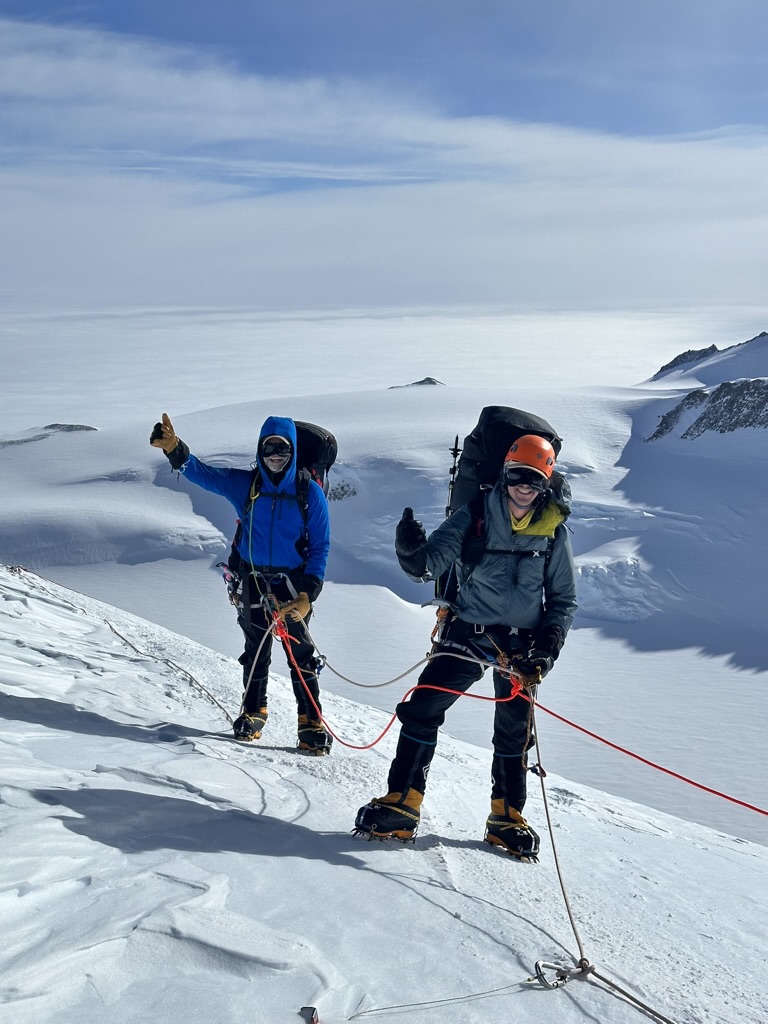
I think we reached High Camp sometime before 10 p.m., and by around 10 the camp was finally set up. But getting there is only half the job.
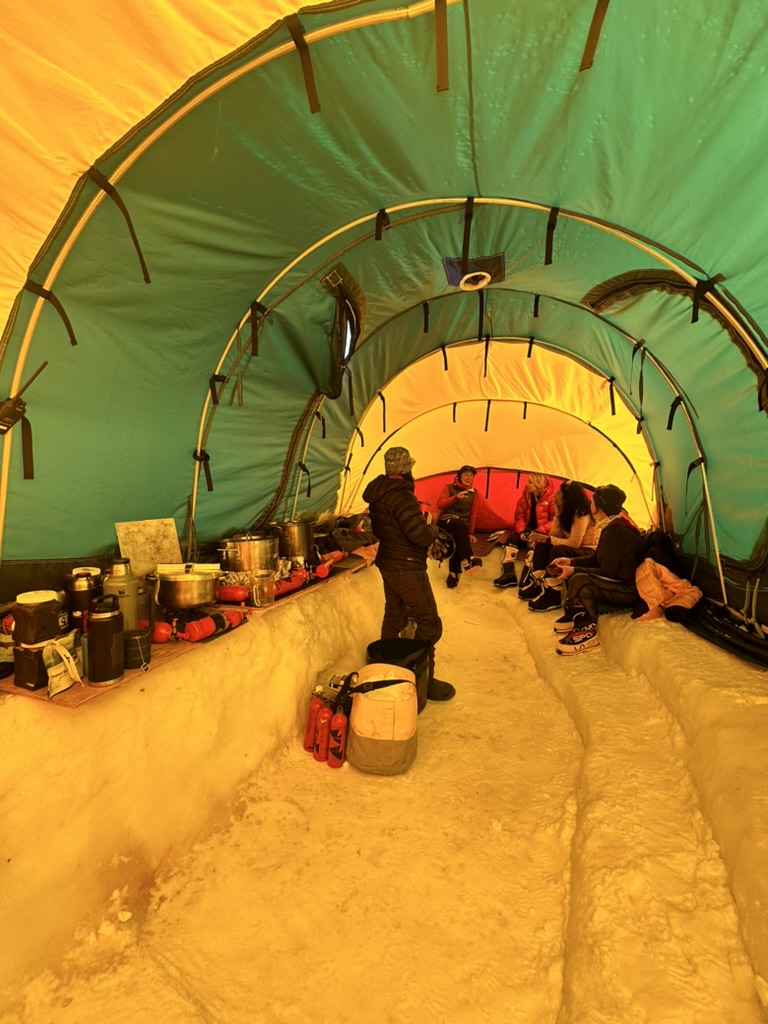
You arrive absolutely knackered after climbing all day, and there’s basically nothing waiting for you. You have to build your home from scratch. Everyone is destroyed to some degree, some slightly more destroyed than others, so whoever still has something left in the tank just does what they can to get camp established.
The wind was battering us while we were trying to put the tents up. And up there, losing a tent is serious business. If your tent blows away and you’re left exposed in temperatures around minus 30°C or worse, you’re in genuine trouble. There’s no room for fucking around.
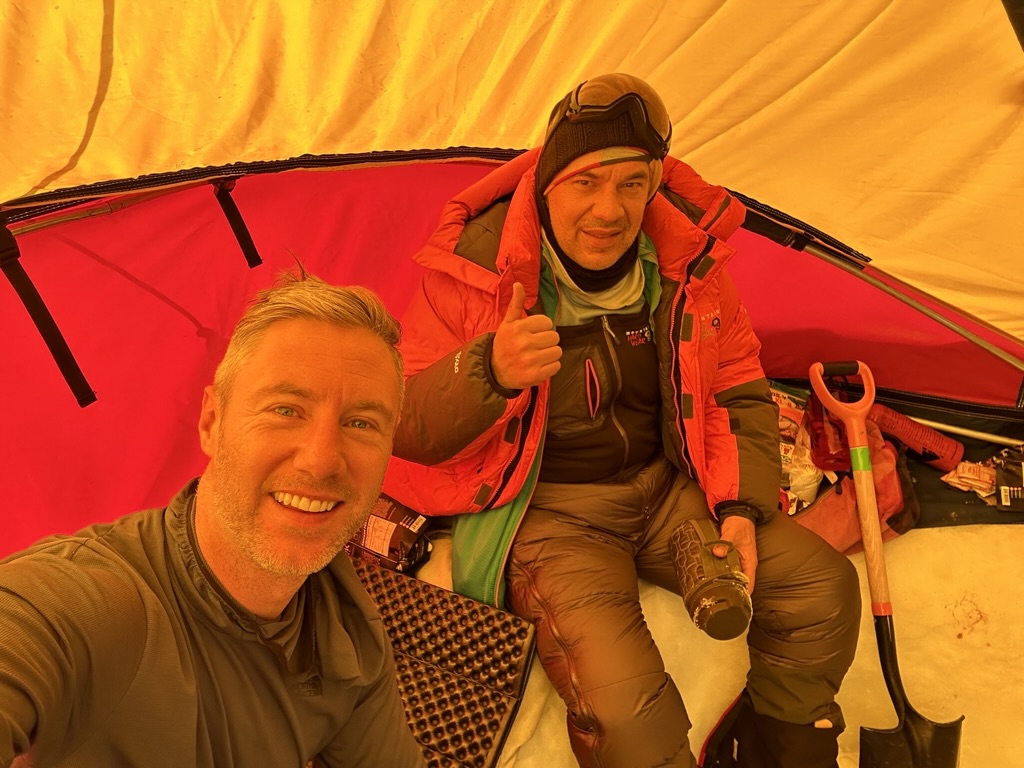
So setting up High Camp at 3700m after a full day on the fixed ropes was, truth be told, a fucking bitch. In a perfect world, you’d then spend the following day resting and acclimatizing at High Camp before thinking about the summit. But it was already becoming pretty clear that our expedition wasn’t going to follow the perfect-world schedule. The weather was due to turn, and some people were about to lose fingers and tips of noses. Not good.
Mount Vinson Summit Day
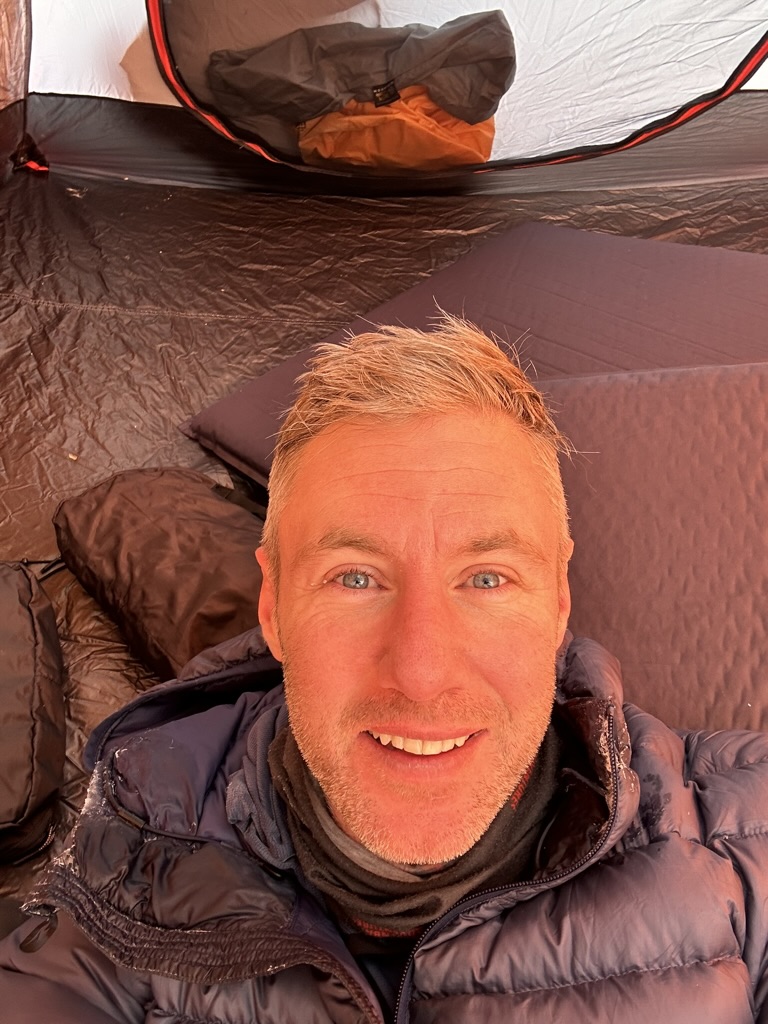
Summit day. January 7th was a huge day for me. I woke up in my tent knowing that, if everything went to plan, today would be the day I completed the Seven Summits. And no matter how prepared I was, there are always nerves. WHAT IF I FAILED THIS F*CKING THING. I have an awful habit of catastrophizing, and today it was in full force because I was so close to my goal!
Something can go wrong. The weather can turn. You can get frostbite. You can simply be too tired and get turned around. In fact, one person in our group did have to turn back on summit day, so sadly we didn’t have a 100% success rate. The rest of the group was moving well, though, and we set off at around 9:30 in the morning. Summit day on Vinson can take up to 12 hours, so we knew we had a long day ahead of us. And then off we went.
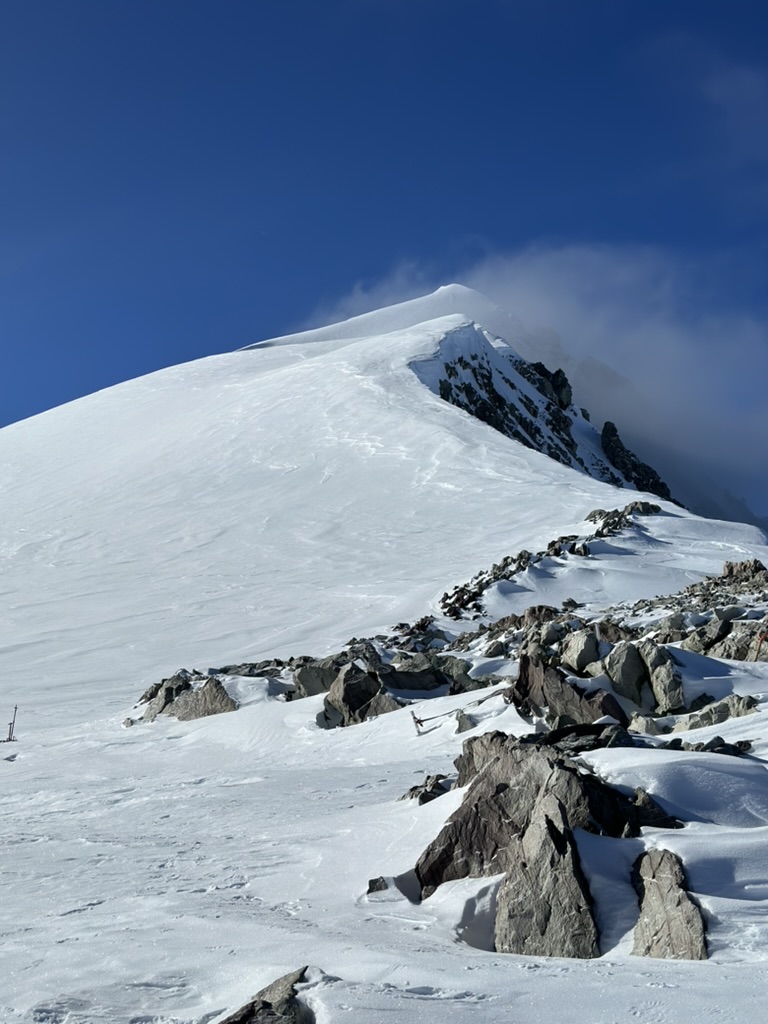
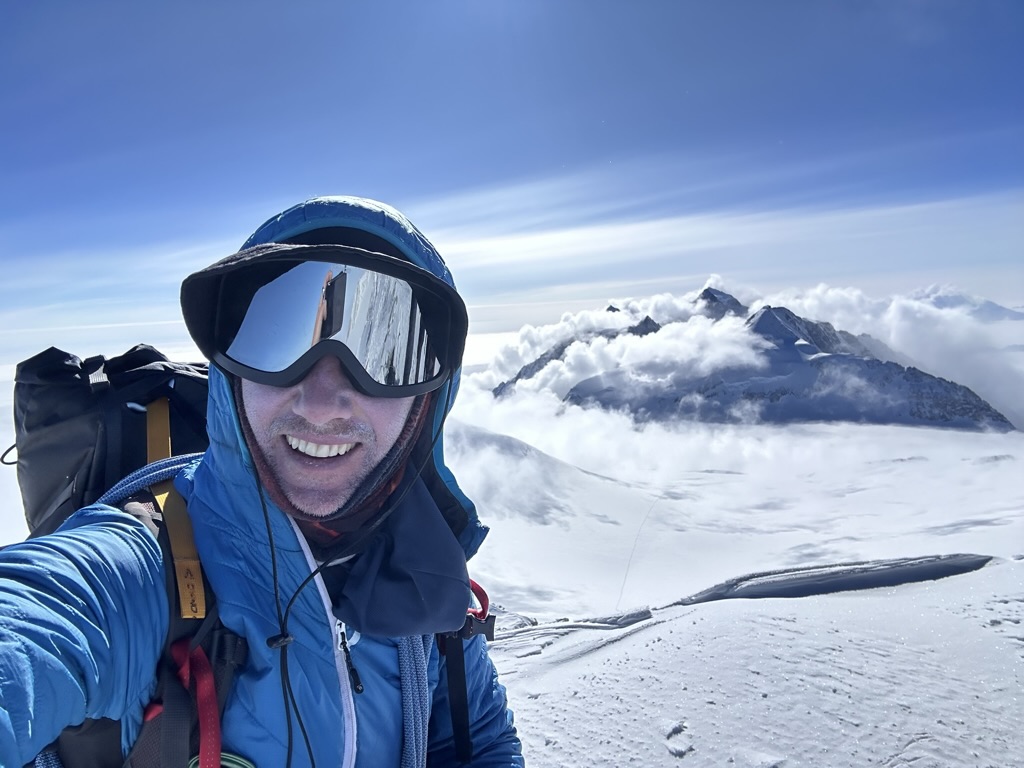
It’s basically one long, relentless slog through paradise. You’re climbing for hour after hour through this enormous white Antarctic landscape, slowly gaining altitude, knowing that every step is taking you closer to the top. After five, six, seven hours of climbing, we finally reached the summit at around 4:30 p.m. For me, it was incredibly emotional.
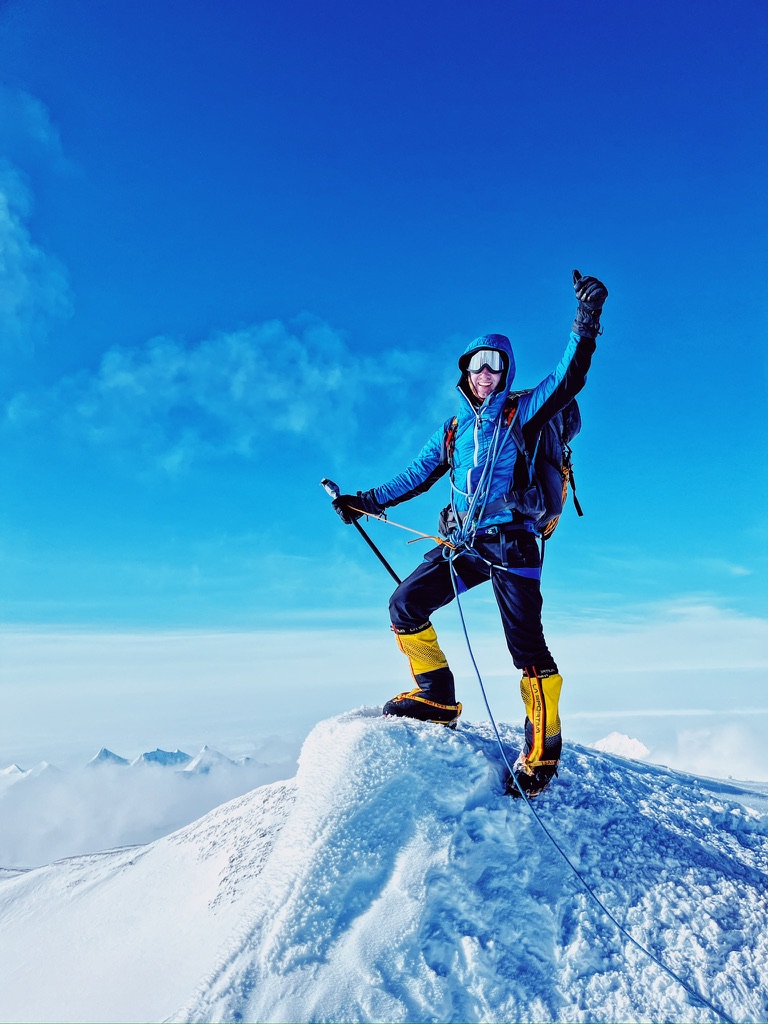
This was the culmination of years of training, expeditions, money, time and sacrifice. Everest, Denali, Aconcagua, Elbrus, Kilimanjaro, Carstensz Pyramid, all of it had eventually led me here, standing on top of Mount Vinson, my seventh and final Seven Summit. One thing I could do on Vinson that I couldn’t really do on Everest was actually sit there and enjoy it.
On Everest, I was terrified. I was constantly conscious of the fact that I was in the death zone and that hanging around unnecessarily was a very bad idea. Vinson was different. It’s still a serious mountain, of course, but the objective danger is nowhere near Everest. So I could sit on the summit, look around, take my time and really appreciate where I had come from and where I had ended up. That moment meant a lot to me.
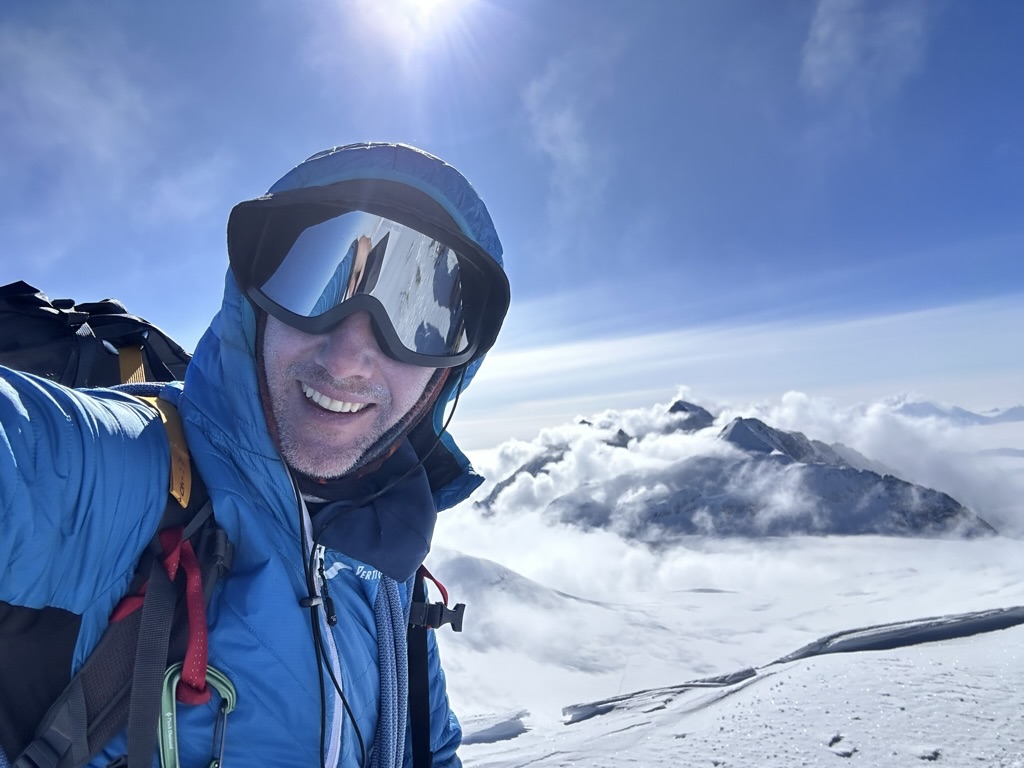
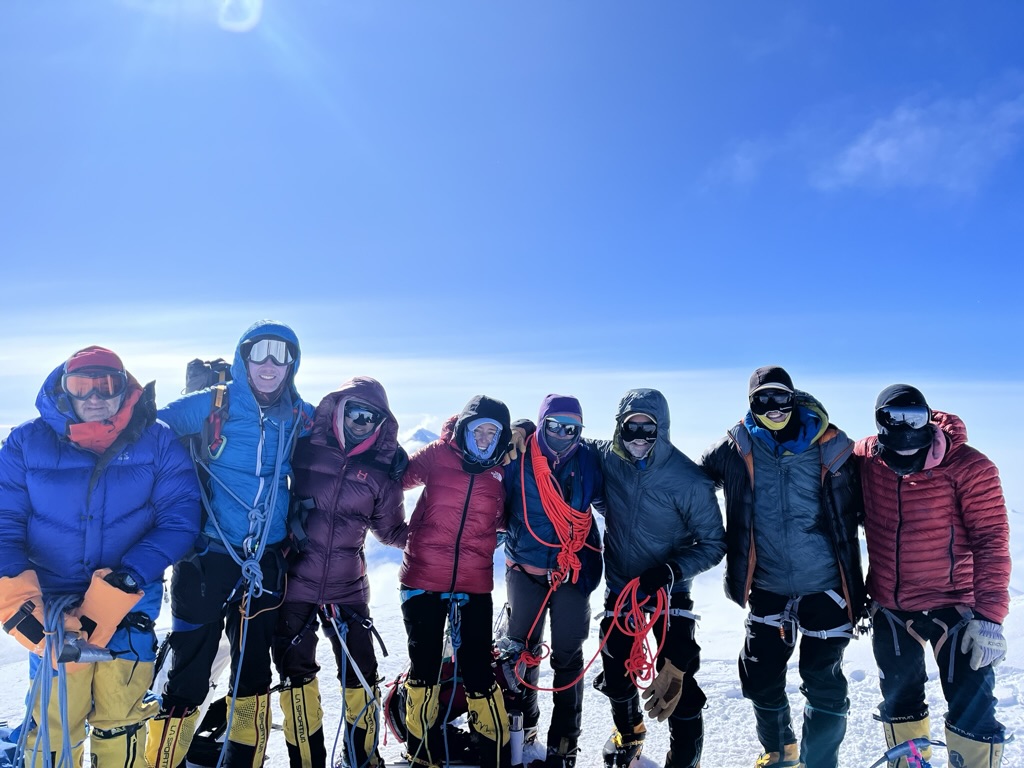
Eventually, though, you have to leave. And from the summit, it’s a long bloody way back down. The descent was absolutely spectacular. You already know the route, you can see the path you climbed earlier, and psychologically it’s completely different because the summit is behind you. It took us another three or four hours to get back to High Camp.
We arrived just as the weather was beginning to turn.
Cloud had started moving in, which wasn’t particularly good news for the teams still above us. Because our journey had been so streamlined, including the immediate transfer from Union Glacier to Vinson Base Camp and relatively few weather delays, we had moved through the mountain quickly. Other teams were a day, or more, behind us. So some were still making their way toward high camp as we were descending, and some of them hadn’t reached camp yet when the cloud cover began closing in.
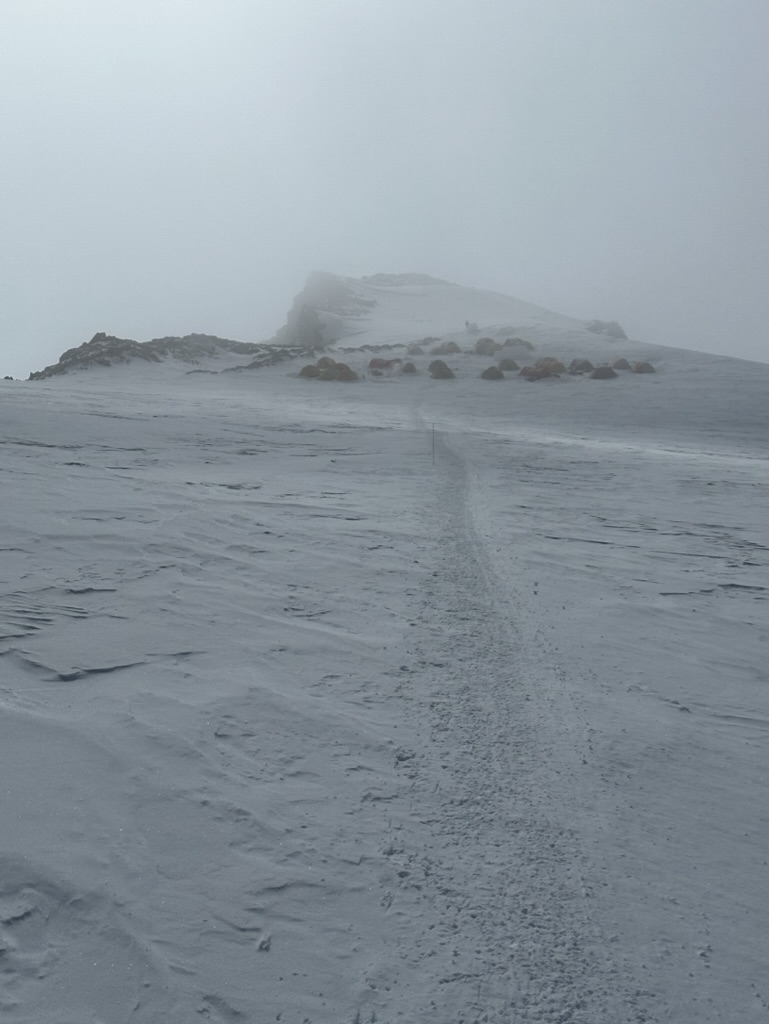
For us, though, the job was done. Seven Summits. Finished.
The way back down
There wasn’t too much drama on the descent itself. We came down from the summit to High Camp in about three or four hours. It was another long slog, but when you’ve just finished the Seven Summits, you’ve got a little extra spring in your step.
The bigger issue was the weather coming in behind us.
Antarctica is brutally cold regardless, but when the weather closes in, things become much more serious. On a clear day you can have brilliant sunshine even when it’s minus 30°C or minus 40°C. Once the cloud rolls in, visibility can disappear, the wind can pick up, and everything suddenly feels much more hostile, particularly high on the mountain where you’re completely exposed.
We had been the first group to summit and therefore the first group heading back down. Everything had gone almost perfectly for us. We had a strong group, we moved quickly, and the weather had given us the window we needed. There were another couple of groups behind us, though, and by the time we were back at High Camp, conditions were already deteriorating. They were due to make their summit attempts the following day, so the cloud moving in was not what they wanted to see.
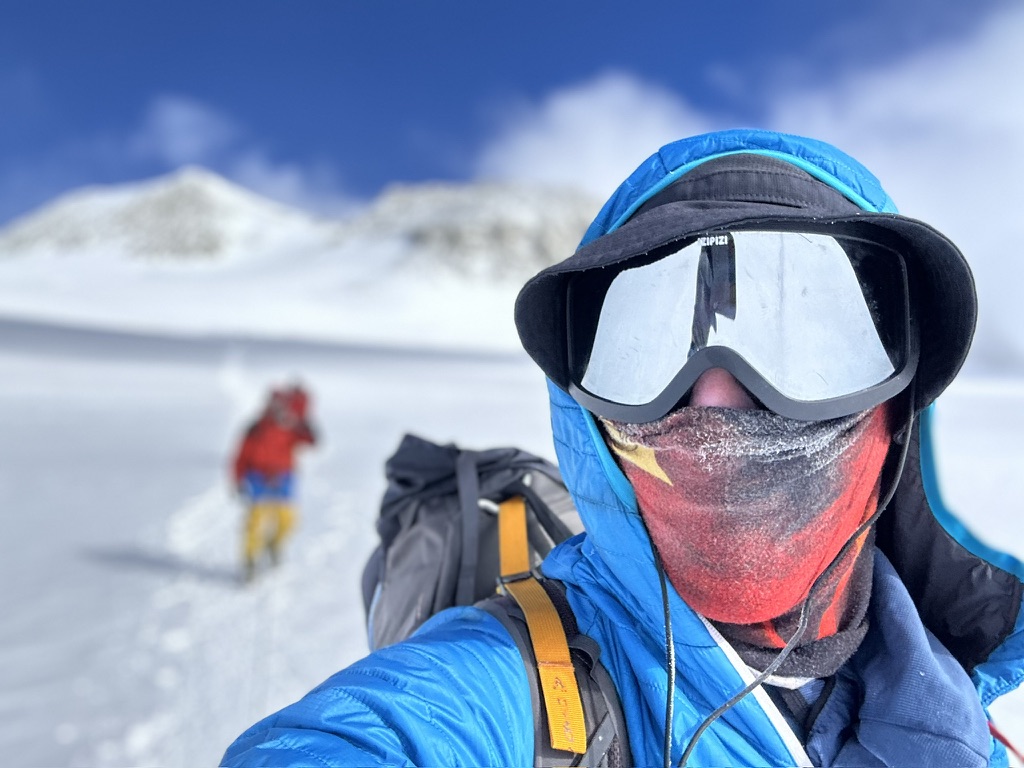
For us, the next morning was simple: get off the mountain. We packed everything up and made the long descent from High Camp, down the fixed ropes, through Low Camp and eventually all the way back to Vinson Base Camp. And suddenly it was over.
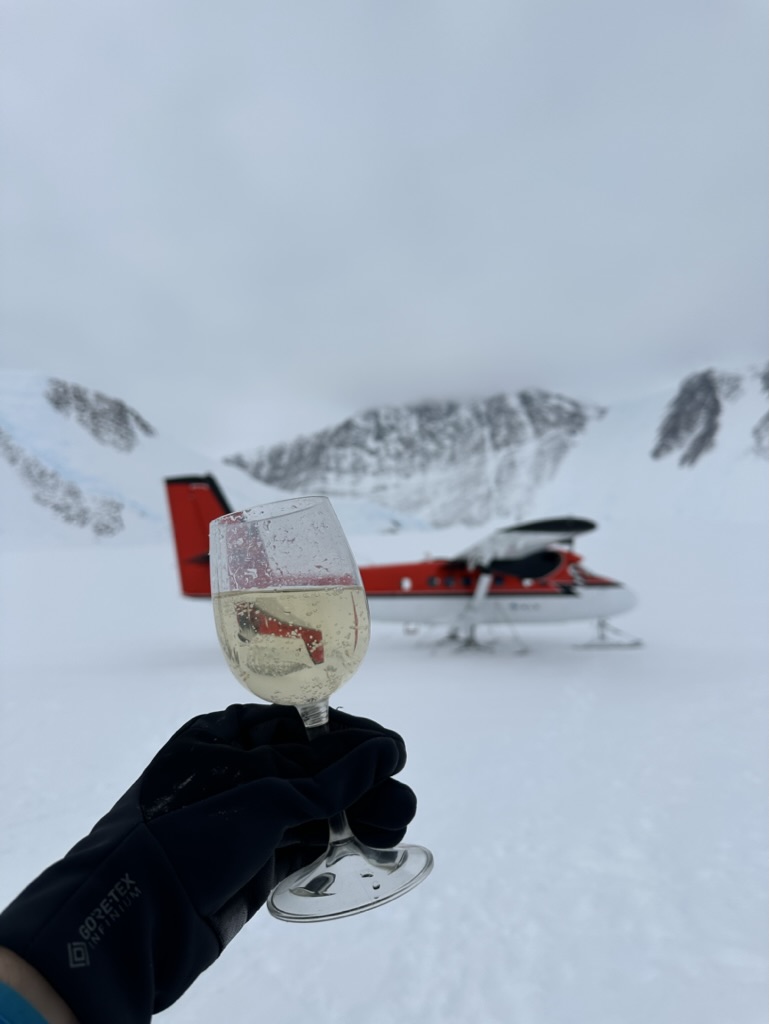
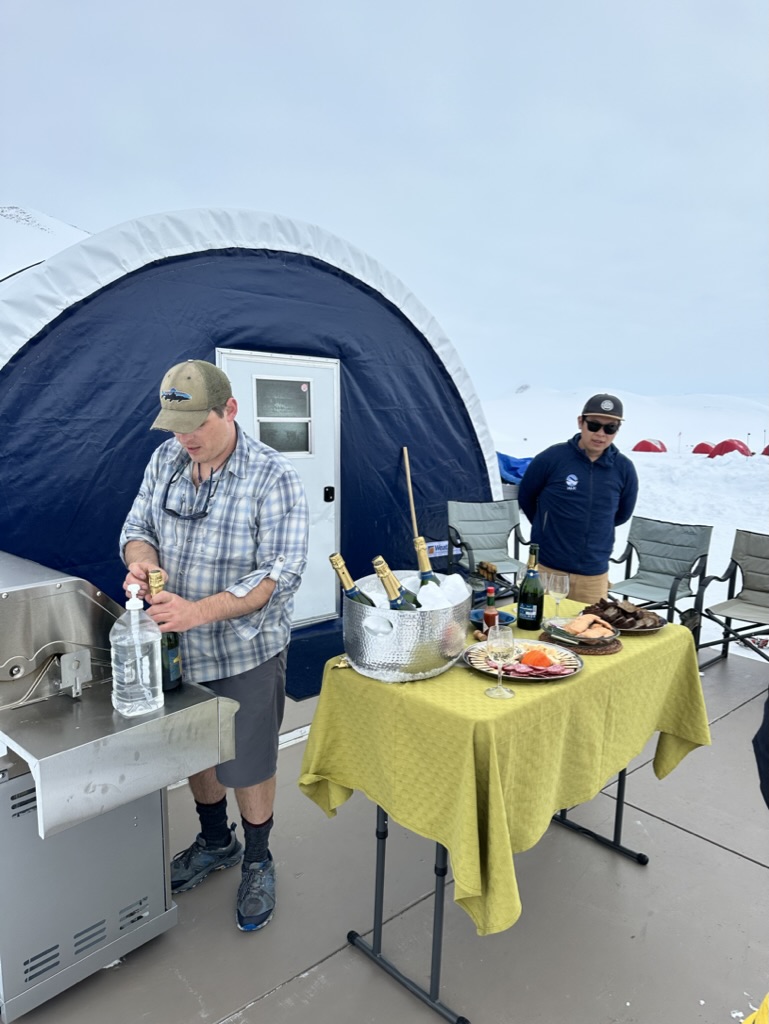
Before we knew it, we were standing at Base Camp drinking champagne and celebrating the end of the Seven Summits. After years of planning, training, climbing and spending an obscene amount of money chasing mountains around the world, there I was drinking champagne beneath Mount Vinson with the whole thing finally finished.
The only slightly sobering thought was what was happening above us. The other teams still had to try to summit in the deteriorating weather, and near the top of Vinson you are incredibly exposed. But they had excellent guides and strong teams, and there was nothing more we could do from Base Camp.
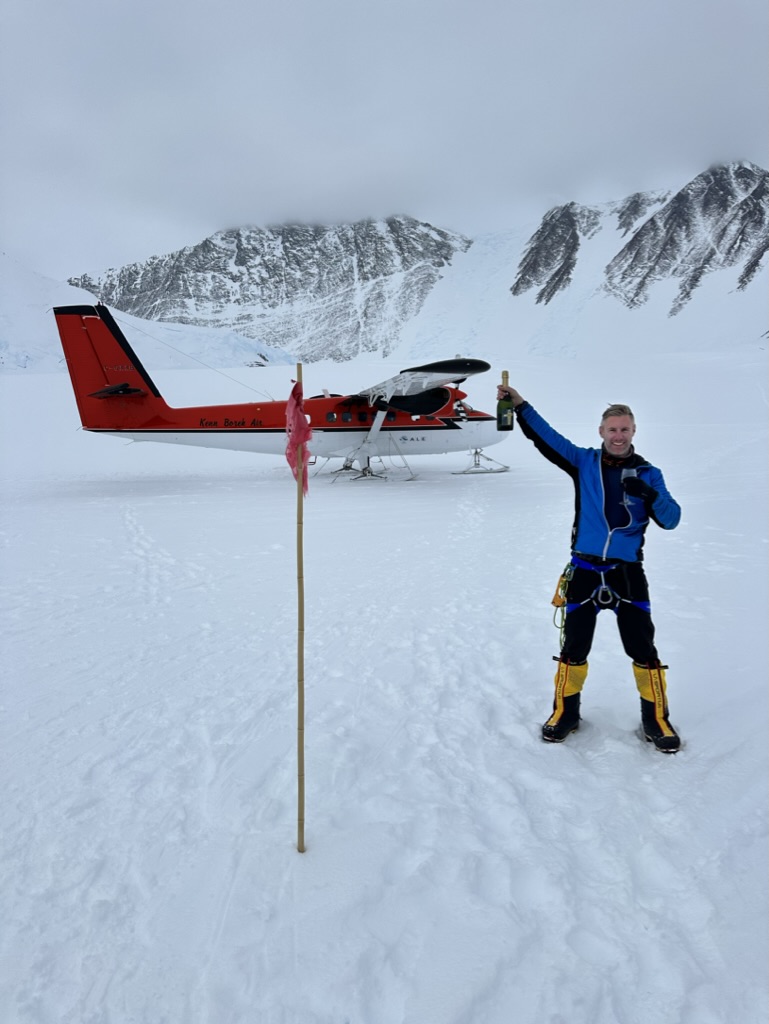
So we celebrated. And then we got ridiculously lucky again. A gap appeared in the clouds and the ski plane managed to get in that very same day to collect us. We piled aboard, flew out from Vinson Base Camp and landed back at Union Glacier. By that stage the champagne had been flowing fairly freely, and once we arrived at Union Glacier the celebrations continued. It ended up being one of the best nights of my life.
Frost Bite and lost fingers
Back at Union Glacier, my trip still wasn’t finished. I still had my expedition to the South Pole ahead of me, and I also ended up running the Antarctica Marathon, which I’ve talked about above. Even after all of that, we were still going to be waiting several days for the big plane to come in and take us back to Punta Arenas in Chile, finally bringing the whole trip to an end.
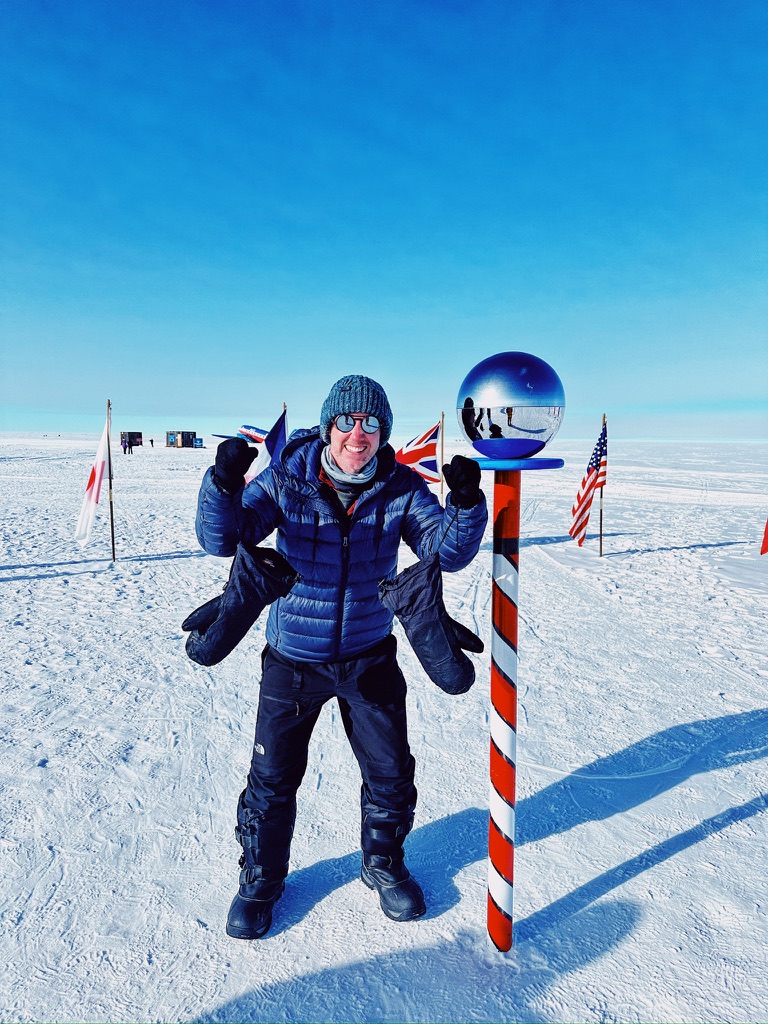
While I was waiting for the South Pole expedition, some of the other Vinson teams eventually started arriving back at Union Glacier. As we had feared, they had been caught by the bad weather higher on the mountain and ended up three or four days behind us. And the cold had taken its toll.
Some of them came back with severe frostbite injuries. A few had blackened fingertips, and some had injuries around the tips of their noses. At that stage it was impossible to know exactly how much tissue would ultimately be lost, because frostbite can take time to fully declare itself, but it was clear that some of the injuries were serious. It was a fairly brutal reminder of the reality of climbing in Antarctica.
We had been fortunate. We had a strong team, moved quickly, got the weather window we needed, summited and got off the mountain before conditions really deteriorated. The groups behind us weren’t quite so lucky. That’s the reality of the mountains sometimes. You can do everything right and still end up paying a heavy price when the weather turns. I just hope everyone involved made as good a recovery as possible.
How Difficult Is Mount Vinson?
Mount Vinson, of course, is not the hardest of the Seven Summits. Everest is much harder. Denali is much harder. The brutal reality about Mount Vinson is the difficult thing about it is affording it. It costs a fortune. It’s difficult to get to. You can only do it once a year. That being said, it’s still not easy. It’s like a week, ten days expedition. It’s minus 40 degrees.
As I said, these groups behind us got frostbite and lost parts of their noses and fingers, so it’s still no joke. There’s fixed ropes. You need proper gear. But if it’s the seventh of your Seven Summits and you’ve already got Denali under your belt and Everest under your belt, then of course it should be manageable. All in all, I would probably call it a six and a half out of ten.
Was Mount Vinson Worth It?
Mount Vinson is categorically worth it, if you’re aiming to do the Seven Summits, of course. And equally, if you’re hoping to complete the Explorers Grand Slam or the Ultimate Explorers Grand Slam, it’s a necessity, so of course it’s worth it. However, if you’re going to drop 60 grand on an expedition, and it’s the only 60 grand you have to draw, put in an expedition, then of course it’s better to climb Everest with that 60 grand. You might have to add another 10 or so, but that still would be a better choice.
And also, I think I would also choose the South Pole ahead of Mount Vinson. If you’re wealthy or you’re dedicated your life to adventures, like I have, then it’s worth it regardless. But financially, if you’re feeling the pinch, it’s only worth it to complete these big life goals.
Completing the Seven Summits
Climbing Seven Summits was a culmination of probably ten-plus years of training, of learning, of spending. It gave my life purpose. It gave me adventures. I met some of the most amazing people on the planet, and I hold fond, fond memories of it.
I wrote a blog post about how much it costs to climb the Seven Summits because I know that’s a big barrier for a lot of people, me included. And I’m happy to answer any questions on my Instagram if anyone else is considering doing it.
Remember, never travel without travel insurance! And never overpay for travel insurance!
I use HeyMondo. You get INSTANT quotes. Super cheap, they actually pay out, AND they cover almost everywhere, where most insurance companies don't (even places like Central African Republic etc!). You can sign-up here. PS You even get 5% off if you use MY LINK! You can even sign up if you're already overseas and traveling, pretty cool.
Also, if you want to start a blog...I CAN HELP YOU!
Also, if you want to start a blog, and start to change your life, I'd love to help you! Email me on johnny@onestep4ward.com. In the meantime, check out my super easy blog post on how to start a travel blog in under 30 minutes, here! And if you just want to get cracking, use BlueHost at a discount, through me.
Also, (if you're like me, and awful with tech-stuff) email me and my team can get a blog up and running for you, designed and everything, for $699 - email johnny@onestep4ward.com to get started.
Do you work remotely? Are you a digital nomad/blogger etc? You need to be insured too.
I use SafetyWing for my digital nomad insurance. It covers me while I live overseas. It's just $10 a week, and it's amazing! No upfront fees, you just pay week by week, and you can sign up just for a week if you want, then switch it off and on whenever. You can read my review here, and you can sign-up here!


 As you know, blogging changed my life. I left Ireland broke, with no plan, with just a one-way ticket to Thailand
and no money. Since then, I started a blog, then a digital media company, I've made
more than $1,500,000 USD, bought 4 properties and visited (almost) every country in the world. And I did it all from my laptop as I
travel the world and live my dream. I talk about how I did it, and how you can do it too, in my COMPLETELY FREE
Ebook, all 20,000
words or so. Just finish the process by putting in your email below and I'll mail it right out to you immediately. No spam ever too, I promise!
As you know, blogging changed my life. I left Ireland broke, with no plan, with just a one-way ticket to Thailand
and no money. Since then, I started a blog, then a digital media company, I've made
more than $1,500,000 USD, bought 4 properties and visited (almost) every country in the world. And I did it all from my laptop as I
travel the world and live my dream. I talk about how I did it, and how you can do it too, in my COMPLETELY FREE
Ebook, all 20,000
words or so. Just finish the process by putting in your email below and I'll mail it right out to you immediately. No spam ever too, I promise!