

From Food Delivery to Fintech: How We Expect Everything Instantly
It used to wait. Letters took weeks, checks took days, and Saturday errands ate up the whole afternoon. Today, we groan if a delivery takes longer than half an hour. A roast turkey for Thanksgiving used to take at least two days to prepare.
“We’ve become an on-demand society,” James Segrest, one of the gambling experts and digital lifestyle professionals from CasinoOnlineCA, explains.
Table of contents
- From Food Delivery to Fintech: How We Expect Everything Instantly
- The Psychology of “I Want It Now”
- Food Delivery: From a Quick Bite to Instant Expectation
- Fintech: Money in Motion
- Entertainment: Streaming, Skipping, and Playing Now
- The Rise of Impulse Online Shopping
- From Maximum Effort to a Convenience Revolution
This is true. Our lives are engineered for speed, and slow mornings and morning routines are a complete luxury. We stroll through the door and pick up a coffee-to-go just because we’re always on the move.
With such a lifestyle, other demands from our daily life change too. Instead of e-wire banking, we use payment apps that allow us to transfer money instantly.
We choose fast fashion over repairing our old clothes, and we opt for playing at a PayDirect Now casino rather than a traditional bank’s payment system.
In short, our society is used to tolerating waiting, and now even a 10-second loading screen feels like forever.
The Psychology of “I Want It Now”
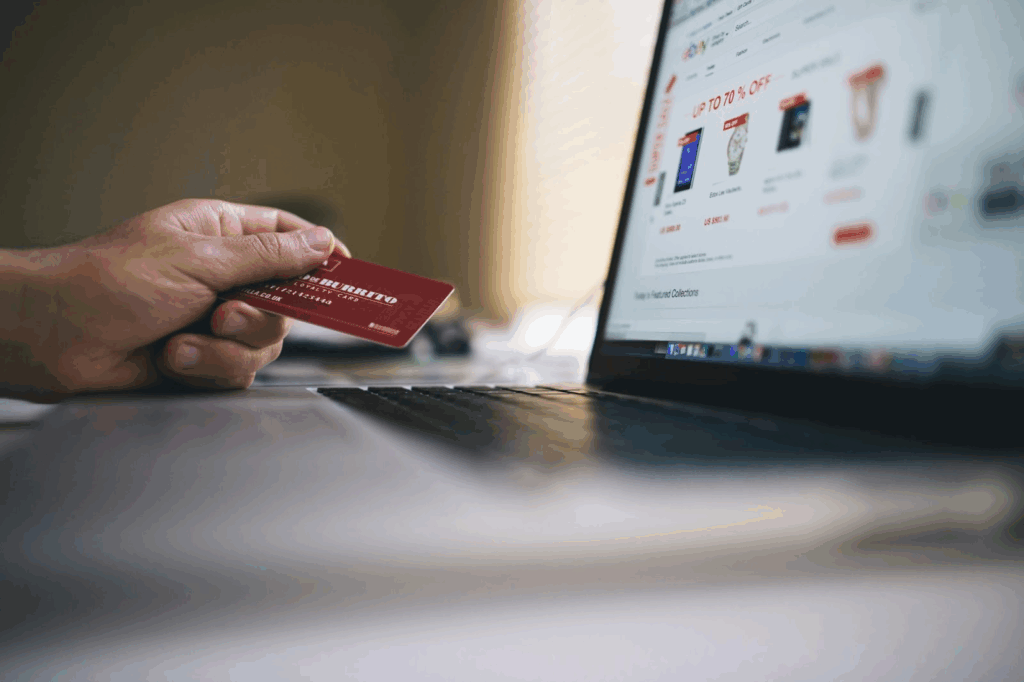
We have become impatient because instant gratification is a powerful force, and our brains love quick rewards.
Each time we satisfy a desire immediately, our brains release a small hit of dopamine, the feel-good neurotransmitter. This happens whether we soothe a hunger pang with Uber Eats or cure boredom with Netflix.
Over time, our experiences conditioned us to crave that speedy reward cycle in more and more areas of life. In some cases, we even desire the cycle itself more than the actual service or product.
“Progressed a level on Candy Crush without losing a single life? You feel so much more powerful than the others,” Segrest notes. “It’s like we’re constantly training our brains to expect a constant flow of small and instant wins.”
This can start a feedback loop. The more we get things immediately, the less tolerant we become of any delay.
A famous psychological experiment from the 1970s, called the Marshmallow Test, offered children one treat immediately or two if they waited, and the results revealed the power of delayed gratification. There are upsides to this instant culture, as we feel more efficient, productive, and satisfied.
However, psychologists also warn of downsides. These include decreased patience, diminished ability to delay gratification, and heightened stress when things inevitably don’t happen as fast as we expect.
Segrest provides an interesting insight into online gambling in this matter: “In the casino world, instant gratification keeps players engaged: quick wins, immediate feedback. But it can also lead to impulsivity and bigger spending, the exact psychology behind limited-time offers.”
Food Delivery: From a Quick Bite to Instant Expectation
Few industries illustrate this change more clearly than food delivery. Ordering pizza was a weekend indulgence, but now apps like Uber Eats or SkipTheDishes are an everyday staple, even on our fridge doors. More than 60% of Canadians have ordered food online, and one in five does it more than once a month. The trend is obvious.
Our standard of “fast” has changed, too. If an app quotes 45 minutes, some of us groan and look elsewhere. Pandemic habits reinforced this, but convenience has cemented it.
“Drive-throughs once felt quick, and now they seem slow compared to a courier dropping food to your doorstep.”
In short, cravings plus apps equals instant gratification, the main psychological concept that seems to be driving the world and online living, shopping, and relaxing nowadays.
Fintech: Money in Motion
If banking didn’t support speed, all other industries would suffer. Yes, you may pay at your door and tip your food courier, but big orders over weekends and urgent, forgotten bills are impossible to pay with cash. This is why the banking system has been completely redesigned to prioritize speed.
Over 80% of Canadians now bank online, and sending money is as easy as sending an SMS. Waiting five business days for a check to clear used to be normal. Today, people panic if an e-transfer takes more than a few minutes, and banking speed is already measured in seconds.
Younger generations are even more impatient. Over half of Gen Z and Millennials say that they’ll pay extra to avoid waiting time for restocks. Boomers, on the other hand, would do the opposite and wait in lines in front of stores just to get an item on sale. It’s evident just how much speed rather than cost defines true value today.
Fintech startups know this, and they provide real-time stock trades, instant wage access, and immediate peer-to-peer lending.
“It’s fascinating to watch it unveil, as money is expected to move as fast as a message, and just banking from a café across the street from a real bank,” Segrest notes.
Entertainment: Streaming, Skipping, and Playing Now
If there’s one domain where impatience rules, it’s entertainment. Canadians no longer wait for Thursday night TV. Entire seasons of TV shows drop at once, and binge-watching replaces anticipation. Over half the country subscribes to at least one streaming service.
Gaming has followed the same trajectory.
Midnight release lines no longer exist because games are downloaded instantly. In the gambling sector, speed is also a competitive advantage.
“Casino nights used to mean finding poker buddies or travelling to play, but now you can log in and start playing with real win potentials from your couch,” James Segrest of CasinoOnlineCA adds.
Casinos in Canada highlight PayDirect as an innovative method with the trusted Interac network that processes instant deposits.
The Rise of Impulse Online Shopping
Not every shopper buys big-ticket items online. In fact, some of the strongest proof of our “instant culture” lies in the tiny, impulse-friendly buys that Canadians make daily. These quick-click purchases are often found in newsletters in our email inbox and are the digital equivalent of grabbing gum and candy at the checkout counter.
Canadians most often buy gadgets online, including:
- Phone chargers, Bluetooth removables, and add-ons like speakers;
- Socks, T-shirts, and underwear basics;
- Cosmetics and skincare minis, like lip balms and sheet masks;
- Kitchen gadgets and small appliances, like avocado slicers or portable juicer bottles;
- Pet toys and treats, and many more.
What makes these items so irresistible is a simple formula of cheapness, convenience, and inevitability. Even if you don’t use them right away, you know they’ll eventually get used. Another charger will get lost, socks will disappear, and pets will always want a new treat. You’re not actively hunting for them, but if the algorithm puts them on your screen, it only feels natural to buy them.

From Maximum Effort to a Convenience Revolution
Not long ago, daily chores required a lot of effort. Grocery runs meant lugging bags across town, and catching a cab meant calling dispatch or waving in the streets. Even paying bills demanded checks, envelopes, and stamps. Today, our phones do the legwork.
“If something requires more than a few taps, people seem to automatically lose interest in a service or product,” Segrest notes.
That’s the new reality. Speed itself has become a marker of quality. Canadians embraced tap-to-pay cards and mobile deposits, not because older methods were unsafe. They chose them because these options shaved seconds off a routine. We’ve built a world where convenience equals value, and it shows in every sector.
Remember, never travel without travel insurance! And never overpay for travel insurance!
I use HeyMondo. You get INSTANT quotes. Super cheap, they actually pay out, AND they cover almost everywhere, where most insurance companies don't (even places like Central African Republic etc!). You can sign-up here. PS You even get 5% off if you use MY LINK! You can even sign up if you're already overseas and traveling, pretty cool.
Also, if you want to start a blog...I CAN HELP YOU!
Also, if you want to start a blog, and start to change your life, I'd love to help you! Email me on johnny@onestep4ward.com. In the meantime, check out my super easy blog post on how to start a travel blog in under 30 minutes, here! And if you just want to get cracking, use BlueHost at a discount, through me.
Also, (if you're like me, and awful with tech-stuff) email me and my team can get a blog up and running for you, designed and everything, for $699 - email johnny@onestep4ward.com to get started.
Do you work remotely? Are you a digital nomad/blogger etc? You need to be insured too.
I use SafetyWing for my digital nomad insurance. It covers me while I live overseas. It's just $10 a week, and it's amazing! No upfront fees, you just pay week by week, and you can sign up just for a week if you want, then switch it off and on whenever. You can read my review here, and you can sign-up here!









 As you know, blogging changed my life. I left Ireland broke, with no plan, with just a one-way ticket to Thailand
and no money. Since then, I started a blog, then a digital media company, I've made
more than $1,500,000 USD, bought 4 properties and visited (almost) every country in the world. And I did it all from my laptop as I
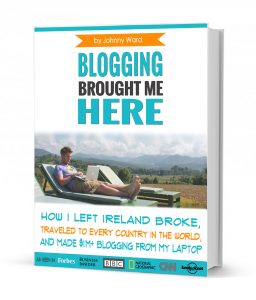
travel the world and live my dream. I talk about how I did it, and how you can do it too, in my COMPLETELY FREE
Ebook, all 20,000
words or so. Just finish the process by putting in your email below and I'll mail it right out to you immediately. No spam ever too, I promise!
As you know, blogging changed my life. I left Ireland broke, with no plan, with just a one-way ticket to Thailand
and no money. Since then, I started a blog, then a digital media company, I've made
more than $1,500,000 USD, bought 4 properties and visited (almost) every country in the world. And I did it all from my laptop as I
travel the world and live my dream. I talk about how I did it, and how you can do it too, in my COMPLETELY FREE
Ebook, all 20,000
words or so. Just finish the process by putting in your email below and I'll mail it right out to you immediately. No spam ever too, I promise!