


Research First, Book Second: The Habit That Makes Bold Travel Less Stressful
The best travelers are not always the most fearless people in the room. More often, they are the ones who know which details matter before they commit. They still book the odd route, cross the unfamiliar border, say yes to the strange itinerary, and go where most people hesitate, but they do it with their eyes open.
That is the part of bold travel people do not always talk about. The smooth-looking trip usually has a boring little backbone: checked routes, saved addresses, backup cash, local rules, appointment times, weather notes, and a few uncomfortable questions asked before anyone presses “book.”
It may not sound romantic. But research is what gives you the freedom to move with confidence once the trip begins. And honestly, that confidence is what makes the whole thing more fun.
Table of contents
- Research First, Book Second: The Habit That Makes Bold Travel Less Stressful
- Bold Travel Works Better With Boring Research
- The Difference Between Fear and Due Diligence
- What Experienced Travelers Check Before Committing
- The Same Habit Applies to Personal Services Abroad
- Reading Reviews Without Letting Them Do All the Thinking
- Smart Research Questions Before a Cross-Border Appointment
Bold Travel Works Better With Boring Research
Adventure has a reputation for being spontaneous. Book the flight, pack a bag, figure it out when you land. Sometimes that works. Sometimes it turns into a great story. Other times, it turns into six hours at the wrong bus station because you trusted a forum post from 2014.
The truth is simple: the more unusual the trip, the more useful the research. A weekend in a major tourist city might not require much planning. A border crossing, a remote destination, a tight connection, or a trip built around a specific purpose is different. Those trips reward the person who checks the details early.
That does not mean planning every minute. Nobody wants a trip that feels like a spreadsheet with luggage. It means knowing the basics before you go so you can spend less energy solving avoidable problems later.
For example, experienced travelers often check:
- Access and entry rules, especially around borders, visas, and identification
- Transportation timing, including how early or late routes actually run
- Payment expectations, because not every place works smoothly with cards
- Weather and walking conditions, since small discomforts can shape the whole day
- Local communication norms, including whether messages, calls, or printed confirmations are more reliable
None of that kills the adventure. It protects it. You can still leave room for surprises, street food, wrong turns, and the kind of decisions that make travel feel alive. The difference is that you are not gambling the whole trip on guesswork.
The Difference Between Fear and Due Diligence
There is a big difference between being scared of everything and doing your homework. Fear says, “Do not go.” Due diligence says, “Go, but know what you are getting into.”
That mindset matters, especially for travelers who like to push beyond the obvious places. The goal is not to remove every possible risk. That is impossible, and honestly, not how travel works. The goal is to understand the situation well enough to make a clear decision.
If you are heading somewhere with a complicated route, you look up how people usually get there. If you are crossing a border, you check what documents you need. If you are booking a local service, you read the fine print, ask what is included, and make sure you know who to contact if plans change.
That is not being timid. That is being smart.
A lot of travel stress comes from vague assumptions. You assume the taxi stand will be obvious. You assume the office will accept your card. You assume the person you are meeting will speak English. You assume the route back will be just as easy as the route in. Maybe all of that is true. Maybe not.
Research helps you replace assumptions with actual information. It gives you a stronger starting point, which makes it easier to stay flexible when something inevitably goes sideways.
What Experienced Travelers Check Before Committing
Before booking anything that involves time, money, or a fixed schedule, experienced travelers usually slow down for a minute. Not forever. Just long enough to ask better questions.
Access and Timing
First, they check whether the plan is actually realistic. Can you get there when you need to? Are there limited crossing hours, seasonal schedules, or long waits? Is the destination walkable, or will you need transportation once you arrive?
Timing is where many trips quietly fall apart. A place may look close on a map, but that does not mean the day will feel easy. Border lines, traffic, weather, appointment delays, and meal breaks can all change the rhythm of a trip. A smart traveler builds in space, even on a short itinerary.
Real Costs, Not Just Headline Costs
The cheapest option is not always the most affordable once the full trip is added up. Flights, baggage, taxis, parking, meals, tips, exchange rates, extra nights, and missed work can all change the real cost of a decision.
This does not mean every trip has to be expensive to be worthwhile. It means the numbers should be honest. If you are traveling to save money, solve a problem, or make a major decision abroad, the full picture matters more than the first price you see.
Local Credibility Signals
Good travelers also pay attention to trust signals. Not flashy promises. Not perfect-looking photos. Real signals. Clear communication, consistent information, transparent policies, recent feedback, realistic timelines, and a willingness to answer direct questions.
This applies to tour companies, drivers, local guides, apartment rentals, language schools, wellness services, and pretty much anything else that affects your time or comfort. If the information is vague before you book, it may not magically become clearer after you arrive.
Backup Plans
Finally, there is the unglamorous hero of bold travel: the backup plan. Save the address. Screenshot the confirmation. Carry a little cash. Know another route. Have a meeting point. Give yourself an exit if the original plan stops making sense.
Backup plans do not make you less adventurous. They make you harder to derail. And once you know you can handle a hiccup or two, the trip starts to feel less stressful and a lot more open.
The Same Habit Applies to Personal Services Abroad
The research-first habit does not stop with flights, buses, guesthouses, or border crossings. It also applies when travelers look into personal services abroad. That might mean a wellness appointment, a longer stay for remote work, a language course, or a consultation connected to health, appearance, or quality of life.
This is where bold travel needs a little maturity. You can be independent without being careless. You can be open to options in another country without acting like every option is automatically a good one. The point is not to say yes faster. The point is to know enough to decide clearly.
For example, some travelers heading to Mexico may look into care-related appointments while planning a practical trip. In a place like Los Algodones, a provider such as Dental del Rio may appear during the research process, but seeing a name is only the beginning. A smart traveler still checks the details: communication, consultation steps, realistic timelines, follow-up needs, and what questions should be answered before booking anything.
That is especially important with dental care. Treatments are personal, and what works for one patient may not be right for another. A qualified dentist should be the one to explain options, risks, alternatives, and whether a treatment may be appropriate after an evaluation. Travel can make access easier for some people, but it should never replace careful decision-making.
Reading Reviews Without Letting Them Do All the Thinking
Reviews can be useful. They can also be messy, emotional, outdated, vague, or too polished to tell you much. That does not mean you should ignore them. It means you should read them like a traveler, not like someone looking for one magic answer.
The goal is to look for patterns. Are people repeatedly mentioning clear communication? Do they describe the process in a way that sounds specific? Are timelines explained realistically? Do comments mention staff answering questions, giving instructions, or helping travelers understand what to expect?
This is the kind of thinking that matters when researching what patients look for when reading clinic reviews. A single glowing comment should not carry the whole decision. Neither should one angry review without context. What matters more is consistency, detail, and whether the information helps you ask better questions.
Also, watch for red flags. Be careful with any service that makes huge promises, pressures you to decide quickly, avoids questions about risks, or focuses only on low prices. A strong travel deal is one thing. A personal care decision is something else.
Good research does not mean you have to become an expert overnight. It means you slow down enough to notice whether the information feels clear, complete, and realistic. If it does not, that is a sign to ask more before moving forward.
Smart Research Questions Before a Cross-Border Appointment
Before making plans around a cross-border appointment, ask practical questions first. Not dramatic questions. Practical ones. The kind that can save you time, stress, and confusion later.
Start with the basics. What happens during the first visit? Is it a consultation, an exam, a treatment appointment, or only a planning conversation? How long might it take? What records, images, or medical information should you bring? If you are traveling from another country, ask whether anything should be sent ahead of time.
Then ask about timing. Can everything realistically happen in one visit, or could follow-up be needed? How much recovery time, if any, should be considered before traveling again? What should you avoid scheduling right after the appointment? These answers matter because travel days have limits, even when the distance looks short.
Money questions matter too, but they should not be the only questions. Ask what is included, what may change after an evaluation, and how costs are explained before decisions are made. Clear pricing is helpful. Clear expectations are even better.
Finally, ask about communication. Who do you contact if you need clarification before the trip? How will instructions be shared after the visit? What language support is available? What happens if your travel plans change or if the provider recommends a different timeline than expected?
None of these questions make the trip less adventurous. They make it more yours. You are not just following a deal, a recommendation, or a search result. You are building a plan that fits your time, your budget, your comfort level, and your actual needs.
Bold travel is not about ignoring details. It is about being confident enough to go after you have checked them. Research does not kill adventure. It protects the part of travel that matters most: the freedom to move, choose, adjust, and enjoy the experience without feeling like you are guessing your way through it.
So yes, book the unusual route. Cross the border. Take the trip that makes sense for your life, not just your Instagram feed. But do the homework first. The best travelers are not the ones who never ask questions. They are the ones who ask the right ones before they commit.
Remember, never travel without travel insurance! And never overpay for travel insurance!
I use HeyMondo. You get INSTANT quotes. Super cheap, they actually pay out, AND they cover almost everywhere, where most insurance companies don't (even places like Central African Republic etc!). You can sign-up here. PS You even get 5% off if you use MY LINK! You can even sign up if you're already overseas and traveling, pretty cool.
Also, if you want to start a blog...I CAN HELP YOU!
Also, if you want to start a blog, and start to change your life, I'd love to help you! Email me on johnny@onestep4ward.com. In the meantime, check out my super easy blog post on how to start a travel blog in under 30 minutes, here! And if you just want to get cracking, use BlueHost at a discount, through me.
Also, (if you're like me, and awful with tech-stuff) email me and my team can get a blog up and running for you, designed and everything, for $699 - email johnny@onestep4ward.com to get started.
Do you work remotely? Are you a digital nomad/blogger etc? You need to be insured too.
I use SafetyWing for my digital nomad insurance. It covers me while I live overseas. It's just $10 a week, and it's amazing! No upfront fees, you just pay week by week, and you can sign up just for a week if you want, then switch it off and on whenever. You can read my review here, and you can sign-up here!






 As you know, blogging changed my life. I left Ireland broke, with no plan, with just a one-way ticket to Thailand
and no money. Since then, I started a blog, then a digital media company, I've made
more than $1,500,000 USD, bought 4 properties and visited (almost) every country in the world. And I did it all from my laptop as I
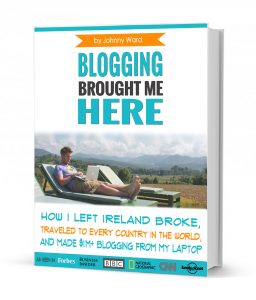
travel the world and live my dream. I talk about how I did it, and how you can do it too, in my COMPLETELY FREE
Ebook, all 20,000
words or so. Just finish the process by putting in your email below and I'll mail it right out to you immediately. No spam ever too, I promise!
As you know, blogging changed my life. I left Ireland broke, with no plan, with just a one-way ticket to Thailand
and no money. Since then, I started a blog, then a digital media company, I've made
more than $1,500,000 USD, bought 4 properties and visited (almost) every country in the world. And I did it all from my laptop as I
travel the world and live my dream. I talk about how I did it, and how you can do it too, in my COMPLETELY FREE
Ebook, all 20,000
words or so. Just finish the process by putting in your email below and I'll mail it right out to you immediately. No spam ever too, I promise!