

Solo Travel Tips and Tricks That Make Your First Trip Easier
At some point, the idea stops being abstract and becomes a browser tab with flight prices. That is usually when doubt shows up. Traveling alone sounds freeing, but it also raises questions about safety and planning, as well as makes you wonder whether you will enjoy your own company for days on end.
The same tension shows up in solo work, which is why essay writers often talk about learning to trust their process before trusting the outcome. When expectations are realistic and preparation is thoughtful, the experience becomes less about fear and more about focus. So, let’s walk you through the choices that make traveling alone feel even more fulfilling.
Table of contents
- Solo Travel Tips and Tricks That Make Your First Trip Easier
- Build a Simple Framework Before You Chase Inspiration
- Treat Money Decisions as Part of Your Mindset
- Reduce Cognitive Fatigue With Intentional Planning
- Remember That Safety Comes From Consistency
- Learn From Repeatable Systems
- Let Tools Handle Logistics
- Balance Solitude With Low-Stakes Connection
- Reflect So the Trip Stays With You
- Bottom Line
Build a Simple Framework Before You Chase Inspiration
Instead of collecting ideas first, decide how much certainty you need to feel grounded. Many people overlook this step when searching for solo travel planning tips and advice, yet it shapes everything that follows.
Start with fixed points. Lock in your accommodation, arrival plan, and departure window. That creates a stable frame. Once those pieces are in place, you can afford flexibility elsewhere.
This approach also helps avoid the trap of overplanning. When the skeleton of the trip is clear, daily decisions feel lighter. You stop asking what you should do and start noticing what you want to do.
Treat Money Decisions as Part of Your Mindset
Budgeting alone is not just arithmetic. It affects how relaxed or tense you feel throughout the trip. Many solo travel tips for beginners focus on cutting costs, but comfort deserves equal attention.
Instead of one rigid daily number, divide your spending into priorities. Decide where you want ease and where you are fine compromising. For example, you might choose a central location so you can walk more, even if it costs extra.
Here’s a useful way to think about money on solo trips:
- Non-negotiables that protect your energy;
- Optional expenses that enhance enjoyment;
- A quiet buffer for unexpected moments.
When these boundaries are set early, financial choices stop stealing attention from the experience itself.
Reduce Cognitive Fatigue With Intentional Planning
Being alone means every decision runs through you: directions, meals, timing, safety… Over time, this mental load adds up, which is why if you’re going to remember just one out of the solo travel planning tips, remember this: reduce daily decision fatigue.
Pair busy days with lighter ones. After a long transit or sightseeing-heavy day, plan something simple. A neighborhood walk. A familiar meal. A slow morning.
This mirrors how students seek dissertation writing help when sustained solo effort becomes draining. The issue is rarely ability; it is endurance. Travel benefits from the same respect for limits. Planning rest is what keeps the trip enjoyable beyond the first few days.
Remember That Safety Comes From Consistency
Fear-based advice often does more harm than good. Practical safety tips for solo travelers focus on habits that reduce risk without shrinking your world.
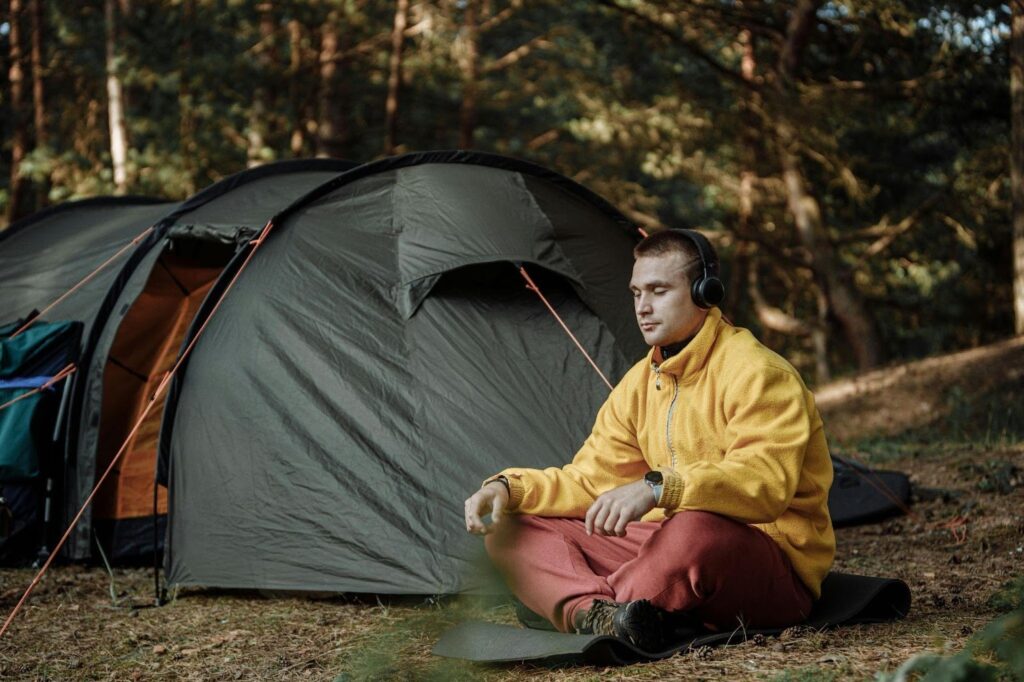
Predictability helps a lot! Leave accommodation at similar times. Use the same routes when possible. Keep essentials in consistent places. These patterns make you more aware of changes around you.
Two behaviors matter more than any gadget:
- Staying observant without appearing unsure;
- Avoiding decisions when tired or rushed.
Safety grows from calm routines. When those are in place, your confidence follows naturally.
Source: https://www.pexels.com/photo/man-in-yellow-jacket-sitting-beside-gray-tent-5052143/
Learn From Repeatable Systems
Social media favors extremes, but real progress comes from repeatable habits. Michael Perkins has discussed this principle in research contexts tied to essaywriters.com, noting that essay writers who work independently succeed by refining systems, not chasing bursts of motivation. The same logic applies to solo travel.
Experienced travelers reuse what works. Packing lists stay consistent. Booking strategies evolve slowly. Mistakes become data, not drama.
If something reduced stress on one trip, keep it. If it drained energy, remove it next time. Over time, your approach becomes personal and reliable, which is far more valuable than copying someone else’s itinerary.
Let Tools Handle Logistics
Technology should lower friction, not flatten experience. Many solo travel planning tips and guides recommend apps for maps, translation, and transport, and they are right. Where people go wrong is outsourcing curiosity along with logistics.
Use tools to get from place to place. Once there, step back. Walk without checking reviews. Sit somewhere unfamiliar. Ask questions instead of searching for answers.
The goal is not efficiency at all costs but presence.
Balance Solitude With Low-Stakes Connection
Traveling alone does not require constant isolation. One of the most overlooked solo travel tips is planning optional social contact without pressure.
Shared spaces help with that. Group activities early in the trip can ease loneliness without committing you to constant interaction. Casual conversations often happen naturally when you are relaxed, too.
Pay attention to your own signals: some days call for quiet; others benefit from connection. Neither means you are doing it wrong.
Reflect So the Trip Stays With You
The final part happens after you return because reflection turns experience into confidence.
Write down what challenged you, what surprised you, and what felt easier than expected. These notes will become proof for future trips that you can handle uncertainty and still enjoy yourself.
Solo travel teaches self-trust when you pause long enough to notice it.
Bottom Line
Traveling alone is less about bravery and more about alignment. When your plans match your energy, money choices match your values, and safety relies on habits rather than fear, the experience feels steady.
Over time, these tips for solo travel stop being advice and start becoming instinct. Each trip builds on the last, not because everything went perfectly, but because you learned how to adjust. That is the real reward of solo travel that makes you want to do this again.
Remember, never travel without travel insurance! And never overpay for travel insurance!
I use HeyMondo. You get INSTANT quotes. Super cheap, they actually pay out, AND they cover almost everywhere, where most insurance companies don't (even places like Central African Republic etc!). You can sign-up here. PS You even get 5% off if you use MY LINK! You can even sign up if you're already overseas and traveling, pretty cool.
Also, if you want to start a blog...I CAN HELP YOU!
Also, if you want to start a blog, and start to change your life, I'd love to help you! Email me on johnny@onestep4ward.com. In the meantime, check out my super easy blog post on how to start a travel blog in under 30 minutes, here! And if you just want to get cracking, use BlueHost at a discount, through me.
Also, (if you're like me, and awful with tech-stuff) email me and my team can get a blog up and running for you, designed and everything, for $699 - email johnny@onestep4ward.com to get started.
Do you work remotely? Are you a digital nomad/blogger etc? You need to be insured too.
I use SafetyWing for my digital nomad insurance. It covers me while I live overseas. It's just $10 a week, and it's amazing! No upfront fees, you just pay week by week, and you can sign up just for a week if you want, then switch it off and on whenever. You can read my review here, and you can sign-up here!




 As you know, blogging changed my life. I left Ireland broke, with no plan, with just a one-way ticket to Thailand
and no money. Since then, I started a blog, then a digital media company, I've made
more than $1,500,000 USD, bought 4 properties and visited (almost) every country in the world. And I did it all from my laptop as I
travel the world and live my dream. I talk about how I did it, and how you can do it too, in my COMPLETELY FREE
Ebook, all 20,000
words or so. Just finish the process by putting in your email below and I'll mail it right out to you immediately. No spam ever too, I promise!
As you know, blogging changed my life. I left Ireland broke, with no plan, with just a one-way ticket to Thailand
and no money. Since then, I started a blog, then a digital media company, I've made
more than $1,500,000 USD, bought 4 properties and visited (almost) every country in the world. And I did it all from my laptop as I
travel the world and live my dream. I talk about how I did it, and how you can do it too, in my COMPLETELY FREE
Ebook, all 20,000
words or so. Just finish the process by putting in your email below and I'll mail it right out to you immediately. No spam ever too, I promise!