

The Tyrrhenian Coast of Italy: What to Visit and How to Travel Stress-Free
Most travelers hear “Tyrrhenian Coast” and immediately picture Positano. Maybe Amalfi. (I’m guilty of that myself, since planning my honeymoon there!) A lemon tree hanging over a terrace somewhere just for the Gram.
But the Tyrrhenian coast stretches far beyond that tiny slice of Campania. This coastline runs down the western edge of Italy through Lazio, Campania, Basilicata, Calabria and northern Sicily, covering volcanic islands, Roman ruins, fishing villages, black sand beaches and some of the best road trip areas in Europe.
Of course, one day you’ll be standing on cliffs above the Amalfi Coast watching ferries zigzag across the sea. Drinking your Aperol Spritz (and then perhaps another for luck). A few days later you’re driving through sleepy Calabrian towns where old men still play cards outside cafes all afternoon. Then suddenly you’re swimming beside volcanic rock in Stromboli while smoke rises from the island itself. Sounds pretty nice!
The key to enjoying this part of Italy is slowing down a little and understanding the geography before you go. Distances look short on a map. Roads often aren’t. Europe can be like that sometimes, as an Irishman, I can absolutely testify to that! Summer traffic can be brutal around Naples and Amalfi. Ferries depend heavily on weather conditions. Train travel, however, is excellent. Especially between the larger cities.
And that’s exactly where most good Tyrrhenian coast trips should begin.
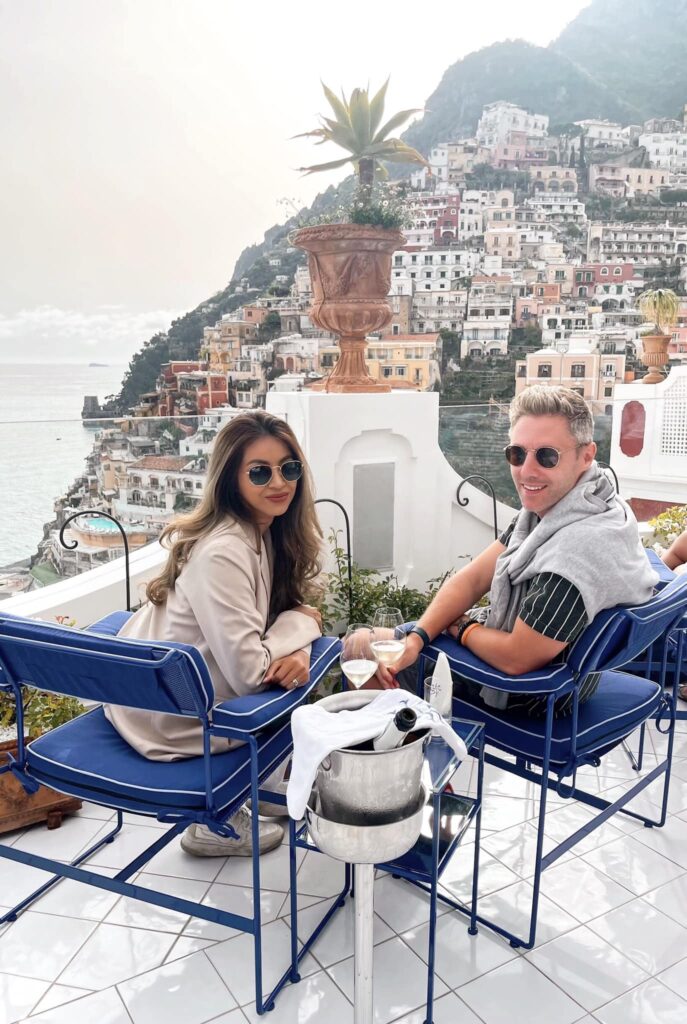
Table of contents
Rome and the Lazio Coast
Rome gets the attention. Fair enough. It’s Rome. But the Tyrrhenian coastline north and west of the capital deserves a couple of days of your time too.
The easiest place to start is Ostia Antica. Most tourists spend four hours standing in lines at the Colosseum while Ostia sits half empty despite being one of the most impressive Roman archaeological sites in the country. Ancient streets, bathhouses, mosaics, amphitheatres. You can wander almost freely.
Then head north along the coast.
Santa Marinella has become a classic local escape from Rome during summer weekends. Beach clubs, seafood restaurants, families arriving from the city by train. Relaxed atmosphere. Very Italian. Less polished than the Amalfi Coast, but that’s partly why I liked it.
Further north, Tarquinia offers a completely different vibe. Etruscan tombs, medieval streets and a slower rhythm overall. Civitavecchia meanwhile acts as the major cruise port, though most travelers rush straight through it. Big mistake. The waterfront seafood spots around sunset are excellent.
Logistically, Lazio is straightforward. Trains work well. Roads are decent. Distances remain manageable. You can comfortably combine Rome and the coastal towns without much stress.
Campania and the Amalfi Coast
This is the famous section. The postcard Italy section. YOU CANNOT MISS THIS BIT for obvious reason, just don’t ONLY come here.
Positano rises vertically from the sea like somebody built a luxury resort into a cliff face by accident. Amalfi feels historic and chaotic at the same time. Ravello sits high above everything with those ridiculous terrace views across the coastline. Atrani, meanwhile, remains my favourite of the lot because life still feels relatively local there. And the prices reflect that a little.
Unfortunately, the driving sounds romantic until you spend three hours stuck behind buses on narrow cliff roads! Searching desperately for parking that costs more than your hotel room. During summer, public transportation wins here almost every time.
Sorrento makes the smartest base in my opinion. Easy ferry connections. Good restaurants. Train access to Naples. Day trips in every direction. You avoid dragging luggage through steep Amalfi staircases while still staying close to the action.
What about Naples? Well, people either love Naples immediately or spend the first twelve hours trying to understand it. Traffic everywhere. Scooters flying through gaps that barely exist. Laundry hanging from apartment windows above chaotic little alleyways. Then suddenly you sit down for pizza and completely forgive the city for everything.
From there, the Circumvesuviana train connects travelers to Pompeii and the Sorrento Peninsula. Slow train. Slightly chaotic. Completely worth it.
South of Amalfi, things calm down dramatically. And you’ll need it by this stage!
Paestum was one of the biggest surprises for me anywhere in Italy. Huge Greek temples standing almost perfectly preserved beside quiet countryside. Hardly any crowds compared to Rome or Pompeii. Then further south, the Cilento coast opens up with beaches, hill towns and a much more relaxed atmosphere overall.
This part of Campania rewards patience. Stay longer. Move slower. Book accommodation early in summer. Ferry schedules matter. Restaurant reservations matter too (Especially in July and August when the Americans flood the place!)
Calabria and the Costa degli Dei
Calabria feels rougher around the edges than northern Italy. But I 1000% mean that positively. The Costa degli Dei, or Coast of the Gods, stretches along the Tyrrhenian side of Calabria and delivers some of the best swimming water I’ve seen anywhere in Europe.
Tropea steals the headlines. Fair enough again. The old town rises dramatically above turquoise water, and the beach below the cliffs genuinely looks Caribbean on a sunny day. The sunset here is spectacular.
But personally, it’s always the smaller places nearby that interest me more.
Pizzo Calabro has excellent tuna and swordfish restaurants for the non-veggies (like me!). Scilla feels tied completely to the sea with fishing boats pulled up directly beneath houses. Capo Vaticano offers viewpoints where the coastline curves endlessly southward into haze. Road tripping works brilliantly here because tourism infrastructure remains relatively low-key. You can still stumble across family-run restaurants where nobody speaks much English and lunch somehow lasts three hours (you’re on holiday, indulge!) The beaches vary constantly too. White sand in one bay. Rocky coves in the next. Crystal water almost everywhere.
Basilicata and Maratea
Maratea deserves far more attention internationally. I find it so weird that it’s not famous.
This stretch of coastline in Basilicata feels dramatic in a completely different way from Amalfi. Higher cliffs. Darker beaches. Fewer tourists. Roads twisting through mountains before suddenly opening onto tiny coves below.
Cala Jannita stood out immediately for me because of the volcanic black sand. Swimming there feels completely different from the polished beach clubs further north. Wilder. Less curated.
The whole region feels like Italy before mass tourism fully arrived. And honestly, after a few busy days around Amalfi or Naples, Maratea comes at the perfect time in the trip. Long seafood lunches. Quiet evenings. Tiny beaches hidden below cliffs. Boats bobbing around little harbours.
Nearby Praia a Mare and Scalea in northern Calabria also work well as overnight stops if you’re continuing south. Distances along this coastline can be deceptive though. A short drive on the map often becomes a winding mountain road taking twice as long as expected. Build flexibility into your itinerary.
Northern Sicily and the Aeolian Islands
Crossing into Sicily changes the atmosphere immediately. Palermo is loud, gritty and addictive. Markets spill through alleyways. Motorbikes swarm in every direction. Norman churches sit beside Arabic influences and crumbling old buildings. Sicily feels layered historically in a way few places do.
Cefalù provides balance after Palermo. Small beach town. Beautiful cathedral. Great sunsets. Easy place to slow down for a couple of days.
Then come the Aeolian Islands. Lipari works best as a base because ferry connections are strongest there. Stromboli feels surreal once the volcano starts erupting after dark. Panarea attracts the stylish crowd during summer. Salina remains quieter and greener.
Vulcano smells faintly of sulphur almost constantly.
The islands all have different personalities despite sitting relatively close together. Ferry schedules become your biggest logistical factor here, especially if weather changes. Build extra time into the itinerary rather than trying to rush through island hopping.
And finally, San Vito Lo Capo rounds things off beautifully. White sand, clear water and a genuinely relaxed beach atmosphere.
How to Travel the Tyrrhenian Coast Stress-Free
The biggest mistake people make here is trying to do too much (Hands up if you’re guilty of that johnny boy!). While Rome is easily reachable from Naples with Italo high speed trains, other destinations can be tricky to squeeze in with Amalfi, Calabria and Sicily all deserve proper time individually. Trying to squeeze the entire Tyrrhenian coast into one rushed week usually ends with more train stations and parking garages than actual experiences.
– Use trains between major cities.
– Use ferries where possible around Campania and Sicily.
– Rent a car selectively rather than for the entire trip.
And during summer, book ahead. Especially:
- Amalfi Coast hotels
- ferries
- trains
- beach clubs
- island accommodation
AS ALWAYS, shoulder seasons are best. And September is probably the sweet spot overall. Warm sea, fewer crowds, slightly calmer roads.
The Tyrrhenian coast rewards curiosity too. Some of my favourite moments happened away from famous landmarks entirely. Random roadside seafood places. Tiny fishing ports. Old men arguing outside cafes in Calabria. Swimming beneath cliffs in Basilicata with almost nobody else around.
That’s the beauty of this coastline. Every section feels different. Every region changes character.
And somehow it all still connects together perfectly.
Remember, never travel without travel insurance! And never overpay for travel insurance!
I use HeyMondo. You get INSTANT quotes. Super cheap, they actually pay out, AND they cover almost everywhere, where most insurance companies don't (even places like Central African Republic etc!). You can sign-up here. PS You even get 5% off if you use MY LINK! You can even sign up if you're already overseas and traveling, pretty cool.
Also, if you want to start a blog...I CAN HELP YOU!
Also, if you want to start a blog, and start to change your life, I'd love to help you! Email me on johnny@onestep4ward.com. In the meantime, check out my super easy blog post on how to start a travel blog in under 30 minutes, here! And if you just want to get cracking, use BlueHost at a discount, through me.
Also, (if you're like me, and awful with tech-stuff) email me and my team can get a blog up and running for you, designed and everything, for $699 - email johnny@onestep4ward.com to get started.
Do you work remotely? Are you a digital nomad/blogger etc? You need to be insured too.
I use SafetyWing for my digital nomad insurance. It covers me while I live overseas. It's just $10 a week, and it's amazing! No upfront fees, you just pay week by week, and you can sign up just for a week if you want, then switch it off and on whenever. You can read my review here, and you can sign-up here!




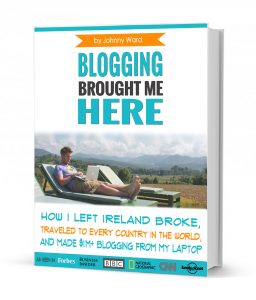 As you know, blogging changed my life. I left Ireland broke, with no plan, with just a one-way ticket to Thailand
and no money. Since then, I started a blog, then a digital media company, I've made
more than $1,500,000 USD, bought 4 properties and visited (almost) every country in the world. And I did it all from my laptop as I
travel the world and live my dream. I talk about how I did it, and how you can do it too, in my COMPLETELY FREE
Ebook, all 20,000
words or so. Just finish the process by putting in your email below and I'll mail it right out to you immediately. No spam ever too, I promise!
As you know, blogging changed my life. I left Ireland broke, with no plan, with just a one-way ticket to Thailand
and no money. Since then, I started a blog, then a digital media company, I've made
more than $1,500,000 USD, bought 4 properties and visited (almost) every country in the world. And I did it all from my laptop as I
travel the world and live my dream. I talk about how I did it, and how you can do it too, in my COMPLETELY FREE
Ebook, all 20,000
words or so. Just finish the process by putting in your email below and I'll mail it right out to you immediately. No spam ever too, I promise!