

Why the Manaslu Circuit Is Nepal’s Last True Wilderness Trek
The prayer flags snapped violently in the morning wind, and through their colorful dance, I caught my first real glimpse of Manaslu. Eight thousand one hundred sixty-three meters of ice and rock, glowing pink in the dawn light. I stood there on the trail outside Lho village, breathing hard in the thin air, my fingers numb despite my gloves, and felt something I hadn’t experienced on any other trek in Nepal — complete, overwhelming solitude.
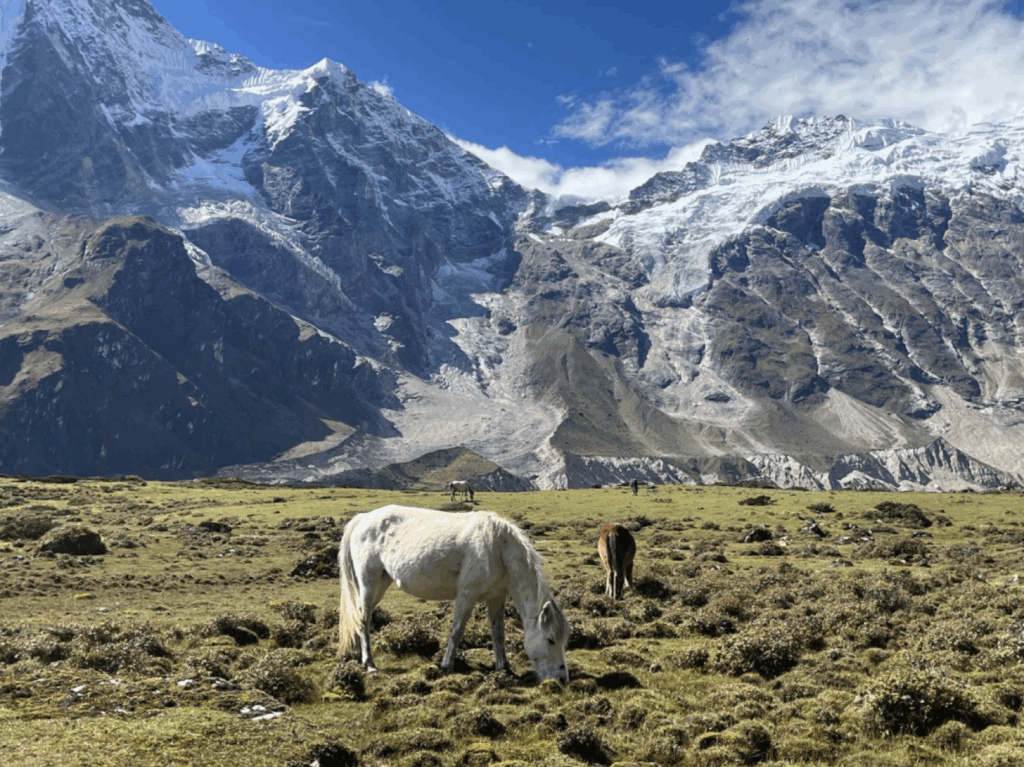
It was day seven of what would become the most profound trek of my life, and I’d seen exactly twelve other trekkers since leaving Soti Khola. Twelve. On the same day the previous year, I’d counted over two hundred people at Namche Bazaar on the Everest trail. But here, on the Manaslu Circuit Trek, it was just me, my guide Pemba, the mountain, and a silence so complete I could hear my heartbeat echoing off the valley walls.
Walking Through Nepal’s Forgotten Valleys
People ask me what makes Manaslu different, and I struggle to explain it without sounding like I’m gatekeeping some secret. The truth is, it’s not just one thing — it’s the accumulation of small moments that couldn’t happen anywhere else. It’s walking for six hours without seeing another soul except for a herder moving his yaks to lower pastures. It’s arriving at a teahouse in Samdo to find you’re the only guests, and the owner’s grandmother teaches you to make momos while snow begins to fall outside.
The trail itself feels rebellious, like it refuses to be tamed. Some days we walked on paths so narrow that yaks had worn grooves into the mountainside over centuries of use. The Budhi Gandaki River roared below us, sometimes turquoise, sometimes angry brown after rain, always reminding us that nature was in charge here. There were no coffee shops with WiFi names like “Everest View Café” or pizza restaurants at 4,000 meters. Just simple stone houses, wood smoke curling from chimneys, and the kind of authentic hospitality that happens when tourism hasn’t yet become an industry.
I remember stopping for lunch somewhere between Deng and Namrung — I can’t even remember the village name, it was so small. An elderly woman served us dal bhat in her kitchen while her grandchildren did homework by candlelight. No menu, no choices, just whatever the family was eating that day. The walls were black from decades of cooking smoke, and pictures of the Dalai Lama watched over us from every corner. When I tried to pay, she seemed almost offended by my attempt to turn her hospitality into a transaction.
Following the Ancient Trade Route
Looking back at my journal, the rhythm of those fourteen days feels like a meditation. Each village marked a gradual ascent not just in altitude but in cultural immersion:
Days 1-3 took us from Machha Khola through Jagat to Deng, following the Budhi Gandaki gorge through subtropical forests that gradually gave way to pine. These early days were about finding your trail legs, crossing countless suspension bridges while the river roared below.
Days 4-6 brought the Tibetan influence as we climbed from Namrung through Lho to Samagaun. This is where the trek reveals its true character — prayer walls stretching for hundreds of meters, villages where time stopped centuries ago. In Lho, at 3,520 meters, Manaslu finally shows herself in all her terrifying beauty.
Day 7 in Samagaun was supposed to be for acclimatization, but really it was for remembering how to be human at altitude. I hiked up to Pungyen Monastery with some French trekkers who’d appeared out of nowhere. The monks were preparing for evening prayers, and one of them, maybe eighty years old with hands like worn leather, handed me yak butter tea without a word. Just a smile that suggested he’d seen a thousand foreign faces pass through but still found joy in this simple act of hospitality.
Days 8-9 pushed us higher — Samdo at 3,860 meters, then Dharamsala at 4,460. These aren’t villages anymore, just stone shelters against the wind. In Samdo, I watched blue sheep navigate impossible slopes while Pemba pointed out fresh snow leopard tracks. We never saw the cat, but knowing it was out there added something electric to the thin air.
Day 10 — Larkya La Pass day — started at 2 AM and lasted forever. Ten hours from Dharamsala to Bimthang, with the 5,167-meter pass as the cruel centerpiece. I won’t romanticize it: for four hours ascending to the pass, it was pure suffering. Step, breathe, breathe, breathe, step. But then the prayer flags appeared through wind-driven snow, and the view… Himlung Himal, Cheo Himal, and the entire Annapurna range reveal themselves like a divine apology for the morning’s misery.
Days 11-13 were all descent — Bimthang to Tilije to Dharapani, dropping from alpine moonscape back to forests and finally to the road at Besisahar. My knees screamed with every downward step, but the thick air at 2,300 meters felt like breathing soup after two weeks up high.
The Sacred and the Simple
Samagaon hit differently than any village I’d stayed in before. At 3,500 meters, it sits in Manaslu’s shadow like a collection of stone prayers. We arrived during full moon, and that evening I walked to Pungyen Monastery with a few locals heading to evening prayers. The monks were chanting, their deep voices mixing with the sound of drums and horns that echoed across the valley. An elderly monk, maybe eighty years old, handed me a cup of yak butter tea without a word, just a smile that suggested he’d seen a thousand trekkers come through but still found joy in sharing this moment.
The next morning, Pemba suggested we acclimatize by hiking to Birendra Lake. Halfway up, my lungs screaming for oxygen, I wanted to quit. But then we crested a ridge and there it was — a glacial lake so perfectly blue it looked fake, with Manaslu’s north face reflected in its surface. We sat there for an hour, not talking, just existing in that space where earth meets sky. A lammergeier circled overhead, its three-meter wingspan casting shadows on the snow. These are the moments you can’t plan for, can’t buy, can’t Instagram your way into. You just have to walk until you find them.
The Pass That Changes You
Larkya La Pass broke me down and rebuilt me. We started the climb at 3 AM, headlamps cutting through darkness, ice crunching under our boots. The altitude made every step feel like three, and I stopped every hundred meters to gulp air that never seemed like enough. Pemba kept checking on me, his face concerned but encouraging. “Slowly, slowly,” he kept saying, the mountain mantra that becomes your heartbeat above 5,000 meters.
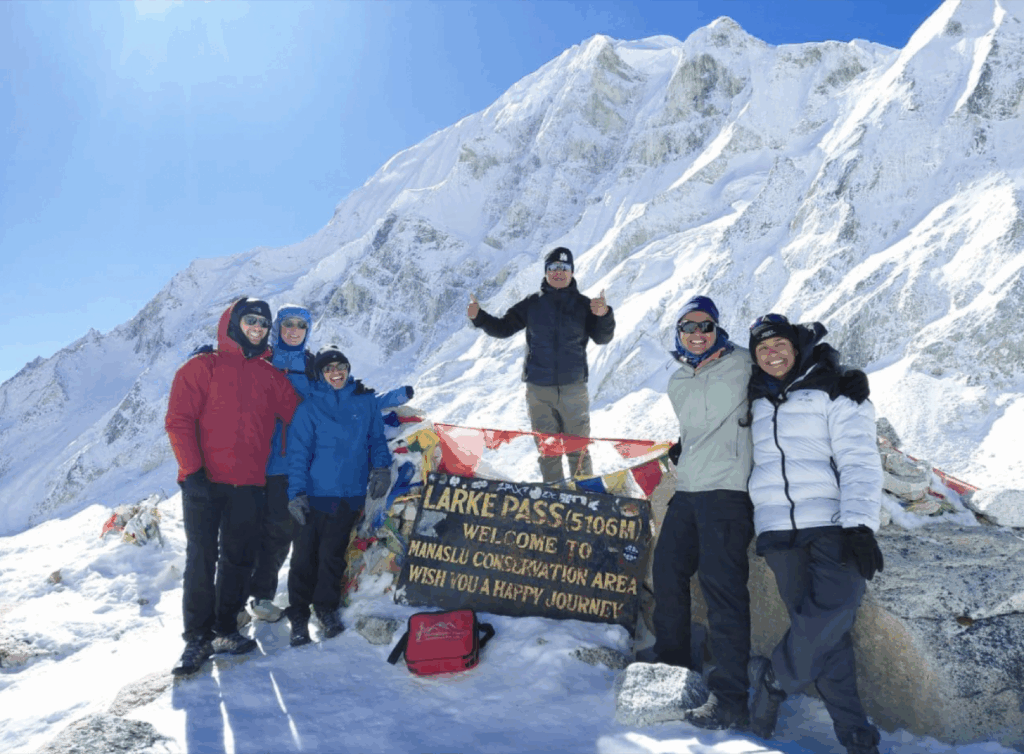
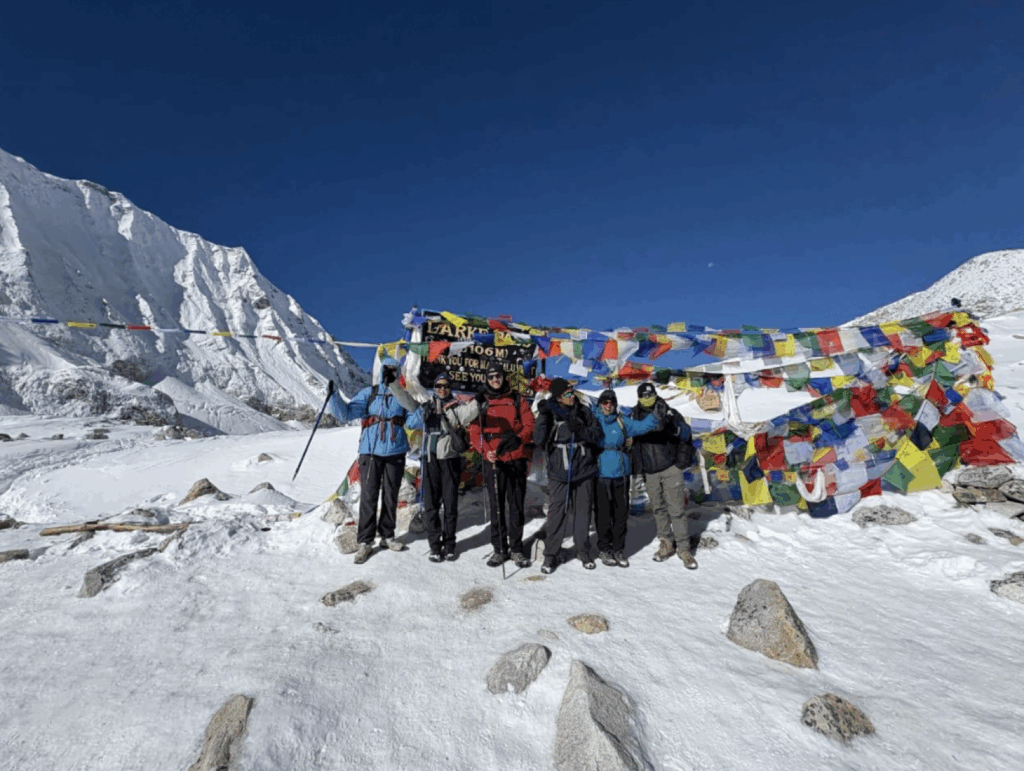
By sunrise, we were approaching the prayer flags that mark the pass at 5,106 meters. The wind was brutal, probably minus fifteen, and my water bottles had frozen solid. But when I finally collapsed next to those flags, when I looked out at the panorama of peaks stretching to Tibet, I understood why people become addicted to mountains. Himlung Himal, Cheo Himal, Kang Guru, even distant Annapurna II — they were all there, painted gold by morning sun. I cried, and the tears froze on my cheeks, and I didn’t care who saw.
The descent toward Bimthang was like entering a different world. We’d crossed more than just a pass; we’d moved from the Tibetan Buddhist world of the east to the Hindu-influenced valleys of the west. If you’re dreaming of experiencing this same untouched trail, the Manaslu Circuit Trek in Nepal offers a similar sense of adventure to what I found here. But even that description doesn’t capture how it feels to earn every view, every valley, every cup of tea through genuine effort.
Why This Trek Remains Wild
I’ve done Everest Base Camp twice and the Annapurna Circuit once, and they’re incredible treks — I won’t pretend otherwise. But they’ve become products, packaged and marketed and Instagrammed into submission. The Manaslu Circuit Trek remains stubbornly uncommercialized, partly due to restricted area permits that limit numbers, partly because it’s harder to get to, but mostly because it requires a commitment that casual trekkers won’t make.
There’s no airport at 3,000 meters to shortcut the approach. No luxury lodges with hot showers and espresso machines. When storms close the pass, you wait, sometimes for days, playing cards with other stranded trekkers and learning Nepali curse words from the porters. The trail doesn’t care about your schedule or your comfort zone. It demands respect, patience, and a willingness to embrace uncertainty.
But that’s exactly why it gives back so much more. In Dharamsala, the night before crossing the pass, I shared a dormitory with just three other trekkers — a couple from Switzerland and a solo hiker from Japan. We cooked dinner together on a single gas stove because the lodge had run out of kerosene. By headlamp, we shared stories, chocolate, and fears about the next day’s crossing. These weren’t people I’d matched with on a travel app or met at a hostel bar. We were there, together, because we’d all chosen the harder path.
What the Mountains Teach
Three weeks after starting the trek, sitting in a Kathmandu café with reliable WiFi and overpriced coffee, I struggled to process what had happened out there. The Manaslu Circuit had stripped away every comfort, every distraction, every excuse. It showed me that wildness isn’t just about untouched landscapes — it’s about unfiltered experiences, unplanned moments, unmanufactured connections.
I watched other trekkers in the café planning their routes, downloading offline maps, booking hotels in advance, trying to control every variable. And I understood the impulse — I’d been the same before Manaslu. But now I knew that the best parts of travel, maybe the best parts of life, happen in the spaces between plans. They happen when you’re lost, exhausted, uncertain, and suddenly the clouds part to reveal a mountain that makes you forget your own name.
The Manaslu Circuit Trek isn’t Nepal’s last true wilderness because it’s remote or difficult, or less traveled. It’s the last true wilderness because it still has the power to make you wild, too. To remind you that you’re an animal who can walk for days, sleep anywhere, and find joy in simple warmth and basic food. It returns you to yourself, weathered and worn but somehow more complete.
As I write this, six months later, I can still close my eyes and hear those prayer flags snapping in the wind. I can smell the juniper burning in morning pujas, taste the salt in my sweat as I climb toward the pass. My feet have healed, my muscles have softened, but something in me remains on that trail, walking slowly, slowly toward something larger than myself. And maybe that’s the point. Maybe wilderness isn’t a place you visit but a part of yourself you recover, one difficult step at a time.
Remember, never travel without travel insurance! And never overpay for travel insurance!
I use HeyMondo. You get INSTANT quotes. Super cheap, they actually pay out, AND they cover almost everywhere, where most insurance companies don't (even places like Central African Republic etc!). You can sign-up here. PS You even get 5% off if you use MY LINK! You can even sign up if you're already overseas and traveling, pretty cool.
Also, if you want to start a blog...I CAN HELP YOU!
Also, if you want to start a blog, and start to change your life, I'd love to help you! Email me on johnny@onestep4ward.com. In the meantime, check out my super easy blog post on how to start a travel blog in under 30 minutes, here! And if you just want to get cracking, use BlueHost at a discount, through me.
Also, (if you're like me, and awful with tech-stuff) email me and my team can get a blog up and running for you, designed and everything, for $699 - email johnny@onestep4ward.com to get started.
Do you work remotely? Are you a digital nomad/blogger etc? You need to be insured too.
I use SafetyWing for my digital nomad insurance. It covers me while I live overseas. It's just $10 a week, and it's amazing! No upfront fees, you just pay week by week, and you can sign up just for a week if you want, then switch it off and on whenever. You can read my review here, and you can sign-up here!


 As you know, blogging changed my life. I left Ireland broke, with no plan, with just a one-way ticket to Thailand
and no money. Since then, I started a blog, then a digital media company, I've made
more than $1,500,000 USD, bought 4 properties and visited (almost) every country in the world. And I did it all from my laptop as I
travel the world and live my dream. I talk about how I did it, and how you can do it too, in my COMPLETELY FREE
Ebook, all 20,000
words or so. Just finish the process by putting in your email below and I'll mail it right out to you immediately. No spam ever too, I promise!
As you know, blogging changed my life. I left Ireland broke, with no plan, with just a one-way ticket to Thailand
and no money. Since then, I started a blog, then a digital media company, I've made
more than $1,500,000 USD, bought 4 properties and visited (almost) every country in the world. And I did it all from my laptop as I
travel the world and live my dream. I talk about how I did it, and how you can do it too, in my COMPLETELY FREE
Ebook, all 20,000
words or so. Just finish the process by putting in your email below and I'll mail it right out to you immediately. No spam ever too, I promise!