


Best Solar Generator Uses for Camping, RVs, and Emergencies
A solar generator can make outdoor plans easier and power outages less stressful. It stores electricity in a battery, then sends that power through AC outlets, USB ports, or DC outputs when you need it.
The key is matching the system to the job. Camping, RV travel, and emergency backup all ask for different capacity, output, charging speed, and portability. A compact weekend unit and a home backup system can both help reliably, but they solve different problems.
Table of contents
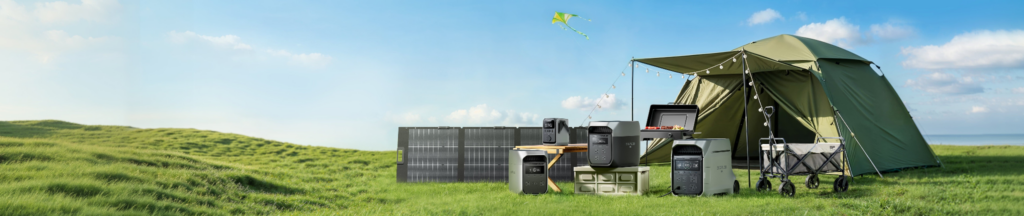
Start With the Trip, Not the Product
Most buyers start by comparing model names. That can waste time because the same device may feel oversized at a tent site and undersized during a long blackout. Start with the place, the loads, and the hours you expect to use power.
A well-chosen solar generator should answer a specific need first. For a weekend camper, that may be phones and lights. For a homeowner, it may be a refrigerator, router, and medical device during an outage.
This approach also helps you avoid paying for capacity you will not use. A clear use case makes it easier to compare weight, ports, charging options, and expansion without getting distracted by every feature on the page.
Know What Each Use Case Demands
The same solar generator can support more than one situation, but each setting changes the priority. Camping rewards light weight and quiet operation. RV travel adds higher output needs. Emergency use puts more pressure on runtime, safety, and recharge options.
Tent Camping
Tent campers usually care about small loads. Phones, headlamps, cameras, GPS units, and compact fans use far less energy than cooking appliances. A lightweight unit with USB-C and AC outlets can cover these basics without adding much bulk.
Camp Kitchens
Camp kitchens need more caution. Electric kettles, induction cooktops, coffee makers, and toaster ovens can draw heavy power for short periods. A solar generator works best here when you check rated input labels before packing high-watt gear.
RV Travel
RV use often sits between camping and home backup. Travelers may want to run a refrigerator, lights, laptops, fans, or a small appliance during stops. Output, port layout, solar input, and car charging become more important than minimum weight or smallest size.
Emergency Home Loads
Emergency backup starts with essentials. Your solar generator should support the loads that protect food, communication, and safety before comfort items. A router, modem, LED lights, phone chargers, and a refrigerator usually matter more than entertainment devices.
Size It With Real Loads
A solar generator choice becomes clearer when you separate watts from watt-hours. Watts show how much power a device needs at one moment. Watt-hours estimate how much energy it will use over time, and appliance labels matter more than online averages.
Check Running Watts
Running watts describe normal operation. A laptop, fan, or LED light may draw modest power, while heat-producing devices can draw much more. Public utility charts often list laptops around 0.02 to 0.05 kWh per hour.
Watch Starting Surge
Motor-driven appliances may need extra power for a brief startup moment. Refrigerators, pumps, and some tools can draw more when they start than when they run. Leave headroom instead of sizing your setup to the exact running number.
Estimate Daily Energy
Daily energy is the number that decides runtime. Add each device’s wattage, then multiply by the hours you expect to use it. The U.S. Department of Energy recommends estimating appliance use this way when comparing household energy needs.
| Use Case | Common Loads | Data Point to Check | Planning Note |
|---|---|---|---|
| Tent camping | Phones, lights, camera batteries | USB-C output and total watt-hours | Keep weight low |
| RV travel | Fridge, fan, laptop, lights | AC output, solar input, car charging | Plan for travel days |
| Emergency backup | Router, refrigerator, lights | Runtime, surge output, recharge method | Prioritize essentials |
| Camp cooking | Coffee maker, kettle, toaster | Rated watts on appliance label | Use high loads briefly |
Compare Popular Backup Styles
Gas generators still make sense for some heavy outdoor loads, especially when fuel storage and ventilation are handled correctly. They should never be used indoors. FEMA advises running portable generators outdoors in well-ventilated areas away from doors, windows, and vents.
Portable power stations serve a different role. They avoid exhaust and reduce campground noise, but they depend on stored energy and recharge conditions. That makes load planning more important, especially when sunlight is limited or weather changes quickly.
A solar generator sits in the middle for many users. It is cleaner and quieter than a fuel generator, yet more capable than a basic power bank. Jackery, Anker, Bluetti, Goal Zero, and EcoFlow all address parts of this market.
Use It Better in the Field
Good results depend on habits as much as hardware. A strong battery can disappoint if panels sit in shade, high-watt appliances run too long, or the unit is stored without charge before storm season.
Place Panels With Intention
Solar panels work best with clear sun and careful placement. Trees, vehicle shadows, clouds, and poor angles reduce output. Treat the panel rating as a best-case figure, then build your charging plan with room for real weather.
Keep Loads Modest
Small loads preserve runtime. Charge phones during the day, use LED lights at night, and run heavy devices in short sessions. This habit helps a solar generator support more useful hours without forcing you into a larger setup.
Build a Simple Rotation
A rotation keeps power predictable. Charge the unit before leaving, recharge from the vehicle when driving, use solar during daylight, and reserve battery capacity for night use. This approach works for camping and emergency planning.
- Charge the unit fully before the trip or storm window.
- Test your key devices at home before relying on them.
- Pack the correct charging cables and panel adapters.
Plan for Fuel-Free Safety
Unlike a gas unit, a solar generator does not create exhaust while discharging. That matters in tents, cabins, garages, and homes. You still need to follow the manual, keep vents clear, and avoid wet or overheated conditions.
Why EcoFlow Is Easy to Build Around
EcoFlow gives buyers a practical ladder instead of one fixed answer. RIVER 3 Plus lists 286Wh capacity and 600W output for light use, while DELTA 3 Plus offers 1 to 5kWh expandable capacity and 1800W output for broader backup needs.
For heavier home plans, DELTA Pro 3 lists 4 to 48kWh expandable capacity, 4kW output, and up to 2600W solar input under optimal conditions. That range lets users start with real needs, then scale when those needs grow.
Remember, never travel without travel insurance! And never overpay for travel insurance!
I use HeyMondo. You get INSTANT quotes. Super cheap, they actually pay out, AND they cover almost everywhere, where most insurance companies don't (even places like Central African Republic etc!). You can sign-up here. PS You even get 5% off if you use MY LINK! You can even sign up if you're already overseas and traveling, pretty cool.
Also, if you want to start a blog...I CAN HELP YOU!
Also, if you want to start a blog, and start to change your life, I'd love to help you! Email me on johnny@onestep4ward.com. In the meantime, check out my super easy blog post on how to start a travel blog in under 30 minutes, here! And if you just want to get cracking, use BlueHost at a discount, through me.
Also, (if you're like me, and awful with tech-stuff) email me and my team can get a blog up and running for you, designed and everything, for $699 - email johnny@onestep4ward.com to get started.
Do you work remotely? Are you a digital nomad/blogger etc? You need to be insured too.
I use SafetyWing for my digital nomad insurance. It covers me while I live overseas. It's just $10 a week, and it's amazing! No upfront fees, you just pay week by week, and you can sign up just for a week if you want, then switch it off and on whenever. You can read my review here, and you can sign-up here!






 As you know, blogging changed my life. I left Ireland broke, with no plan, with just a one-way ticket to Thailand
and no money. Since then, I started a blog, then a digital media company, I've made
more than $1,500,000 USD, bought 4 properties and visited (almost) every country in the world. And I did it all from my laptop as I
travel the world and live my dream. I talk about how I did it, and how you can do it too, in my COMPLETELY FREE
Ebook, all 20,000
words or so. Just finish the process by putting in your email below and I'll mail it right out to you immediately. No spam ever too, I promise!
As you know, blogging changed my life. I left Ireland broke, with no plan, with just a one-way ticket to Thailand
and no money. Since then, I started a blog, then a digital media company, I've made
more than $1,500,000 USD, bought 4 properties and visited (almost) every country in the world. And I did it all from my laptop as I
travel the world and live my dream. I talk about how I did it, and how you can do it too, in my COMPLETELY FREE
Ebook, all 20,000
words or so. Just finish the process by putting in your email below and I'll mail it right out to you immediately. No spam ever too, I promise!