


What to Look for in an Electric Bike Helmet for City Riding
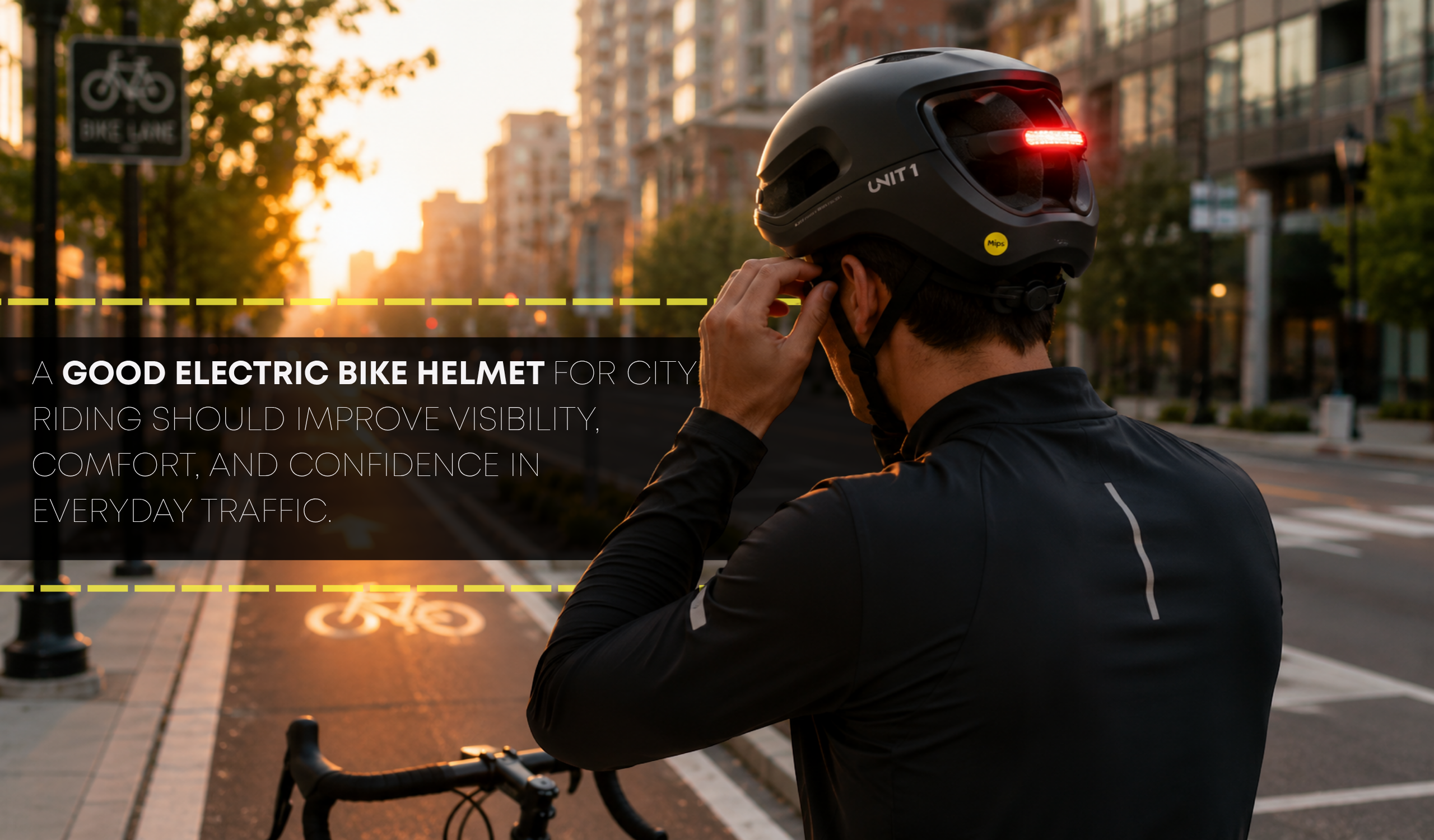
E-bikes nowadays have made everyday travel faster, easier, and more practical, especially for people who use them for commuting, errands, short rides across town, or weekend exploring. But riding a cycle through a busy city is not the same as taking a regular bike down a quiet path.
The pace is quicker.
The stops are more frequent.
The rider is often moving between cars, scooters, pedestrians, delivery bikes, parked vehicles, road markings, and unpredictable intersections. That is why picking an electric bike helmet for city riding should not be treated like an afterthought.
A good helmet should protect well, fit securely, and feel comfortable enough to wear every day. But, a great city e-bike helmet should also help the rider stay visible, communicate movement, and feel more confident in changing traffic conditions.
Table of contents
- What to Look for in an Electric Bike Helmet for City Riding
- Start with E-Bike-specific protection
- Make visibility a priority
- Look for smart features that solve real problems
- Prioritize Fit Before Everything Else
- Think about comfort for daily use
- Consider how you actually ride
- Do not treat style as separate from safety
- Check battery and charging practicality
- Remember that a helmet is one part of safer riding
- Quick Checklist Before Buying
- Final Takeaway
Start with E-Bike-specific protection
Protection should always come first. City e-bikes can move faster than regular bikes, especially when riders accelerate after traffic lights, ride alongside cars, or commute through busier routes.
Before comparing colors, lights, or smart features, check whether the helmet meets recognized safety standards.
Look for:
- CPSC certification for the United States
- EN-1078 certification for Europe
- NTA-8776 certification for higher-speed e-bike use
- MIPS or rotational impact protection for added protection during angled impacts
- A stable retention system that keeps the helmet secure while riding
A helmet can look modern and feel comfortable, but certification is what gives the purchase real value. Start there, then compare design, lighting, and smart features.
Make visibility a priority
In a city, being seen is just as important as being protected. Many rides happen in imperfect conditions: early mornings, late evenings, cloudy weather, shaded streets, or busy intersections where drivers are looking in several directions at once. Useful visibility features include:
- Front lights for visibility from ahead
- Rear lights for drivers and riders behind you
- Side visibility for crossings and turns
- Reflective details for low-light conditions
- Brake lights to show when you are slowing down
- Turn signals to make direction changes clearer
For riders who commute regularly, built-in helmet lights can also reduce the chance of forgetting a separate clip-on light at home.
Look for smart features that solve real problems
Smart features should make city riding easier, not more complicated. The best ones are the features that support everyday decisions on the road.
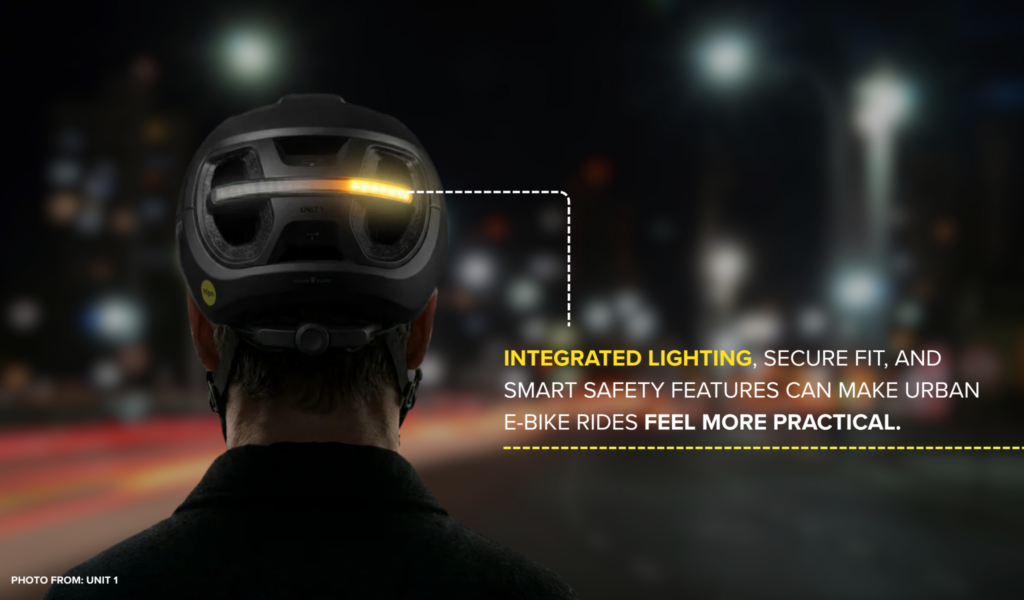
Brake lights can help communicate when a rider is slowing down. Turn signals can make direction changes clearer, especially when hand signaling feels difficult in traffic. Crash detection can add reassurance by sending an alert if a hard impact is detected and the rider does not respond.
App controls are also useful as they allow riders to manage lighting, battery, and settings without making the helmet feel overly technical.
This is where design-led brands like UNIT 1’s smart helmet approach adds value and relevance. UNIT 1’s electric bike helmet for city riding designs shows how helmet technology can support visibility, communication, and protection in one connected system. The brand builds around practical urban riding needs rather than adding technology for the sake of it.
Their AURA helmet, for example, brings together e-bike certification, MIPs protection, integrated front and rear lights, turn signal compatibility, automatic brake light functionality, crash alert support, and app-based customization.
Prioritize Fit Before Everything Else
Even the most advanced helmet will not do its job properly if it does not fit well. A helmet should fit and sit level on the head, cover the forehead, and feel secure without being painfully tight.
The straps should sit neatly around the ears, and the chin strap should feel snug enough that the helmet does not shift while riding. A dial-fit system can make daily adjustment easier, especially for riders who change hairstyles, wear thin caps in colder weather, or share helmets between similar head sizes.
Fit also affects confidence.
If a helmet moves around, feels too loose, or creates pressure points, the rider is less likely to wear it consistently. For city e-bike riders, consistency matters because many trips are short and spontaneous. The helmet needs to be easy enough to wear every time, not only on longer rides.
Think about comfort for daily use
City helmets are not only worn during long weekend rides. They are worn during commutes, quick grocery runs, school drop-offs, coffee stops, and rides between appointments. That means comfort has to be practical, not just technical.
Ventilation helps during warmer weather or stop-start riding. Soft padding improves daily wear. A balanced weight keeps the helmet from feeling tiring. Weather resistance can also matter if the rider commutes through light rain or changing conditions.
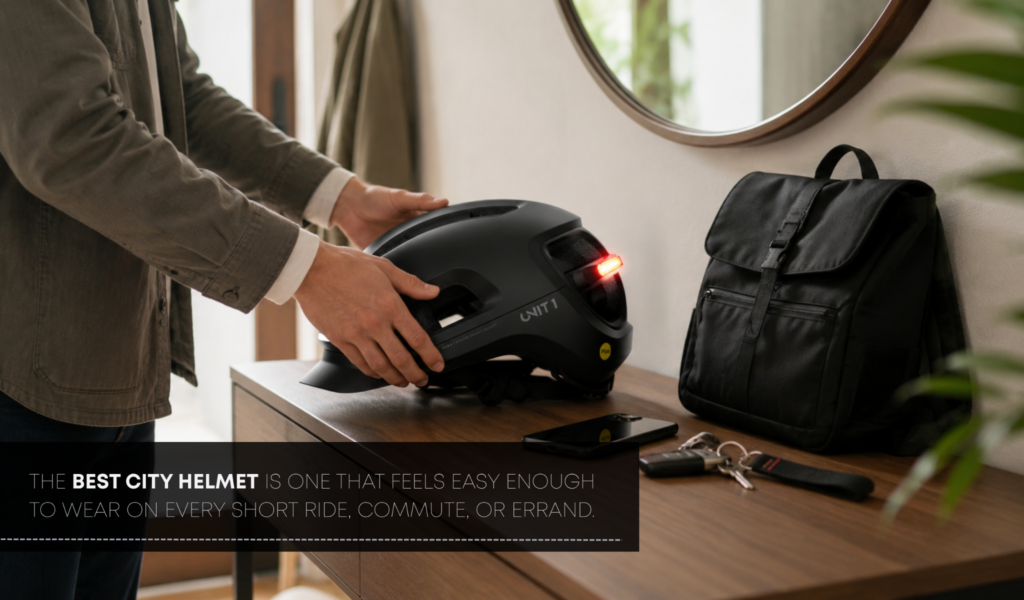
A helmet that looks good but feels heavy, hot, or awkward will eventually stay at home. The best helmet is the one that feels natural enough to reach for before every ride.
Consider how you actually ride
Not every e-bike rider needs the same helmet. Someone riding a few blocks on quiet streets has different needs from someone commuting daily through traffic.
For faster city routes, e-bike certification and stronger impact protection should be high priorities. For traffic-heavy commutes, visibility, brake lights, and turn signals may be more useful. For short everyday rides, fit, comfort, and simple lighting may matter most.
The right helmet should match the rider’s real routine. Think about the usual route, the time of day, road conditions, riding speed, and how often the helmet will be worn. A helmet chosen around actual habits is more useful than one chosen only because it has the longest feature list.
Do not treat style as separate from safety
Style may seem less important than certification or lighting, but it still matters. A helmet only works if someone actually wears it.
For city riders, the helmet often becomes part of daily clothing. It may be worn with workwear, casual outfits, gym clothes, or travel gear.
A clean, modern design can make the helmet feel less like sporting equipment and more like part of an everyday routine.
That does not mean style should replace safety. It means the best city helmets bring both together: certified protection, useful features, and a design that riders do not feel awkward wearing.
Check battery and charging practicality
For smart helmets, battery life matters. Integrated lights, app controls, brake alerts, and turn signals only work when the helmet is charged.
Before choosing a helmet, look at how long the lights last, how the helmet charges, and whether the charging port is convenient. USB-C charging is useful because many riders already use it for phones, laptops, lights, and other devices.
A smart helmet should fit into daily life without becoming another thing to manage. If charging feels simple and battery tracking is clear, riders are more likely to keep the features active.
Remember that a helmet is one part of safer riding
A good helmet can improve protection and visibility, but it should not replace careful riding habits.
City e-bike riders should still use proper bike lights, follow traffic rules, check blind spots, signal clearly, maintain their brakes and tires, and stay alert around parked cars and intersections. Smart features can support safer riding, but awareness remains essential.
The best approach is to combine good equipment with good habits. A helmet can help make the rider more visible and better protected, but the rider’s decisions still shape the safety of each journey.
Quick Checklist Before Buying
Before choosing an electric bike helmet for city riding, ask:
- Does it meet the right safety standards?
- Is it suitable for e-bike speeds?
- Does it fit securely without pressure points?
- Can it help me stay visible in traffic?
- Are the smart features useful for my actual route?
- Is it comfortable enough for daily use?
- Will I realistically wear it every time I ride?
If the answer is yes to most of these, the helmet is more likely to fit your real riding routine.
Final Takeaway
E-bikes are not only changing city commutes; they are also becoming popular with electric bikes for adventure riders who want more range, support, and flexibility on outdoor routes.
These helmets can also be used for other adventure rides; it’s all about finding one that matches the speed, visibility needs, comfort expectations, and real-world conditions of urban e-bike travel.
Start with certification. Make sure the fit is secure. Look for visibility features that help in traffic. Consider smart functions only when they solve practical problems, such as signaling, braking, crash alerts, or lighting control.
For riders who want a more complete connected safety system, new age helmet brands show where the category is moving. The smart helmets are built around the idea that a helmet should help before, during, and after a risky moment.
Hence, the right helmet should not make riding feel more complicated. It should make every ride feel more visible, more protected, and easier to trust.
Remember, never travel without travel insurance! And never overpay for travel insurance!
I use HeyMondo. You get INSTANT quotes. Super cheap, they actually pay out, AND they cover almost everywhere, where most insurance companies don't (even places like Central African Republic etc!). You can sign-up here. PS You even get 5% off if you use MY LINK! You can even sign up if you're already overseas and traveling, pretty cool.
Also, if you want to start a blog...I CAN HELP YOU!
Also, if you want to start a blog, and start to change your life, I'd love to help you! Email me on johnny@onestep4ward.com. In the meantime, check out my super easy blog post on how to start a travel blog in under 30 minutes, here! And if you just want to get cracking, use BlueHost at a discount, through me.
Also, (if you're like me, and awful with tech-stuff) email me and my team can get a blog up and running for you, designed and everything, for $699 - email johnny@onestep4ward.com to get started.
Do you work remotely? Are you a digital nomad/blogger etc? You need to be insured too.
I use SafetyWing for my digital nomad insurance. It covers me while I live overseas. It's just $10 a week, and it's amazing! No upfront fees, you just pay week by week, and you can sign up just for a week if you want, then switch it off and on whenever. You can read my review here, and you can sign-up here!









 As you know, blogging changed my life. I left Ireland broke, with no plan, with just a one-way ticket to Thailand
and no money. Since then, I started a blog, then a digital media company, I've made
more than $1,500,000 USD, bought 4 properties and visited (almost) every country in the world. And I did it all from my laptop as I
travel the world and live my dream. I talk about how I did it, and how you can do it too, in my COMPLETELY FREE
Ebook, all 20,000
words or so. Just finish the process by putting in your email below and I'll mail it right out to you immediately. No spam ever too, I promise!
As you know, blogging changed my life. I left Ireland broke, with no plan, with just a one-way ticket to Thailand
and no money. Since then, I started a blog, then a digital media company, I've made
more than $1,500,000 USD, bought 4 properties and visited (almost) every country in the world. And I did it all from my laptop as I
travel the world and live my dream. I talk about how I did it, and how you can do it too, in my COMPLETELY FREE
Ebook, all 20,000
words or so. Just finish the process by putting in your email below and I'll mail it right out to you immediately. No spam ever too, I promise!