

Are Fat Tire E-Bikes Worth It for Outdoor Adventures?
Fat tire e-bikes are worth considering if your outdoor adventures regularly take you beyond smooth pavement. From gravel roads and forest tracks to campground trails, their wider tires can provide better traction and a more comfortable ride on uneven surfaces.
But that doesn’t mean they’re the right choice for every traveler. Fat tire e-bikes are generally heavier than conventional bicycles, and their advantages depend on where you ride. Before choosing one for your next adventure, it helps to understand what they do well and where a lighter bike might make more sense.
What Makes Fat Tire E-Bikes Different?
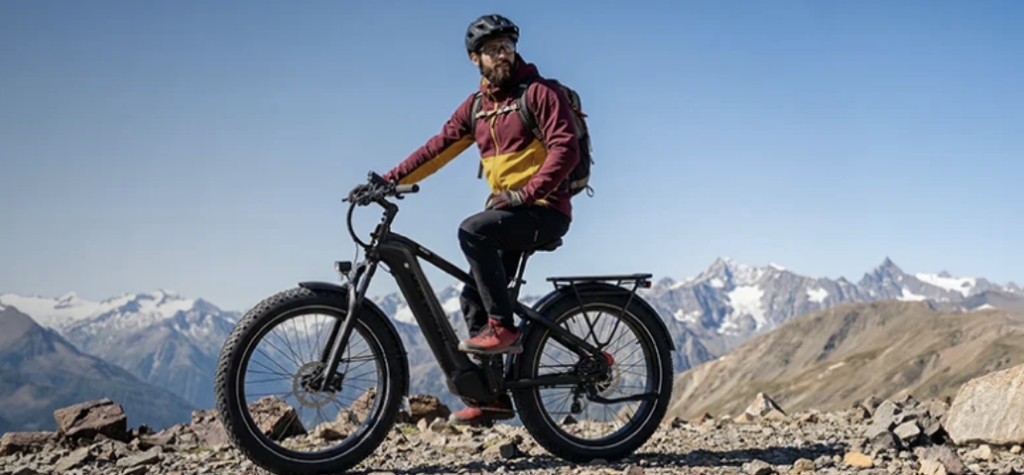
The most obvious difference is the tires. While conventional bicycles typically use narrower tires, fat tire e-bikes often feature tires around four inches wide.
That extra width creates a larger contact patch at an appropriate tire pressure, helping the bike maintain traction on surfaces such as loose gravel, packed dirt, and uneven paths.
The tires also absorb some of the smaller bumps along the way. On a long ride through a national forest or around a remote campsite, that added cushioning can make a noticeable difference.
However, wider tires create more rolling resistance in some conditions and add weight. If your travels mainly involve paved cycling paths, a conventional electric bike may feel lighter and easier to handle.
Where Do Fat Tire E-Bikes Perform Best?
The biggest advantage of a fat tire e-bike is its versatility across different surfaces.
Imagine spending a weekend exploring a lakeside campground. The route might begin on a paved road, continue along a gravel access track, and finish on a rough dirt path leading toward a scenic viewpoint.
A fat tire e-bike can handle those transitions more comfortably than many narrow-tire commuter bikes.
They’re particularly useful for:
- Gravel roads: Wider tires help maintain traction on loose stones and uneven surfaces.
- Forest tracks: Extra tire cushioning makes roots, small rocks, and rough patches easier to manage.
- Campground exploration: Electric assistance helps riders cover longer distances between campsites, trailheads, and nearby attractions.
- Mixed-terrain day trips: A versatile tire setup reduces the need to stay exclusively on paved routes.
Still, fat tires don’t make every trail rideable. Deep mud, steep rocky sections, and technical mountain bike trails can exceed the capabilities of a recreational fat tire e-bike.
It’s also important to check local access rules. Some trails prohibit motor-assisted bicycles regardless of tire size.
Are Fat Tire E-Bikes Good for Camping Trips?
For camping enthusiasts, fat tire e-bikes can be a practical way to explore beyond the immediate campsite without relying on a car for every short journey.
They’re especially useful at larger campgrounds or recreation areas where interesting destinations are spread several miles apart.
Battery range is an important consideration, though.
A manufacturer might advertise 60 or 80 miles of range, but actual distance varies with hills, terrain, rider weight, assistance level, and weather conditions.
Before heading out, calculate your full round-trip distance and leave extra battery capacity for unexpected detours. Riding back to camp on a steep gravel road with a nearly empty battery is not an enjoyable way to finish the day.
Cargo capacity matters too. If you plan to carry water, snacks, a camera, or camping supplies, check the bike’s total load rating and the weight limits of any racks or bags.
For a longer trip, it helps to explore different fat tire electric bikes and compare battery capacity, frame design, suspension, and carrying ability rather than focusing on motor power alone.
What Should You Look for in an Adventure-Ready Fat Tire E-Bike?
A good outdoor e-bike should match the routes you plan to ride.
For mixed-surface adventures, consider these essentials:
Battery capacity: A larger battery can support longer journeys, but real-world range should always be planned conservatively.
Motor assistance: A responsive pedal-assist system is particularly useful when climbing hills or riding with additional gear.
Suspension and brakes: Front suspension can reduce impacts on rough tracks, while properly maintained hydraulic disc brakes provide controlled braking on varied terrain.
Frame accessibility: A step-through frame can make mounting and dismounting easier, particularly when stopping frequently to take photographs or explore viewpoints.
One example is the Mokwheel Basalt ST 2.0, a step-through fat tire e-bike designed for everyday travel and mixed-terrain adventures.
It features 26 × 4-inch puncture-resistant fat tires, a 750W motor with up to 1100W peak power, and a 48V 19.6Ah battery. Mokwheel lists a range of 60–80 miles under its stated conditions, while the 110mm adjustable front suspension and hydraulic disc brakes are useful for riding on uneven roads.
The bike also has a rated maximum payload of 450 lb, offering flexibility for riders who carry additional supplies. Its step-through design makes frequent stops and remounting more convenient.
At approximately 80 lb, however, it is a substantial bike. Anyone planning to transport it by car should check the capacity of their bike rack before setting off.
For travelers who regularly combine pavement, gravel, and moderate dirt tracks, this type of setup offers a practical balance between comfort and outdoor versatility.
When Is a Regular E-Bike the Better Choice?
Fat tire e-bikes aren’t always the most convenient option, particularly when portability matters.
If your adventure involves train travel, carrying a bicycle upstairs, or fitting it into a small vehicle, a lighter commuter or folding e-bike may be easier to manage.
Likewise, riders who spend most of their time on smooth roads may appreciate the lower rolling resistance and more responsive handling of narrower tires.
The best approach is to think about your usual riding conditions, not the most demanding trail you might encounter once a year.
When comparing different electric bikes, consider where you’ll ride most often, how far you expect to travel, and whether the bike’s weight and storage requirements fit your travel plans.
Making the Most of Your Next Outdoor Ride
A fat tire e-bike can open up more possibilities for outdoor exploration, especially when your route includes gravel roads, forest tracks, and campground paths.
The wider tires provide useful traction and comfort, while electric assistance makes longer journeys and moderate climbs more manageable. The trade-off is additional weight, which matters when transporting or storing the bike.
If your adventures regularly involve mixed terrain, a fat tire e-bike is worth a closer look. Choose one that suits your routes, plan your battery range carefully, and check trail access before leaving.
The right bike won’t replace the experience of exploring somewhere new, but it can make getting there a little easier.
Remember, never travel without travel insurance! And never overpay for travel insurance!
I use HeyMondo. You get INSTANT quotes. Super cheap, they actually pay out, AND they cover almost everywhere, where most insurance companies don't (even places like Central African Republic etc!). You can sign-up here. PS You even get 5% off if you use MY LINK! You can even sign up if you're already overseas and traveling, pretty cool.
Also, if you want to start a blog...I CAN HELP YOU!
Also, if you want to start a blog, and start to change your life, I'd love to help you! Email me on johnny@onestep4ward.com. In the meantime, check out my super easy blog post on how to start a travel blog in under 30 minutes, here! And if you just want to get cracking, use BlueHost at a discount, through me.
Also, (if you're like me, and awful with tech-stuff) email me and my team can get a blog up and running for you, designed and everything, for $699 - email johnny@onestep4ward.com to get started.
Do you work remotely? Are you a digital nomad/blogger etc? You need to be insured too.
I use SafetyWing for my digital nomad insurance. It covers me while I live overseas. It's just $10 a week, and it's amazing! No upfront fees, you just pay week by week, and you can sign up just for a week if you want, then switch it off and on whenever. You can read my review here, and you can sign-up here!







 As you know, blogging changed my life. I left Ireland broke, with no plan, with just a one-way ticket to Thailand
and no money. Since then, I started a blog, then a digital media company, I've made
more than $1,500,000 USD, bought 4 properties and visited (almost) every country in the world. And I did it all from my laptop as I
travel the world and live my dream. I talk about how I did it, and how you can do it too, in my COMPLETELY FREE
Ebook, all 20,000
words or so. Just finish the process by putting in your email below and I'll mail it right out to you immediately. No spam ever too, I promise!