


Black Water Dive: Your Complete Guide to the Ocean’s Most Thrilling Night Adventure
Imagine floating in complete darkness, miles from shore, suspended over thousands of feet of open ocean. Your light suddenly illuminates a transparent octopus with arms extended like a mythical kraken, or a bizarre larval fish that looks more alien than earthly. This is black water diving, and it’s one of the most surreal experiences a diver can have.
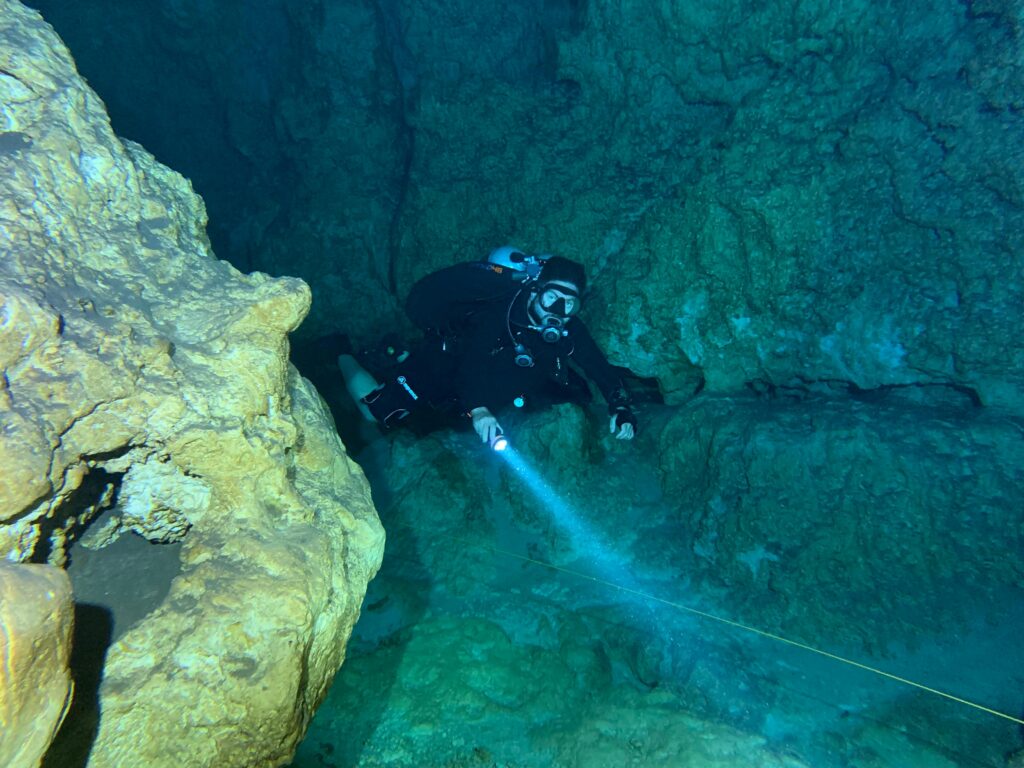
This complete guide cuts through the confusion to give you everything you need to know about black water diving: from understanding the three different types and what creatures you’ll encounter, to honest assessments of the challenges, safety considerations, and how to determine if you’re ready for this bucket-list adventure. Because spotting tiny, transparent marine creatures in the darkness requires clear vision, many divers rely on a Corrective dive mask to see these fascinating organisms clearly during night dives.
Table of contents
- Black Water Dive: Your Complete Guide to the Ocean’s Most Thrilling Night Adventure
- What is Black Water Diving? Understanding the Basics
- How Black Water Diving Differs from Regular Night Diving
- The Three Types of Black Water Dives: Which One is Right for You?
- The Incredible Creatures of Black Water Dives
- Setting Realistic Expectations
- Skills, Equipment, and Safety Requirements
- Top Black Water Diving Destinations Worldwide
- Is Black Water Diving Right for You?
- Conclusion
What is Black Water Diving? Understanding the Basics
The Black Water Diving Definition
A black water dive is a specialized night dive conducted in the open ocean, far from shore, where divers are suspended in the water column over abyssal depths (typically 1,000 to 4,000+ feet of water beneath them). Unlike conventional diving, where you descend to a reef or wreck, blackwater diving keeps you hovering at relatively shallow depths (usually 15-60 feet) in the middle of what feels like infinite darkness.
The magic happens when high-powered lights are deployed from the boat to simulate moonlight conditions. These lights attract deep-sea creatures during their nightly vertical migration, the largest animal migration on Earth that happens every single night in oceans worldwide. Billions of organisms rise from the depths to feed in surface waters under the cover of darkness, creating an extraordinary opportunity to witness life forms rarely seen by humans.
The setup typically involves a main line extending down from the boat with individual drop lines where divers can clip themselves using carabiners. This tether system allows divers to maintain position relative to the boat while having freedom to move around their personal space, searching the darkness with powerful dive lights for those magical encounters.
How Black Water Diving Differs from Regular Night Diving
The most profound difference is the complete absence of reference points. There’s no reef below you, no sandy bottom to glance at for orientation, no shore lights in the distance. You’re floating in what divers describe as “liquid space,” surrounded by darkness in every direction except where your light beam cuts through the water.
While regular night diving focuses on reef creatures that emerge after dark, blackwater diving targets the pelagic zone’s macro life. You’re observing planktonic organisms, larval fish in transparent developmental stages, and bizarre deep-sea creatures that have migrated upward from depths no recreational diver could reach.
The skills required differ significantly too. Without bottom references, maintaining neutral buoyancy becomes absolutely critical. Your depth awareness must be constant and deliberate, as it’s surprisingly easy to drift up or down without visual cues. The psychological challenge is also greater. Some divers find the vast darkness intimidating, while others find it meditative and peaceful.
The Three Types of Black Water Dives: Which One is Right for You?
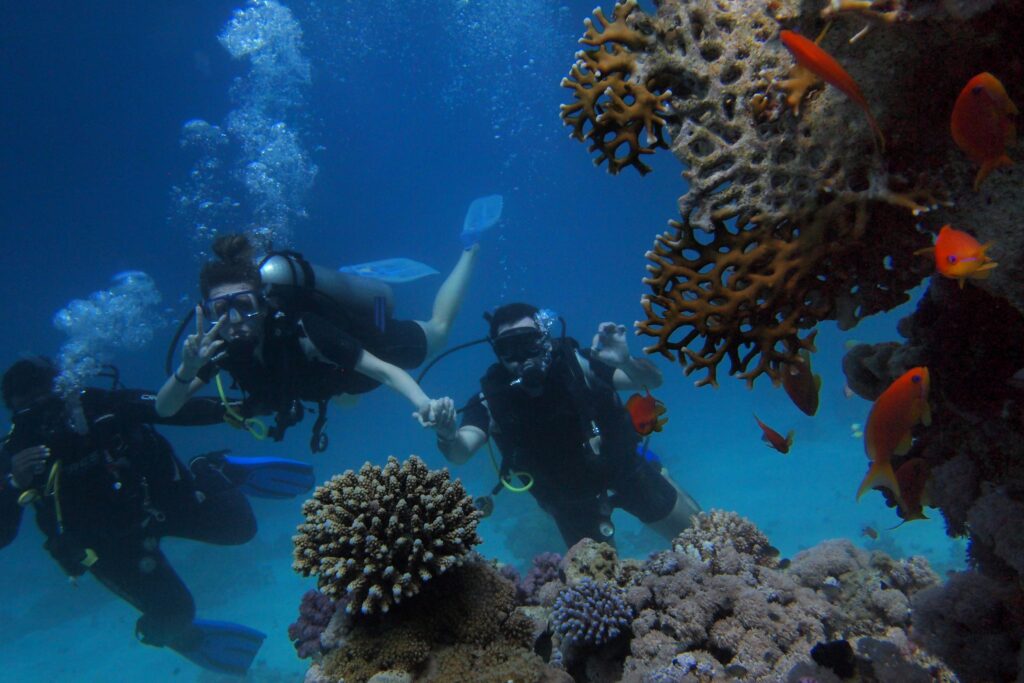
Open Ocean (Offshore) Black Water Diving
This is the “classic” black water dive experience. Open ocean black water diving takes place well away from shore, over abyssal depths where the seafloor might be 3,000, 6,000, or even 10,000+ feet below you.
Divers clip themselves to individual drop lines extending from a main line, creating a “Christmas tree” effect with divers positioned at various depths. This is actually the easiest type physically since you’re tethered to the boat, but it’s the most mentally challenging. The psychological impact of being suspended over thousands of feet of water in complete darkness can be intense.
Best for: Intermediate divers comfortable with night diving and solid buoyancy control who want the security of a tether system.
Near Reef Black Water Diving
This advanced option is conducted at deep walls where the open ocean meets coral structures. The key difference? No tethers. Divers swim freely in the water column, using lights placed on the reef wall as reference points.
This style requires excellent buoyancy control, strong situational awareness, and comfort with free swimming in deep water. You’re monitoring depth, air, position, buddy location, and searching for creatures all simultaneously.
Best for: Advanced divers with excellent buoyancy control, significant night diving experience, and comfort with deep water. Not recommended for first-time black water divers.
Bonfire Black Water Diving
Think of bonfire diving as “black water diving lite.” Rather than venturing into the open ocean, bonfire dives are conducted in shallower water (typically 30-60 feet) over sandy or rocky bottoms. High-powered lights are placed on the bottom, pointing upward, creating a “bonfire” effect that attracts creatures.
The psychological barrier is much lower. Having a bottom reference point, diving at conventional recreational depths, and staying closer to shore make this approachable for divers who aren’t ready for the deep open ocean at night.
Best for: Newer divers with basic night diving experience who want to try black water diving without extreme conditions.
The Incredible Creatures of Black Water Dives
Every single night, across every ocean on Earth, billions of organisms undertake diel vertical migration (DVM). As darkness falls, countless creatures swim upward from depths of 1,000 feet or more to feed in nutrient-rich surface waters. Scientists estimate the biomass involved in this daily migration represents one of the largest movements of animals on the planet, making this phenomenon happen every single night.
- Cephalopods are the superstars of most blackwater dives. You might encounter paper nautilus with their delicate paper-thin shells, diamond squid, the incredible blanket octopus with flowing membrane “capes,” or longarm octopus with impossibly extended tentacles. Many appear in transparent or semi-transparent larval forms that look absolutely alien.
- Larval and juvenile fish appear in their planktonic stage: transparent with flowing, decorative appendages that bear no resemblance to their adult forms. You might see larval lionfish, flounder, anglerfish, or eels, all bizarre and beautiful.
- Gelatinous creatures dominate the water column. Various jellyfish species, siphonophores (colonial organisms that can extend many feet), ctenophores (comb jellies) with rainbow-like cilia, and salp chains create otherworldly formations.
- Crustaceans include the famous phronima (the “alien” amphipod), larval lobsters and crabs, transparent shrimp, and bizarre planktonic crustaceans sporting elaborate spines and appendages.
Setting Realistic Expectations
Black water diving involves a lot of searching for occasional moments of extraordinary discovery. You might spend 60 minutes peering into darkness before a transparent octopus suddenly materializes in your light beam. What you see varies dramatically based on moon phase, current conditions, time of year, and local oceanographic conditions.
A “slow” dive might yield dozens of jellyfish and some larval fish. A “good” dive might include multiple cephalopod encounters and truly alien-looking creatures. That mystery and unpredictability are part of black water diving’s allure.
Skills, Equipment, and Safety Requirements
Essential Skills
- Buoyancy control is absolutely critical. Without a reef floor or bottom to reference, maintaining your depth becomes entirely dependent on perfect neutral buoyancy. You need to hover motionlessly while using fine fin movements to position yourself.
- Night diving comfort is mandatory. If you haven’t done multiple night dives and felt completely comfortable in dark water environments, black water diving will amplify those concerns exponentially.
- Psychological comfort with depth and open water cannot be overstated. Some divers experience genuine anxiety suspended over thousands of feet of water in darkness. There’s no shame in deciding it’s not for you.
- Most operators require Advanced Open Water certification, night diving experience, and 20-50 logged dives, depending on the operator and dive type.
Required Equipment
- Lighting is everything. You must have a minimum of two lights: a primary dive light (1,000+ lumens with a focused beam) and a backup. Rechargeable dive lights are increasingly popular for reliability and brightness.
- Full exposure protection is essential. You’ll encounter stinging organisms like jellyfish and siphonophores. A full wetsuit or drysuit, hood, gloves, and boots that leave no skin exposed will save you from painful stings.
- Mask considerations are important for extended periods of searching in darkness. A prescription scuba mask is crucial if you wear glasses, as you’ll need to spot tiny, distant creatures clearly.
- Equipment security is non-negotiable. When the seafloor is thousands of feet away, dropping something means it’s gone forever. Every piece of equipment must be secured with clips or lanyards.
Safety Considerations
- Depth discipline is critical. Set depth alarms on your dive computer if available, and check your depth constantly. The typical depth range is 15-60 feet, but unconscious depth changes are common without visual references.
- Staying with the lights is fundamental. Whether tethered or swimming near reef-mounted lights, straying too far means potentially drifting away in the current. If your lights fail, the dive is over. Ascend safely using your depth gauge.
- Weather and conditions must be suitable. Operators will cancel dives if conditions aren’t safe. Trust their judgment because black water diving in suboptimal conditions is not worth the risk.
Top Black Water Diving Destinations Worldwide
- Kona, Hawaii, is where black water diving originated and remains the most developed destination. The island’s volcanic mountains plunge into the sea, creating conditions where depths of 10,000+ feet sit just a mile or two offshore. Multiple operators offer nightly dives with well-refined safety protocols and high success rates. The Hawaiian waters host unique species, including the paper nautilus and various endemic larval fish.
- Palau offers arguably the most dramatic blackwater diving outside Hawaii. Located in Micronesia, Palau sits on the edge of ocean trenches exceeding 25,000 feet deep. The water clarity is exceptional, with visibility often exceeding 150 feet. Palau offers both open ocean and near-reef black water diving, with a variety of species not seen in Hawaiian waters.
Other notable destinations include:
- Anilao in the Philippines (incredible biodiversity in the Coral Triangle)
- Cozumel, Mexico (accessible and affordable with minimal current)
- Emerging locations in Indonesia, the Cayman Islands, and Florida
Is Black Water Diving Right for You?
You’re Ready If…
You should consider black water diving if you’re comfortable with night diving and have completed multiple night dives without anxiety. Your buoyancy control is excellent. You can hover motionlessly and maintain depth awareness without thinking about it. The concept excites you more than it scares you, and you have a genuine interest in unusual marine life and the exploratory aspects.
Self-assessment checklist:
- Advanced Open Water or equivalent certification
- 20+ logged dives with good buoyancy control
- Multiple night dives completed comfortably
- Comfortable in deep water and open ocean environments
- Own or can access proper lighting equipment
Be honest about red flags: you’re uncomfortable with night diving or deep water, your buoyancy control needs improvement, you have fewer than 20 logged dives total, or you experience anxiety in challenging conditions.
Alternative progression: Start with night diving to build comfort with dark water. Practice buoyancy control extensively. Consider starting with bonfire-style black water diving in shallow water before attempting open ocean dives. There’s no rush. Developing skills properly ensures you’ll actually enjoy the experience when you’re ready.
Conclusion
Black water diving offers one of the most unique and otherworldly experiences available to scuba divers: a chance to witness the ocean’s largest nightly migration and encounter bizarre creatures that few humans ever see. The three types of black water dives provide options for different experience levels, from beginner-friendly bonfire dives to challenging near-reef adventures.
While black water diving requires solid diving skills, proper preparation, and the right mindset, it’s accessible to most intermediate divers willing to push their comfort zone. Not every black water dive will be mind-blowing, but when you spot something truly extraordinary hovering in your light beam, you’ll understand why divers become obsessed with this unique specialty.
Ready to take the plunge? Ensure you have solid night diving experience and excellent buoyancy control. Make sure your dive mask prescription is up to date so you can spot tiny creatures clearly and invest in a quality dive light that won’t fail when you need it most. Research operators in your preferred destination and don’t hesitate to ask about their safety protocols. Secure your equipment properly in a reliable dive bag, charge your lights, and prepare for one of diving’s most memorable adventures.
Remember, never travel without travel insurance! And never overpay for travel insurance!
I use HeyMondo. You get INSTANT quotes. Super cheap, they actually pay out, AND they cover almost everywhere, where most insurance companies don't (even places like Central African Republic etc!). You can sign-up here. PS You even get 5% off if you use MY LINK! You can even sign up if you're already overseas and traveling, pretty cool.
Also, if you want to start a blog...I CAN HELP YOU!
Also, if you want to start a blog, and start to change your life, I'd love to help you! Email me on johnny@onestep4ward.com. In the meantime, check out my super easy blog post on how to start a travel blog in under 30 minutes, here! And if you just want to get cracking, use BlueHost at a discount, through me.
Also, (if you're like me, and awful with tech-stuff) email me and my team can get a blog up and running for you, designed and everything, for $699 - email johnny@onestep4ward.com to get started.
Do you work remotely? Are you a digital nomad/blogger etc? You need to be insured too.
I use SafetyWing for my digital nomad insurance. It covers me while I live overseas. It's just $10 a week, and it's amazing! No upfront fees, you just pay week by week, and you can sign up just for a week if you want, then switch it off and on whenever. You can read my review here, and you can sign-up here!






 As you know, blogging changed my life. I left Ireland broke, with no plan, with just a one-way ticket to Thailand
and no money. Since then, I started a blog, then a digital media company, I've made
more than $1,500,000 USD, bought 4 properties and visited (almost) every country in the world. And I did it all from my laptop as I
travel the world and live my dream. I talk about how I did it, and how you can do it too, in my COMPLETELY FREE
Ebook, all 20,000
words or so. Just finish the process by putting in your email below and I'll mail it right out to you immediately. No spam ever too, I promise!
As you know, blogging changed my life. I left Ireland broke, with no plan, with just a one-way ticket to Thailand
and no money. Since then, I started a blog, then a digital media company, I've made
more than $1,500,000 USD, bought 4 properties and visited (almost) every country in the world. And I did it all from my laptop as I
travel the world and live my dream. I talk about how I did it, and how you can do it too, in my COMPLETELY FREE
Ebook, all 20,000
words or so. Just finish the process by putting in your email below and I'll mail it right out to you immediately. No spam ever too, I promise!