


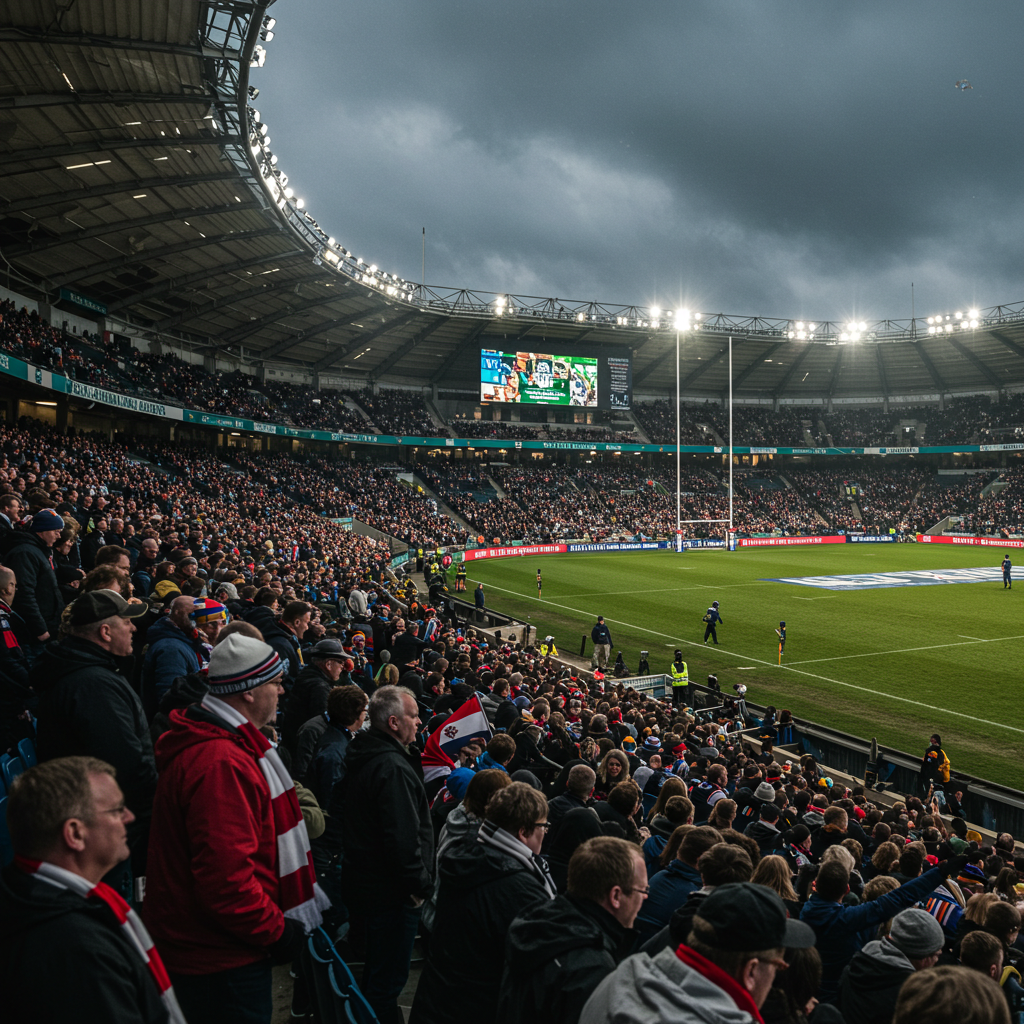
There is a particular kind of magic that descends upon Europe every February. The days are still short, the air carries a persistent winter chill, and yet, for rugby fans, the continent suddenly feels incredibly warm and alive. The Six Nations is not just a tournament; it is an annual pilgrimage. It is a six-week journey of railways, short-haul flights, historic pubs, and some of the most iconic sporting arenas on earth.
Whether you are planning to follow your team for a single away weekend or you are aiming for the ultimate bucket-list adventure of attending multiple matches across different capitals, a successful Six Nations tour requires a bit of planning. You need to know how to navigate the cities, where to find the best pre-match atmosphere, and how to read the unique conditions of each stadium to make the most of your weekend.
The Quest for the Grand Slam: A First-Person Adventure Across Europe’s Best Rugby Cities
My first proper multi-city Six Nations trip was born out of a late-night conversation in a crowded London pub. A few friends and I realised we had accumulated enough annual leave to follow the tournament across three different countries over consecutive weekends. What followed was a whirlwind of early-morning trains, frantic packing, and an unforgettable immersion into European rugby culture.
Our journey began at Twickenham, the massive cabbage patch in south-west London. There is a grand, traditional feel to Twickenham, where fans gather in the car parks hours before kick-off for elaborate picnics out of the boots of their cars. But the real adventure starts when you cross the English Channel.
Taking the Eurostar to Paris for a match at the Stade de France changes the tempo entirely. The French approach to match day is wonderfully sensory. The walk from the metro station in Saint-Denis is filled with the scent of grilling merguez sausages and the sound of brass bands playing traditional French tunes. The stadium itself, with its floating disc-like roof, feels futuristic, yet the passion of the French crowd is deeply historic.
From Paris, we hopped on a flight north to Edinburgh. Stepping off the train at Waverley Station on a crisp, frosty morning, you are immediately greeted by the sight of the castle towering over the city and the distant sound of bagpipes. The walk down Morrison Street towards Murrayfield is a slow, friendly crawl, shared with thousands of Scottish and visiting fans wrapped in heavy woollen tartan scarves.
Each of these cities has its own rhythm, its own language, and its own way of welcoming the oval-ball crowd. Rome offers a sunny, relaxed lunchtime kick-off at the Stadio Olimpico, where a post-match plate of pasta replaces the standard pie. Cardiff brings the game right into the middle of the high street. To truly appreciate the tournament, you have to experience how these different cultures adopt the same eighty minutes of sport and make it entirely their own.
The Pubs of Dublin and Cardiff: A Traveller’s Guide to Pre-Match Atmosphere and Fan Culture
While the matches themselves are the main event, any seasoned rugby traveler will tell you that the hours leading up to kick-off are just as important. When it comes to pre-match atmosphere, two cities stand head and shoulders above the rest: Dublin and Cardiff.
In Cardiff, the Principality Stadium sits right in the city centre, looming over the banks of the River Taff. This unique geography means the entire city becomes the stadium concourse on match day. Hours before the gates open, Westgate Street and St Mary Street are transformed into a sea of red jerseys.
If you want an authentic Cardiff experience, head to the City Arms, a historic pub located almost in the shadow of the stadium walls. The walls are adorned with classic rugby memorabilia, and the chatter is always knowledgeable, friendly, and incredibly loud. As kick-off approaches, you will hear choruses of classic Welsh hymns drifting out of every doorway. The sheer volume of singing in Cardiff is enough to give you goosebumps, even if you are wearing the away colours.
Over in Dublin, the pre-match ritual is slightly different but equally legendary. The Aviva Stadium is nestled in the leafy suburb of Ballsbridge, a pleasant thirty-minute walk from the city centre. This walk is an essential part of the Dublin match-day experience.
Most fans start their afternoon in the historic pubs around Baggot Street. Places like Toners, with its beautiful old wooden snugs, or Doheny & Nesbitt are packed to the rafters with supporters debating team selections over pints of dark stout. The atmosphere here is characterised by what the Irish call the ‘craic’—a warm, self-deprecating humour and an easy hospitality that makes rival fans feel like old friends. By the time you join the walking crowd heading down towards Lansdowne Road, guided by the green-and-white signs, you feel entirely integrated into the fabric of the city.
Live Stadium Tactics: Translating Stadium Energy into Real-Time Match Analysis
Being inside the stadium offers a massive advantage that television viewers simply cannot match. When you are watching from the stands, you can see the entire pitch, observe how the defensive lines are shifting, and feel the physical impact of the tackles. Crucially, you also get to experience the elements first-hand.
I remember sitting high up in the stands in Dublin during a particularly wet and wild February afternoon. The Irish weather can be incredibly unpredictable, and on this occasion, a heavy, swirling storm was blowing directly off the Irish Sea. On television, you might notice the rain on the camera lens, but from the stands, you can see how the wind is whipping the flags atop the stadium and how the dampness is affecting the pitch.
In conditions like these, the entire nature of the match changes. A team that relies on a fast, expansive passing game is going to struggle. The ball becomes as slippery as a bar of soap, and handling errors skyrocket. As I watched the warm-ups, I could see the fullback struggling to judge the flight of the high ball in the swirling wind.
Observing these physical realities in real time allows you to make much sharper assessments of how the match is likely to unfold. If you notice a team’s key playmaker limping slightly during the warm-up, or see that the wind is heavily favouring the side playing towards the Lansdowne Road end in the second half, you can use these observations to your advantage.
For those who enjoy adding a bit of extra interest to the game, these live stadium observations are invaluable. When you are right there in the thick of the action, noticing the tactical shifts before the commentators do, you can use your mobile to place an informed wager. I find that using the rugby betting platform on Monopoly Casino is a brilliant way to react to these live match developments, allowing you to back your real-time insights as the drama unfolds on the pitch.
Of course, if you do decide to place a wager from your seat, it is vital to keep things fun and sensible. It is easy to get swept up in the emotion of a roaring crowd, so always set a strict limit for yourself before the match starts, and never bet more than you can comfortably afford to lose. The goal is to enhance your enjoyment of the game, not to add unnecessary stress to a brilliant weekend away.
Smart Travel Playbook: Seamlessly Placing In-Play Wagers from the Stands
If you are planning to engage in some in-play betting while traveling, a little bit of preparation goes a long way. Stadiums are notorious for poor mobile signal when eighty thousand people are all trying to upload photos and videos at the same time.
To avoid frustration, make sure you log into the stadium’s public Wi-Fi as soon as you arrive, or find a spot in the concourse where your mobile data connection is strongest. It is also wise to set up your betting accounts and deposit your designated entertainment budget before you leave your hotel, so you are not scrambling to enter card details in a crowded stadium seat.
Keep your eyes on the players coming off the bench. In modern international rugby, the ‘bomb squad’ or finishers can completely turn a game around in the final twenty minutes. If you see a dominant front row warming up on the touchline while the opposition scrum is already starting to splinter, that is often the perfect moment to consider an in-play bet on the next try scorer or the final margin of victory.
Ultimately, a Six Nations road trip is about creating memories that will last long after the final whistle has blown. By planning your route, soaking up the local pub culture, and reading the live conditions on the pitch, you can ensure your European rugby adventure is an absolute classic. Turn off your phone after placing your casual wager, look up at the floodlights, and lose yourself in the roar of the crowd.
Please gamble responsibly. For help, support, and advice, visit BeGambleAware.org. Only 18+ players are permitted to play.
Remember, never travel without travel insurance! And never overpay for travel insurance!
I use HeyMondo. You get INSTANT quotes. Super cheap, they actually pay out, AND they cover almost everywhere, where most insurance companies don't (even places like Central African Republic etc!). You can sign-up here. PS You even get 5% off if you use MY LINK! You can even sign up if you're already overseas and traveling, pretty cool.
Also, if you want to start a blog...I CAN HELP YOU!
Also, if you want to start a blog, and start to change your life, I'd love to help you! Email me on johnny@onestep4ward.com. In the meantime, check out my super easy blog post on how to start a travel blog in under 30 minutes, here! And if you just want to get cracking, use BlueHost at a discount, through me.
Also, (if you're like me, and awful with tech-stuff) email me and my team can get a blog up and running for you, designed and everything, for $699 - email johnny@onestep4ward.com to get started.
Do you work remotely? Are you a digital nomad/blogger etc? You need to be insured too.
I use SafetyWing for my digital nomad insurance. It covers me while I live overseas. It's just $10 a week, and it's amazing! No upfront fees, you just pay week by week, and you can sign up just for a week if you want, then switch it off and on whenever. You can read my review here, and you can sign-up here!









 As you know, blogging changed my life. I left Ireland broke, with no plan, with just a one-way ticket to Thailand
and no money. Since then, I started a blog, then a digital media company, I've made
more than $1,500,000 USD, bought 4 properties and visited (almost) every country in the world. And I did it all from my laptop as I
travel the world and live my dream. I talk about how I did it, and how you can do it too, in my COMPLETELY FREE
Ebook, all 20,000
words or so. Just finish the process by putting in your email below and I'll mail it right out to you immediately. No spam ever too, I promise!
As you know, blogging changed my life. I left Ireland broke, with no plan, with just a one-way ticket to Thailand
and no money. Since then, I started a blog, then a digital media company, I've made
more than $1,500,000 USD, bought 4 properties and visited (almost) every country in the world. And I did it all from my laptop as I
travel the world and live my dream. I talk about how I did it, and how you can do it too, in my COMPLETELY FREE
Ebook, all 20,000
words or so. Just finish the process by putting in your email below and I'll mail it right out to you immediately. No spam ever too, I promise!