


What I Actually Pack; Essential Travel Gear After 197 Countries and 10+ Years on the Road
Look, there is a lot of gear content out there. And most of it is written by people who’ve tested it on a two-week holiday and called that research.
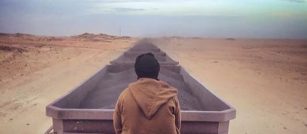
I’ve been lucky enough to test stuff in some genuinely brutal environments. Rowing across the Atlantic. Climbing Everest. Riding iron ore trains across the Sahara. Sitting on cement boats to get to Yemen. Visiting every single country on the planet. That’s a lot of airports, a lot of lost bags, and a lot of “why did I bring this” moments stuffed into a decade on the road.
What’s actually left in my bag after all of that is a short list. And I think it’s a useful one.
Table of contents
The Bag Itself
I’ve gone back and forth between massive backpacks, rolling suitcases and tiny daybags more times than I can count. Where I landed: one 40-litre carry-on backpack. No checked luggage. Full stop.
The second you start checking bags, your travel changes. You lose a couple of hours at airports every single time. You stress every connection change and last-minute gate swap. You’re one mishandled flight away from arriving somewhere without any of your stuff. Carry-on only changed how I travel more than almost anything else I’ve ever done.
Get something with enough structure that you can actually find things when you need them in a rush. Zip compartments, a dedicated laptop sleeve, some kind of internal organisation. Beyond that, don’t overthink it. A solid 35-40 litre bag that fits most airline overhead bins is all you need.
Electronics; This Is Where It Gets Interesting
I’ve tried everything. Most of it ends up abandoned in a hotel room somewhere between Nairobi and Kathmandu. But the stuff that’s stayed with me has genuinely earned its place.
The camera situation. This one took years to figure out properly. I came up through the era of lugging DSLRs and heavy camera bags everywhere, which is miserable when you’re doing anything remotely adventurous. Then action cameras changed things. Smaller, tougher, better for movement. But even those require you to stop, mount the thing, check your angle, and remember to actually press record. When you’re at altitude, mid-challenge, or in a situation that’s moving fast, that process fails you constantly.
The shift I’ve seen recently that actually matters is smart glasses becoming genuinely usable. The concept existed for years in a form that was always a bit clunky and never really delivered. That’s changed. The current generation of sunglasses with a camera built in are legitimately stylish, genuinely wearable, and they capture footage from your actual point of view without requiring you to do anything except keep living your life.
For anyone creating travel content from real situations, this matters in a way that’s hard to overstate. The footage you get from eye level, hands-free, while you’re actually doing the thing is completely different from what you get when you’ve staged something at arm’s length. Walking into a market in Marrakech. Cresting a ridge in the Andes. Stepping off a boat somewhere that barely appears on maps. That perspective, captured live, is more real than anything you stage after the moment has gone. People feel the difference.
There’s also an AI layer now that’s worth mentioning. Navigation, translation, quick information without reaching for your phone. In a country where pulling out a phone on the street is genuinely risky, or when your hands are full and you need an answer quickly, that’s not a gimmick. It’s actually useful.
Your phone. Sort out data before you land anywhere, not after. The stress of arriving somewhere with no connectivity and needing to sort accommodation, currency, and transport all at once is avoidable. eSIMs have made this a lot easier in most parts of the world.
Laptop. If you’re working while you travel, this is your most important piece of kit. Keep it in your carry-on. Always. Not once in ten years have I been glad I checked a laptop.
Power bank and adapters. A good universal adapter with USB-A and USB-C ports, and a decent-sized power bank. I’d say 20,000mAh minimum. On long travel days across multiple countries or through airports with no accessible power points, you’ll burn through your phone faster than you expect. This is the least glamorous item on the list and one of the most important.
Clothing; Less Is Genuinely More
For the first few years I dramatically over-packed clothes. Now I travel with about a week’s worth, hand wash when I need to, and use laundry services for anything bigger. A few things that have stayed true across every climate and every kind of trip:
Merino wool is worth paying for. It handles temperature well, doesn’t hold smells the way cotton does, dries faster, and one good merino shirt can take you through genuinely different climates in the same week. It’s not cheap but it earns its cost.
One proper layer. Not four options. One jacket that handles rain and cold and looks put-together enough for a decent meal. The more you have to decide what to wear, the heavier your bag and your head both get.
Two pairs of shoes. One you’d comfortably walk 20,000 steps in on a bad day. One smarter option for when the situation requires it. That’s actually it.
Health and Safety
Travel insurance is not optional. I used to skip it when I was broke and it nearly cost me everything when I needed a hospital in Southeast Asia. These days I don’t leave without it. SafetyWing is what I’ve moved to for long-term travel – sensible prices, real coverage, and they actually pay out when you need them to.
A small first aid kit with the stuff that’s impossible to find quickly in an unfamiliar pharmacy at midnight. Ibuprofen, antihistamines, rehydration salts, blister pads, something for your stomach. Small and light enough to not notice, genuinely important when you do.
Sunscreen, especially if you’re heading anywhere with serious UV exposure. I’ve been badly burned in the Sahara and at altitude in South America. Both were completely avoidable and neither was any fun.
Money
Two cards, two networks. Visa and Mastercard. When one gets declined at an ATM in a country where you don’t speak the language and the next town is hours away, the other one saves you. This has bailed me out more times than I can recall.
Use accounts and cards with no foreign transaction fees. Regular bank accounts will quietly drain you through exchange rate markups and foreign fees if you’re moving between currencies regularly. There are now good options in most countries specifically built for travellers. Switch to one.
Always let your bank know you’re travelling. Or better yet, use a bank that doesn’t freeze accounts the second you use your card somewhere unusual. I’ve stood at ATMs in some very inconvenient places because my card was blocked for “suspicious activity” in a country I’d specifically told them I was going to.
What This Is Actually About
The gear in my bag is stuff that’s been tested in situations where it actually mattered. Not a practice run. Not a comfortable route. Actual travel in actual places, the kind that throws things at you that no amount of planning fully covers.
If you’re figuring out what to bring on a long trip, start minimal and add things only once you’ve identified a gap from experience. The most common and expensive mistake is buying gear before you know what you need. Get on the road first. Buy the thing that’s missing when you know it’s actually missing.
For the full list of apps, tools, insurance, accommodation platforms and everything else I use day to day, I’ve pulled it all together on the travel resources page. That’s probably the most useful single page on this site if you’re setting up a longer trip.
And if you’re interested in using travel to actually fund your life rather than just taking it in chunks, I put together a full blog guide on how I went from broke and clueless to making a proper living from the road. Not for everyone. But if it’s something you’re seriously thinking about, it’s worth a read.
197 countries. Bag still under 40 litres. I’m calling that a win.
Remember, never travel without travel insurance! And never overpay for travel insurance!
I use HeyMondo. You get INSTANT quotes. Super cheap, they actually pay out, AND they cover almost everywhere, where most insurance companies don't (even places like Central African Republic etc!). You can sign-up here. PS You even get 5% off if you use MY LINK! You can even sign up if you're already overseas and traveling, pretty cool.
Also, if you want to start a blog...I CAN HELP YOU!
Also, if you want to start a blog, and start to change your life, I'd love to help you! Email me on johnny@onestep4ward.com. In the meantime, check out my super easy blog post on how to start a travel blog in under 30 minutes, here! And if you just want to get cracking, use BlueHost at a discount, through me.
Also, (if you're like me, and awful with tech-stuff) email me and my team can get a blog up and running for you, designed and everything, for $699 - email johnny@onestep4ward.com to get started.
Do you work remotely? Are you a digital nomad/blogger etc? You need to be insured too.
I use SafetyWing for my digital nomad insurance. It covers me while I live overseas. It's just $10 a week, and it's amazing! No upfront fees, you just pay week by week, and you can sign up just for a week if you want, then switch it off and on whenever. You can read my review here, and you can sign-up here!



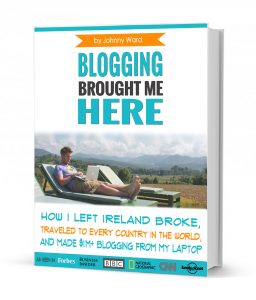 As you know, blogging changed my life. I left Ireland broke, with no plan, with just a one-way ticket to Thailand
and no money. Since then, I started a blog, then a digital media company, I've made
more than $1,500,000 USD, bought 4 properties and visited (almost) every country in the world. And I did it all from my laptop as I
travel the world and live my dream. I talk about how I did it, and how you can do it too, in my COMPLETELY FREE
Ebook, all 20,000
words or so. Just finish the process by putting in your email below and I'll mail it right out to you immediately. No spam ever too, I promise!
As you know, blogging changed my life. I left Ireland broke, with no plan, with just a one-way ticket to Thailand
and no money. Since then, I started a blog, then a digital media company, I've made
more than $1,500,000 USD, bought 4 properties and visited (almost) every country in the world. And I did it all from my laptop as I
travel the world and live my dream. I talk about how I did it, and how you can do it too, in my COMPLETELY FREE
Ebook, all 20,000
words or so. Just finish the process by putting in your email below and I'll mail it right out to you immediately. No spam ever too, I promise!