
Published by Johnny Ward on May 20, 2013
Africa and safari are inextricably linked. But if you plan to don your khaki trousers and your Tilley hat for a wild adventure, where exactly do you plan to go?
Africa is a big place and there are lots of parks to choose from. As not all plains are created equal, here are some of the best:
 Masai Tribe
Maasai Mara National Reserve
If big cats are your thing, The Mara is packed full of deadly felines. It can also boast sights of the great migration: every year, more than 2.5 million animals make a 2,000 kilometre journey between Tanzania and Kenya. Generally, The Mara is considered Africa’s top safari destination.
Central Kalahari Game Reserve
Connoisseurs of truly untamed desert wilderness can head to ‘the plains where courage fails.’ San Bushmen have lived in this raw landscape for approximately 30,000 years. If you really want to get away from it all, Kalahari has been separated from the crowds and tour buses that flock to other parks. Usually, you’re about 50 kilometres away from the nearest human being.
Kidepo Valley National Park
One of the most picturesque parks in Africa, Kidepo is fairly exclusive and unexplored. It shares borders with Sudan and Kenya’s Northern Frontier District. You’ll benefit from great wildlife sightings; especially large buffalo herds.
Ngorongoro Crater Conservation Area
The ‘big five’ (buffalo, rhino, elephant, lion, and leopard) are prolific around the Crater – a lot is packed into a relatively small area. The first glimpse of the crater is heart-stopping; good luck with getting down the inner walls! It’s a good choice for first timers, as it makes safari easy.
Etosha National Park
This safari park has been named ‘Great White Place’ by the locals because of the ivory ground, leftover from a former lake. The trick to Etosha is to just hang out around the waterholes and the animals will come to you. Expect to witness the big five again, as well as gazelle and antelope.
The Gambia
Along the Gambia River you can find as many as six national parks! The Gambia is ideal for bird-watchers (more than 600 species are at the mercy of your binoculars). You can also find plenty of monkeys, baboons, and chimpanzees. Beware the crocodile packed waters; you can spot African otters and manatees, but don’t get too close!
Ahaggar National Park
If you’re looking for the kind of physics-defying landscapes that will leave your jaw hanging, Ahaggar is for you. This national park is 40 times the size of Gambia and contains an amazing 3,000 metre mountain range, as well as classic dunes. Enjoy hanging out with the Tuareg nomads.
Kruger National Park
South Africa’s most popular park, Kruger, has a huge diversity of wildlife. It’s one of the best equipped safari parks in Africa; if you’re a creature of comfort, you’ll do best here. It’s also great for self-drivers, as it’s well signposted and maintained. Included in the safari sightings are hikes and mountain-biking trips, for a bit of variety.
This post has been contributed by Hannah, a lifestyle and travel blogger from the UK. She has written this post for Knowsley Safari Park in England.
 Tags: General African Stuff, safari, wildlife
Published by Johnny Ward on May 08, 2013
Morocco has long been one of the world’s best-kept traveler secrets. Located as conveniently as it is to Europe, it is easy to reach by flight or ferry, but as soon as you arrive you’ll realize that you’re in a totally new world. Morocco’s unique blend of African and Middle Eastern culture, with a little bit of French and Spanish flair thrown in, makes for a magical experience. Historical sites in ancient cities full of rich traditions, amazing natural parks in the desert, coastline, and mountains, and endless shopping opportunities for traditional textiles, metalworks, jewelry, and more are some of the factors that conspire to make it such a great destination. What’s even better is how inexpensive it can be to experience the country. Budget lodging, street food, and local transportation are all very inexpensive throughout the country. Entry to historical and cultural sites is universally low, and often lower if you have a student ID card (even if it’s expired, this is a nice thing to hold onto for some discounts).
Wandering through the bazaars of any Moroccan city is a somewhat magical trip, as they are so full of people and goods that are exotic and unfamiliar. In general, you’ll pay far less here for things than you would back home, so bringing home souvenirs and gifts is always a good plan. It’s best to approach the bartering process lightheartedly, and without a lot of attachment. If you see something you like, casually enquire about how much it and some other things cost, without giving too much of an indication of your interest. The first quoted price is likely to be twice as high (or sometimes more!) than what you can actually get the item for, so make a low counteroffer and you’ll gradually negotiate your way to a middle point. Don’t offer to pay a sum and then rescind it—if a shopkeeper agrees to a price you have quoted, it is disrespectful to try to force him lower. Unless that happens, though, you shouldn’t feel obligated to buy anything even if you spend time haggling. Start to move away and the shopkeeper may lower the price one last time, or you might find a similar item elsewhere in the market for cheaper. At the end of the day, it’s important that you get something you like and feel good about the price, not that you get the absolute lowest price possible.
Finding a small local tour operator, rather than a corporate, international one, can save you a lot of money and greatly enhance the experience. One such company is Marrocos, check out their website ’Travel Guide to Morocco‘, which a small company run by a Portuguese brother and sister that offer high quality multiday tours for small groups. Whether you hope to experience the ancient cities of Fez, Marrakech, Rabat and more, do a camel trek through the Sahara, or walk through the Saghro Mountains, you can find the perfect option for a group of four or so traveling together. The convenience and insider knowledge provided by a tour like this is invaluable.
Whatever you do in the country, you’re guaranteed to have a memorable experience. Morocco is a wonderful place to try new things on a budget. Have fun!
 Tags: advice, budget, General African Stuff, middle east, Morocco, Tour, travel
Published by Johnny Ward on April 18, 2013
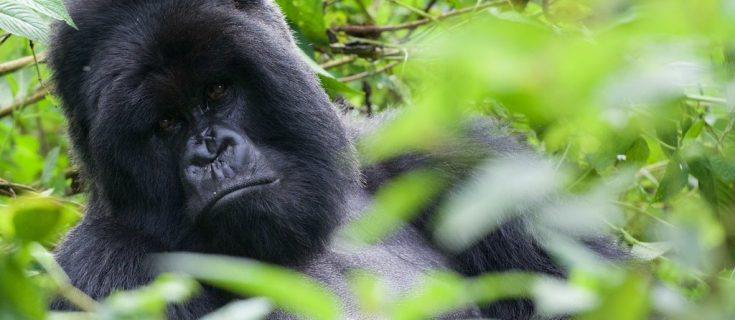
“War does not determine who is right,” wrote Bertrand Russell, “only who is left.” Mountain gorillas are one of the strongest, toughest animals on the planet. But the fallout from inhabiting the same land as human populations means they’re only just hanging in there.

Mountain gorillas are down to an army of under a thousand – estimates put it at 782 in the wild – spread across three rainforests in Uganda and the Democratic Republic of Congo. Despite their incredible prowess, mountain gorillas are the collateral damage in the region’s various conflicts, and victims of irresponsible human behaviour. This includes accidental snaring in traps set for other wildlife, and in some cases hunting or the targeted snatching of baby gorillas as pets. Another threat is the destruction of the rainforests by the local mining and farming industries. Other times, the region’s biggest beasts are caught in the crossfire of the region’s perpetual wars between humans.
The International Union for Conservation of Nature ranks the mountain gorilla, also known as the eastern gorilla, as a critically endangered species. Typically found in groups of around twenty on the region’s volcanic slopes, they are slightly bigger and hairier than the three remaining gorilla subspecies. Led by one dominant male – known as ‘silverbacks’ because of the strands of grey hair that adorn their backs – no amount of chest beating or displays of physical power can warn off the threats to their existence.
Time to act
But humans are coming to realise our responsibility to protect our innocent primate cousins through a series of conservation programmes, awareness campaigns and philanthropic tourism. Since the World Wildlife Federation launched its campaign to preserve the mountain gorilla in 1991, the population has increased by 10%, pulling it a tiny step further away from extinction. The WWF continues to work with governments and park staff to monitor individual mountain gorillas. They’re also involved in efforts to help local communities consider the mountain gorilla in providing sustainable resources.
In one of the world’s more perverse ironies, well-meaning tourists often contribute to the destruction of the wildlife they are appreciating. One of the most sickening examples of this is in the DRC last year, where anti-government rebels boasted of raising money for their war-chest by charging unsuspecting foreigners for tours of the mountain gorilla’s natural habitat. Needless to say, the tourists’ actions had the unintentional consequence of prolonging a conflict which is helping to obliterate the species they were admiring.
But it doesn’t have to be the case that man – especially the naïve foreigner – destroys the thing he loves. The Bwindi Impenetrable Forest in southwest Uganda is home to around half the world’s remaining mountain gorillas. In this UNESCO World Heritage Site, there are tour operators such as Sanctuary Retreats who give nature lovers a chance to appreciate the wonderful species on their gorilla trekking ventures, while also helping to sustain both its natural habitat and the species itself. Guided by experts from the region, travellers are allowed to appreciate the mountain gorilla – and the many other species of animal and plant life unique to the region – without damaging their natural habitat.
 Tags: General African Stuff, gorillas
Published by Johnny Ward on August 26, 2011
Crossing countries by land is a cool thing to do, crossing continents? Even cooler! Here’s a quick look at escaping Europe and heading into Africa without taking a flight.
If your heart is set on arriving in Africa by boat (and let’s face it – traveling by boat is clearly the most awesome way to travel anywhere), your options are quite limited but fear not, it’s still very possible. The easiest, most accessible way to get from Europe to Africa by boat is from Portugal to Morocco, so let’s have a look how you go about it….

1: Get your traveling ass to Spain. Jump on a train or bus from wherever you are and get yourself to Andalusia! There are endless flights to Malaga, Seville, Granada etc all of which are going to get you close to the Mediterranean coast in preparation for your boat trip.
2: Head to Spain’s most southern town, Algeciras. Algeciras is easily reachable by bus from pretty much anywhere in the country, or take the train through some very beautiful mountains. You’re getting close now!

3: Book yourself onto the ferry to Tangiers as a foot passenger. This process is amazingly simple, ferries leave every hour. They vary in speed (and price) but with no booking, no mad desire to get the luxury boat and no time constraints you should be able to hop onto a ferry within a couple of hours of arriving, take the 3 hour trip across the water, all for around $35. Bargain.
4: Get your passport stamped, you’re in Morocco baby! Welcome to Africa! Tangier is a nice enough city but one of it’s highlights is it’s very impressive rail network to the rest of Morocco. Casablanca, Marrakesh, Fez are all within a $20 sleeper train journey and your African adventure can well and truly get started.

Ok guys, I’m a massive fan of overland travel so hopefully this should help you out when you find yourself staring at the Mediterranean see and wondering how to get across. Happy travels!
 Tags: boats, europe, General African Stuff
Published by Johnny Ward on January 11, 2011
For any keen backpacker, the first question is presumably “How much does it cost to see the mountain gorillas in Rwanda?”. Rumours of crazy expenses are unfortunately pretty accurate – to trek with the Mountain Gorillas in either Rwanda or Uganda will cost you a one time fee of $500 (rumours of $1000-$2000 increases through 2011 & 2012 are rife) which gives you access to the gorillas for one hour only. Ouch!

Ok ok so $500 is a heartbreaker but money comes and goes and this really is an opportunity of a lifetime. Petting sedated tigers in Bangkok, feeding domesticated monkeys in India – these have there place of course but trekking with the mountain gorillas is true wildlife at its finest. You get up close and personal with these massive creatures and there are few more inspiring, intimidating and impressive sights than a 200kg silverback male standing on two feet and beating his chest at you, just to let you know who’s boss, and believe me you will certainly know who’s boss!

So should you see the mountain gorillas in Rwanda or Uganda?
Well, you can trek mountain gorillas in 3 places in the world – Democratic Republic of Congo, Uganda and Rwanda. The DRC can be dangerous and with the convoluted and expensive visa requirements pushing the costs higher I’d rule that one. So Uganda or Rwanda? The actual cost remains the same ($500) so which should you choose?
In Uganda:
TRANSPORT: Located a whole days drive from Kampala, it’s more difficult to access and with accommodation around the park being expensive, the costs for independent travelers can soon soar. The town of Buhoma, the nearest town to the gorillas, is a grueling 13 hour bus ride from Kampala so factor that into your timing too. The other entry point is Nkoringo which involves a similarly arduous journey. Get yourself to Kampala, early in the morning head to the bus station in the town centre and you’ll be off. The bus costs around $10 to get to Bwindi,
BOOKING: For Uganda, you need to book through the Ugandan Wildlife Authority, they are more efficient than their Rwandan brothers and are much more open to emails, phone calls etc. Only 50 permits available each day but cancellations are quite common so if there are only a couple of you, you can turn up and wait for cancellations – normally within 2 or 3 days you’ll be good to go.
VISAS: Most nationalities (EU passports, Canada, US, Australia, NZ etx) don’t require any prior work. Just arrive at the border, pay your $50 (steep i know!) and you’re in. Only single entry visas are available.
GORILLAS: Amazing of course, the groups (bands) are smaller than in Rwanda but still impressive. The rainforest here is reportedly denser than that of Rwanda so the photo opps aren’t necessarily as presentable however, as a silverback runs across your path that’ll be the least of your worries! The trek from the park to the gorillas range from 1 to 5 hours depending on the gorillas movement.
In Rwanda:
TRANSPORT: From Kigali, you’ll be heading to Musanze the closest town to the Volcanoes National Park. Probably still a tad too far to consider a day trip so I would recommend heading down the day before, sleep there have your day with the gorillas and head back to Kigali or onwards to Uganda the same day.
BOOKING: With only a limited number of spaces available each day to trek with the gorillas ideally you should book in advance. Easier said that done! For Rwanda, you book through the ORPTN office in Kigali, Rwanda although as you’ll see from their retro website, they aren’t exactly surging through the technological times! Endless emails and phone calls will be required and in the end, if you have time to spare, it’s easier (in a group of 1,2 or 3) to turn up to the office and book when you arrive. You may have to wait for a few days for cancellations but if you’re patient, you’ll get to the see the gorillas I promise! Note that, Rwanda is not a cheap country to stay in so try to get an idea of what specific days there may be spaces so you can arrive roughly around that time and avoid emptying your wallets in the overpriced Kigali!
VISAS: Available on the border and in the airport and generally cost $60 for 30 days. No problems at all.
GORILLAS: The general consensus is that the Rwandan gorilla groups are larger, easier to spot and the scenery allows for better photos and, after visiting here, I can only confirm all of the above. It really is something special, with baby gorillas rolling around at your feet to Silverbacks charging around within a metre or two of you, it will take your breath away. The most famous group, and the furthest to trek to is the Susa group so if you’re feeling energetic ask for that. They have the biggest male, the most babies but can often be up to 5 hours trek away!
Uganda or Rwanda? For me, it’s gotta be Rwanda. The vast majority of the people I met along the way in Africa seemed to say the same thing, of course either country will be a great experience though but Rwanda pips it.

Mountain Gorillas on a budget? There are countless tour operators who would love nothing more than for you to pay them $$$$ to arrange the whole thing for you, arrive by local bus, stay in local accommodation, have your $500 in cash and that’s the best you can hope for. This is not a cheap activity, but one you’ll never regret.
So are the gorillas worth the $500? Definitely, I wouldn’t change it for the world. For example, the standard line is that you must remain 7m away from them, try telling the gorillas that! They’ll be running around you, inches from your face, a truly awe-inspiring experience and one that I urge everyone to try to see for themselves. Not to mention the trek through the thick African rainforest as you make your way to the gorillas, this is Africa in it’s most purest, $500 might be steep but do it now before the price hikes truly make it impossible to consider!
 Me with the silverback
Any questions guys, feel free to comment below and i’ll get back to you asap…
 Tags: General African Stuff, mountain gorillas, rwanda, uganda
Published by Johnny Ward on December 03, 2010
Cape Town to Cairo may be a classic backpacking route but what a trip it is! From snorkeling in the azure blues of the Indian ocean, the white beaches of Zanzibar, wildlife galore in the Serengetti, standing on a glacier as you hike to the top of Kilimanjaro – the trip offers everything you could ever dream an African odyssey would include but how long does it take and how much does it cost?!

It’s a long way – I can vouch for that. Lots of people drive their own motorbikes/cars or go on organized, expensive overlanding tours, as an advocate of independent travel I recommend planning nothing and going for it freestyle! I met a few people doing a similar trip to mine as I was on the road and the times they were allocating for the journey ranged from 4 months to 1 year. Personally, I took about 6 months and I wouldn’t recommend much less than that – sometimes I felt like I was rushing, ultimately it’s a personal choice and everybody travels at different speeds but around 7 months seems to be the general consensus for an optimum duration, long enough to see everywhere you want without feeling rushed but not too long to get too frustrated at what I shall diplomatically refer to as African inefficiency!
 Crossing the nile by hot air balloon
How much does it cost to go from Cape Town to Cairo? Quite a lot I’m afraid guys. Africa is not the continent for backpackers on a seriously restrictive budget, better to save some extra cash and hold off the trip for a year or two as opposed to rushing in and missing out. I would say that the trip from Cape Town to Cairo could be done, in 6 months, for around $6,000 at the bottom end of the scale (missing out on some of the more expensive activities). This could shoot to $15k if you want to do every activity available, stay in decent places and avoid the (often less than delicious) Sub-Saharan African cuisine.
 Trekking mountain gorillas in Rwanda
Here are a few of the ‘optional’ (this is in inverted commas because although now they seem optional, when you’re there you’re almost definitely going to want to do it!) things that you may have to factor into your budget, things that quickly make you wanna rethink that tight budget:
 Reaching the summit of Kilimanjaro
Ok guys, so these external costs can mount up to $3k or $4k alone – then you have to think about food, transport, accommodation and entrance fees on top of that. If you think you’ll be traveling for around 6 or 7 months, that’s approximately 200 days – if you’re good on a budget maybe $20 can do you = $4k, plus the $4k in fees = $8k. But $20 a day is tough in most of Africa (Malawi aside). I probably spend the best part of $10k in my trip, including flights and a ticket to the World Cup Final in Johannesburg – a lot of money for sure, but worth every penny! If you have any questions about things to do on the journey, just drop me an email on Johnny@onestep4ward.com or leave a comment, I’d be more than happy to help…
 Tags: General African Stuff, money
Published by Johnny Ward on November 11, 2010
Taking a picture of you pretending to pick up the Pyramids of Giza must be the most over taken tourist picture in the world…. still it’s a classic isn’t it?!

Egypt plays host to some of the World’s most famous sights and to be honest it’s more of a holiday destination than a backpackers’ hub. That being said, you can travel Egypt on a budget, you can ride camels to your heart’s content, eat falafel’s till your eyeballs explode and still pay entry fees to the sights all for less than $30 a day. Especially if you get a student ID card – you get 50% discount on every sight. (Feel free to contact me about obtaining a student card)
In fact, I would say that Egypt is actually quite cheap to backpack in and with the all landmarks on offer you’re sure to have a great time. If you find yourself backpacking in Egypt, here are the things you gotta see (regardless of your budget!)…
Abu Simbel: You’re not going to want to hear this but Abu Simbel, aside from the Pyramids, is possibly the coolest temple in all of Egypt! The reason you don’t want to know is that it is a mission to get to. Located nearly 300km south of Aswan (which is already the most southern city in Egypt), you’ll need to arrange a bus or tour from Aswan and leave early in the morning (actually, it’s more like late at night as the bus departs around 3am). The sheer size of the Great Temple of Ramses II will wipe away the fatigue from the bus trip in an instant. When you turn the corner to access the temple, there is a tangible ‘wow’ moment when you see the 4 enormous Pharoah statues. Get there early and avoid the hordes of tourists from the package resorts! The entry fee is 80 EGP and 40 EGP for students.


Luxor: Luxor is Egypt. The city centre is a great place to spend a couple of days, you can eat your Mcdonalds ice-cream cone (less than $0.30 and a Godsend in the heat of an Egyptian afternoon) as you gaze at the Temple of Luxor which is found bang in the city centre. You can read all about Luxor and the things to do there here. (LINK!) If you/re ina rush, here’s it in a nutshell: Temples of Karnak – incredible, Luxor Temple – pretty cool, valley of the Kinds – underwhelming but almost obligatory!


Cairo: There’s not much I can say about Cairo that hasn’t been said a thousand times. Obviously the Pyramids of Giza and the Sphinx are something special. An mandatory visit to the Egyptian museum will take a couple of hours too.
Islamic Cairo is an interesting place as well, especially if you’ve never been in an Islamic country before – this section of Cairo oozes charisma. 3 days in Cairo is easily enough time to experience the chaos and see the major sites. If you want to know where to party in Cairo, the Cairo Jazz Club is one of the few clubs that actually resembles a club, but at $5 a drink your budget will get blown apart.


Mount Sinai: Whether you’re religious or not, the sight where Moses received the 10 Commandments remains an influential tale in the world’s history. It’s possible to hike to the top of Mount Sinai, normally you can take a day trip from Sharm or Dahab ($15 for transport and ticket). It leaves around midnight, you hike through the night and see the sunrise over some breathtaking scenery. I was dubious as to whether to bother with this or not, I was wrong to hesitate – it’s awesome, you’ll love it.


EGYPT
Budget: $20 a day is possible if you eat away from the landmarks AND you have a student card
Food: Street food is great and cheap. Shwarmas cost around 5 EGP, falafel sandwiches around 1EGP. Restaurants and fast food cost from 12 EGP+
Accommodation: Great and cheap. No need to book, most places have wifi too. If you search hard and bargain, decent rooms are found for 20 EGP.
Nightlife: Not a lot I’m afraid guys :S Sharm El Sheik and Hurgada feature bars and clubs full of tourists but then that’s like being back home! Cairo Jazz club, Cairo is your best bet and only on the weekends. Egypt doesn’t party hard.
Transport: Reasonably priced and luxurious. Trains are great but more expensive than buses. To get an idea, the 12 hour journey from Luxor to Cairo costs around 130 EGP on the train, with the bus costing around 90 EGP.
People: Egyptians often get tarnished with being pushy but I found that not to be true. Of course around the wonders you get hassled but away from the tourist attractions Egyptians are warm and welcoming.
Weather: It’s the desert – have a guess! November and December are the ‘coolest’ months (it’s all relative though)
Religion: 95% Islamic
Currency: Egyptian pounds: $1 USD – 5.75 EGP (Nov 2010)
Visa: Stress free. VOA (visa on arrival) is possible in all airports and land borders. For those of us who stress about these things, you can arrange it in the embassy in your home country for around $40, it’s only $15 if you wait for VOA.
 Tags: backpackers guide, cheap travel, egypt, General African Stuff, travel guide, Travel tips
Published by Johnny Ward on November 07, 2010
Africa’s highest peak (5895m) and the highest free-standing mountain in the world, climbing ‘Kili’ is a huge highlight of any trip to East Africa. I’m going to dispel a few of the myths about the costs involved and give you all the lo-down on how much it costs to climb Kili on a tight budget.

I guess everyone here wants to climb Kilimanjaro on a budget so let’s get down to business:
How much does it cost to climb Kilimanjaro? Around $1000 USD.
That’s the answer folks, ignore all other websites touting their businesses complete with flights, visas etc. It costs about $1000 USD end of story. Naturally, if you want to pay more your tent will be higher quality, the food a bit nicer but it’s all unnecessary to be honest, the $1000 will get you to the top just fine.

The cheapest way to climb Kilimanjaro is as follows:
Don’t arrange anything before hand. I’ll repeat that guys, do no arrange anything before you arrive in Moshi. Do it all when you get here – that is the easiest and cheapest way to arrange it. You could arrive on at 10pm in the evening and still have time to organize it and set off the next day so have faith!
1) Get to Dar Es Salaam, Tanzania. I arrived by land from Malawi but many international airlines fly here.
2) Take a bus from Ubungu bus station, Dar Es Salaam to Moshi. The bus costs around $5-$10 depending on the bus quality and take 8-10 hours.
3) Arrive in Moshi around 4pm. Find your accommodation (I recommend the A&A guesthouse, $5 private bathroom, views of the mountain – cracking!) and check in.
4) Ignore all the touts hustling you for their business and walk directly into one of the (literally) hundreds of tour operators who offer climbs.
At this junction let me explain the routes. There are 6 different routes you can take but realistically everyone takes one of two, the Machame route or the most popular Coca-Cola (Marangu) route. The Coca-Cola route is the easiest route in terms of physical exertion but the Machame route actually has a higher success rate mostly due to the fact that it takes an extra day so you get a further days acclimitastion. The Machame route offers much better scenery too and I would definitely recommend taking it.
5) Explain you want to do the Machame (or Coca-Cola depending on your choice) route. The standard Machame route is 4 nights/5 days. This costs $850 for 5 days. If you want an additional day to acclimatise on the mountain (recommended) then it costs about $1000. Normally you pay the park fees on the 1st day of the ascent to the park officials, whereas you pay your tour operator their fee for equipment (normally included), food, tents etc
6) Aside from the obligatory tips, this is all you have to pay. It includes porters (compulsory – normally 3 per climber, crazy I know!!), chefs (!?), tents, breakfast lunch and dinner each day, water, equipment, park fees, transport – everything!
7) Ideally, you shouldn’t climb the next day because Moshi itself is around 800m up so an extra day there to acclimatise only increases your chances of success further
8) The following morning, you’ll be picked up and off you go! Tip the porters and chef etc about 5 – 10% of your fee, they very much expect it.
9) Climb to the top and brag to all your friends for the rest of your life
So that’s it guys, you now know how much it costs to climb Kilimanjaro! It costs around $1000 and it’s impossible to get it for less than $850 due to park fees, compulsory porters and guides etc. Just remember, don’t organise it online, come to Moshi and sort it out here. Happy travels! Any other questions just email me on johnny ‘at’ onestep4ward.com
 Me at the top, sporting Northern Ireland's flag
Climbing mountains around the world is a cool way to travel, so if it’s your thing make sure you check out my posts on climbing Mount Kinabalu (Borneo’s highest mountain), and the trek to Mount Everest base camp.
 Tags: climbing kilimanjaro, climbing kilimanjaro on a budget, General African Stuff, kilimanjaro, money, tanzania
Published by Johnny Ward on October 17, 2010
Africa is something else. The source of mankind, natural beauty that will take your breath away, history that will shock and amaze you in equal measure. If you haven’t yet made it to the continent, if you have and you need to reminisce, or if you’re there right now, here are some great movies to stir up those feelings. True, it might be a bit cliché to watch a movie about a country when you’re in the country, but never will you be more taken by its story, its backgrounds, its language and its message. So make the time and engross yourselves in these crackers:

Hotel Rwanda:
Good movies are movies that have the power to captivate people, great movies are movies which can almost transcend their art form and help you realize the emotions of the characters. Hotel Rwanda is truly a great movie.
Based in Kigali, the capital city of Rwanda, it tells the horrific true story of the 1994 genocidal massacre involving the Hutus and Tutsis where the death toll reached an incomprehensible 800,000 Rwandans in 100 terrifying days. All humanity was not lost however and Paul Rusesabagina, played with great passion by Don Cheadle, risked his life time and time again when he accepted fleeing Hutus and Tutsi reformists in the Hotel Des Milles Collines, bribing the Interahamwe militia with anything he could get his hands on. You can’t fail to be moved by the story and sitting in the Hotel Des Milles Collines, guiltily drinking an orange juice, trying to comprehend what happened there a few years previously is one of the most somber and surreal experiences of my life.
NOTE: I should also mention another great movie covering the same story – Shooting Dogs. A movie from the BBC and runs Hotel Rwanda very close.
Last King of Scotland:
Retelling the rise and subsequent gruesome reign of the execrable Idi Amin, The Last King of Scotland uses a little poetic license to merge 3 characters into James McAvoy’s brilliant Scottish doctor who somehow or other became Idi Amin’s main confidant. The movie documents their relationship and touches on the horror that came with Amin’s reign. Ugandans are refreshingly open about their history and, with tact of course, it’s possible to sit in a café in Kampala and chat with the older generation about Amin’s reign and the damage done to the ‘Pearl of Africa’ as Uganda is affectionately known.
The Lion King:
If you haven’t seen Simba singing and dancing along with Rafiki, Pumba and Timone then, my friend, your childhood has a huge Disney shaped hole in it and needs to be addressed as soon as possible. As you backpack around east Africa you’ll see the strong Swahili references throughout the movie, a great reference point for a charming region and an equally charming movie. Simba means lion, Poomba means warthog and more endearingly (as you’ll hear yelled across the street countless times) Rafiki means friend.
Any trip to Africa isn’t complete without a safari and I challenge anyone to say they were out looking for wildlife and didn’t, even once at least, perhaps even just in their head, hum a quick rendition of The Lion Sleeps Tonight. In the jungle, the mighty jungle…. You know how it goes!
Blood Diamond:
TIA. This Is Africa. Indeed. The movie which gave birth to the mainstream usage of this age-old maxim – When your bus leave 3 hours late, TIA. When your food arrives and is nothing like what you ordered, TIA. All fun and games of course, but this movie paints a slightly grimmer picture of TIA- namely conflict or blood diamonds. Set in Zimbabwe (or Rhodesia as Leo Di Caprio, politically charged, insists on calling it throughout the movie) it tells the story of a local man who comes across a valuable diamond. The lengths at which people are prepared to go to is a shocking reminder to how cheap life can be on this continent sometimes. The movie points a stern finger at a European diamond company (I’m sure you see the parallels with reality here!) who horde the diamonds, keeping the prices high and thereby maintaining the violent acts dished out by the people in charge of the diamond mines across Africa. It may not be a true story per se, however I bet you’ll think twice about those diamond earrings next time you reach for your jewelry drawer.
District 9:
Set in South Africa, the storyline goes that an extraterrestrial race come to earth and are forced to live in horrible conditions. They are rejected by the mainstream population of both South Africa and the world and are relocated to District 9. A far fetched story I hear you say?
Not quite… the movie is based on historical event which transpired during the apartheid era, specifically when 60,000 blacks were ‘relocated’ to District 6 in Cape Town. Don’t let the xenophobic themes get you down though, when you are sipping your ice-cold beer on Long Street in Cape Town you’ll feel a whole different vibe now, I assure you of that =)
 Tags: General African Stuff, movies, Travel tips
Published by Johnny Ward on October 17, 2010
Djibouti – the only country name I’m aware of that contains a synonym for ass, that alone should be enough to justify a visit but if that doesn’t quite do it for you, there are a few other gems in this hidden in this little ‘Dubai of Africa’…

As I have traveled through Africa, I heard more and more about how expensive Djibouti was so I caught myself thinking “should I go to Djibouti?”. I asked this question numerous times to numerous people and got the same negative response time and time again – Djibouti is boring, it’s f**king hot, it’s overpriced, there’s nothing to do. I decided to ignore everyone and head straight there anyway…
Boy, was I happy I did. Note this in your journal – Djibouti, in it’s own Francophile way, is an awesome place to backpack. Also, I have a bone to pick with the lonely planet too, from their Africa guide I was expecting Djibouti to decimate my bank account but alas, that’s not necessarily so. True it’s not Ethiopian prices but then where is?!
I guess there are 3 main places which your trip to Djibouti will look to include. Djibouti city itself, Lac Assal and Lac Abbé. All of these are worth a visit for sure although this is where Djibouti can begin to eat your cash :S
Djibouti City, the capital of this tiny country, is a place apart from the Horn of Africa. Colonised by the French in the 19th Century it still holds the French feeling throughout the whole city. If you forget yourself for a moment you could feel you’re wandering down a Parisian street as you chew on your baguette (cheap and delicious here by the way!). The architecture flips between European and African as does the cuisine so it truly holds an ambience unlike anything you’ll have experienced before, try to spend a day soaking it up. I actually spent 3 days here and enjoyed them thoroughly.
Lac Assal – brings goggles and plenty of cash. If you’ve been to the top of Kilimanjaro on your African odyssey you will, no doubt, delight in telling your friends that you’ve been to the summit of Africa (I regularly remind everyone of my time there ) – how about telling them now that you’ve been to the bottom of Africa (is that the right word?!). What I mean is this is the lowest point on the continent, 150m below sea level and it’s salty, real salty. There are 2 ways to get here (and public transport, as I said, is not one of them :S):
1) Rent a car – costs around $75-$125 but you do need a 4 wheel drive, so that will be around the $100 mark
2) Go on a tour. If you have 6 people + you can go around various tour agents (there are loads in the city) and pay around $35 per person to go. Or if you’re feeling lucky, you can go on your own and hope to coincide with another group.
Lac Abbé is another cracking trip but again it doesn’t come cheap. Same situation with the car and 4WD so join a tour or rent a car, no other options I’m afraid. Generally speaking, you’ll drive here, spend the night there (you can sort that out when you get there, no probs) and see sunrise the next morning, pretty spectacular. I guess the best way to describe it is if you try to imagine what the world would look like 1000 years after a nuclear holocaust, this is pretty much it. A barren landscape that stretches as far as you can see, spewing out steam at its will – really amazing. Google image it and book your car!
Ok, so Djibouti is a cool place. Not as expensive as some will lead you to believe and if you can’t afford the 2 lakes I personally think it’s still well worth the visit for the city alone, there’s nowhere quite like it in the world. If you can afford the lakes then you’re in for a real treat so make sure you have a big enough memory card for all those photos you’re going to take.
My price guide would be this: If you stay for 4 days or so and don’t visit the lakes, you’ll need around $150 to visit Djibouti. Extend that by a couple of days and visit the lakes, that figure will jump to $400 or so for 6 days (but it’s well worth it if you can afford it).
Djibouti:
Budget: Not as pricey as people say but still not cheap – $25-$40 per day (excluding car rental)
Food: street food and supermarkets allow you to eat for $2 – $4 per meal. Cheap restaurants are $3-$6 per meal. The French hangover in Djibouti means that delicious pastries, croissants, pain au chocolate are in abundance here.
Accommodation: The biggest cost. Start at $20 per night + (BUT that includes air conditioning which is almost a necessity in Djibouti!) I recommend the Horseed, with ice cold AC – just remember to barter hard!
Transport: Getting around the city you can use minibuses for next to nothing. Around the country, it’s pretty much nonexistent and you need car rental to visit the lakes unfortunately.
People: Really cool although bring a French phrase book, English isn’t widespread
Weather: HOT AS HELL!!!!, bring sunscreen and drink plenty of water
Religion: Predominately Muslim, although in comparison to Somaliland or Sudan it’s quite understated generally.
Currency: $1 USD – 180 Djibouti Francs. ATMS do work with foreign cards although they’re not entirely reliable so bring cash (USD or Ethiopian Birr just in case)
Visa: $30, not available on arrival by land. No probs to get, easiest in Addis Ababa, Ethiopia. Collect the same day if you ask nicely.
  Tags: Backpacking, cheap travel, djibouti, General African Stuff, travel guide
|
|